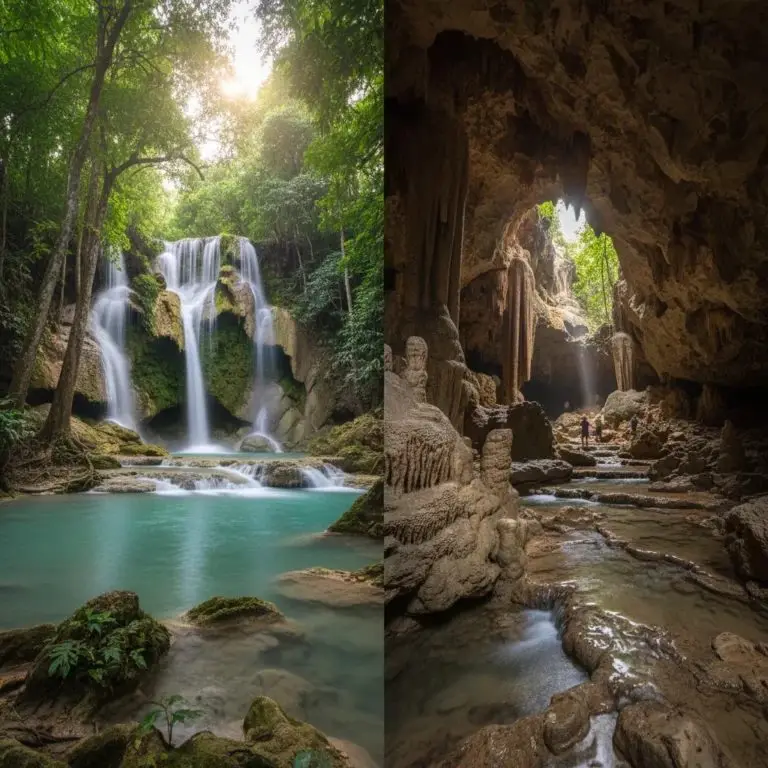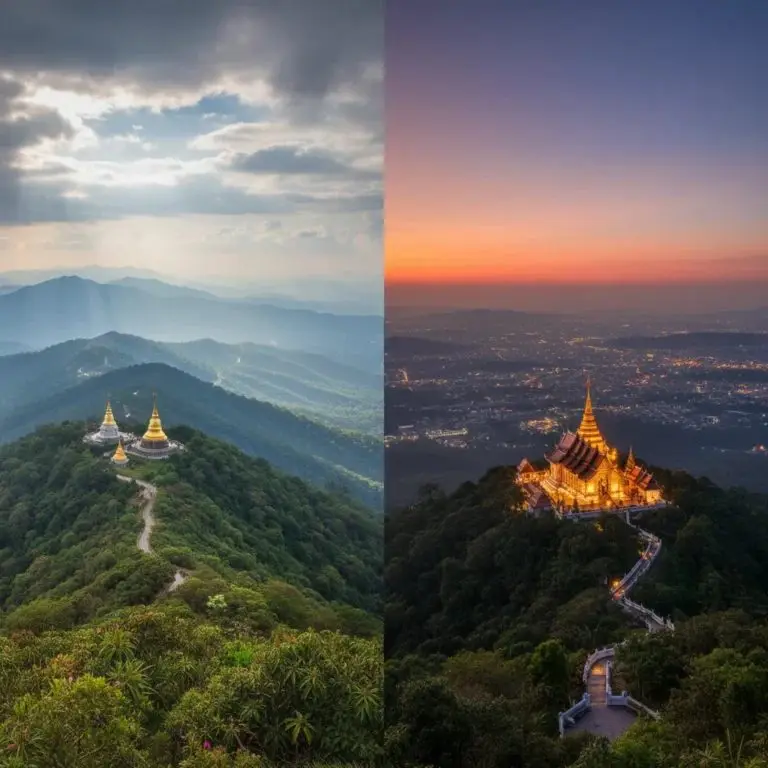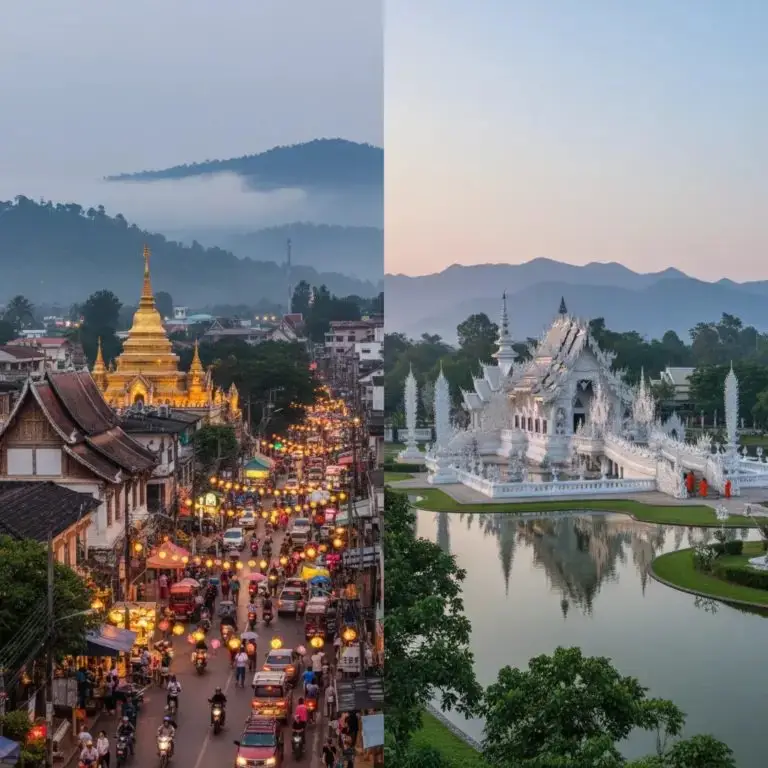
You dream of misty mountains and ancient temples, but you can't decide which city in the north of the country deserves your attention? Picture this: in one place you plunge into the endless drive of modern coffee culture and creative chaos, while in another you freeze in reverent silence before surreal architecture lost amid rice fields. Thailand gives us two completely different northern poles, and the question "Chiang Mai or Chiang Rai" is not just a choice of location, but a choice of the rhythm in which your perfect holiday will unfold.
Many travelers confuse these two destinations because of their similar names and proximity to the border, yet their atmospheres differ radically. If you are planning a tour, it's important to understand: Chiang Mai is the bustling capital of the northern region with developed infrastructure, where excursions are combined with a lively nightlife, whereas Chiang Rai offers a more intimate, meditative experience for those seeking solitude. Our detailed comparison will help you set your priorities and make the right choice, so that your dream resorts in the north of the country leave only the most vivid impressions.
Who will you choose?
Chiang Mai VS Chiang Rai You have already voted. Thank you! Chiang Mai 45% Chiang Rai 55%Pros and cons: Chiang Mai
✅ Pros- A huge choice of cafes and coworking spaces
- A variety of cultural attractions and temples
- Large numbers of tourists and traffic jams
- Seasonal heavy air pollution
Pros and cons: Chiang Rai
✅ Pros- A calm atmosphere and authenticity
- Unique architectural sights such as the White Temple
- Poorly developed infrastructure for expats
- Fewer options for nighttime entertainment
Chiang Mai or Chiang Rai: where to go?
Choose Chiang Mai if you need more developed infrastructure, plenty of cafes and restaurants, as well as a lively nightlife. Head to Chiang Rai if you dream of a relaxing holiday, immersion in authentic culture and visiting unique temples.
Chiang Mai versus Chiang Rai: where to spend less and get more?
Chiang Rai is usually cheaper, but Chiang Mai more often turns out to be better value for the ratio of price to the number of impressions. That is, on a more modest budget Chiang Rai really helps you save, but Chiang Mai frequently gives more richness for every baht spent.
The difference is usually felt above all in accommodation and getting around. In Chiang Rai, lodging tends to cost a little less, and the city as a whole is perceived as calmer and less expensive. At the same time, when it comes to food the gap is no longer so noticeable: you can eat cheaply in both cities, especially if you choose local cafes, markets and street food. So the main savings in Chiang Rai more often come not from food, but from a cheaper base and, in some cases, lower daily expenses.
However, Chiang Mai often wins on the value of the trip, because the density of impressions there is higher. In one place more temples, markets, cafes, walking areas, interesting districts and short-trip options are concentrated. The city is better suited to those who want to stroll, try different food, visit attractions and at the same time not spend too much time and money on constant transfers. Chiang Rai also has very strong points of attraction — famous temples, unusual museums, beautiful views and a more relaxed atmosphere — but there the set of impressions is usually more pinpointed, and for some places it's more convenient to use transport, a bike, a car or excursions.
Because of this, Chiang Rai is better chosen if you have a short trip of 1–2 days, want tranquility, lower expenses and a few striking sights without unnecessary fuss. And Chiang Mai is better suited for 3–6 days and is especially good for a first trip to northern Thailand, when you want more variety: the old town, temples, markets, cafes, walks and trips into nature.
The bottom line can be put simply: if the goal is to spend less, Chiang Rai more often wins; if the goal is to get more impressions for your money, Chiang Mai more often wins.
Chiang Mai versus Chiang Rai: immersion in atmosphere and impressions
Chiang Mai and Chiang Rai are often placed side by side because both cities are considered gateways to northern Thailand, but they feel completely different. Chiang Mai gives the impression of a large cultural center with a multilayered life: here the ancient history of Lanna combines with temples, markets, walking streets, modern quarters and easy access to the mountains. Chiang Rai, on the contrary, is perceived as more intimate, more contemplative and in a sense more artistic: its image is built around vivid temples, art spaces, northern landscapes and the border geography around the Golden Triangle. This contrast is clearly visible even in official tourist descriptions: for Chiang Mai the focus is on Doi Suthep, Tha Phae Walking Street, Nimman and trips into the mountains, while for Chiang Rai it's the White Temple, the Blue Temple, Baan Dam, Doi Tung, Doi Pha Tang and the Golden Triangle.
The atmosphere of Chiang Mai is built on the sense of a living historic city. Its old center with temples, city walls and moats is perceived not as an open-air museum, but as a place where history continues to live within everyday life. This feeling reaches deep into the past: UNESCO notes that Chiang Mai was specially founded in 1296 by King Mangrai as the political, economic, social and cultural center of the Lanna state. Even today this is felt in the layout of the city: in Chiang Mai it's easy to alternate walks through the old town, visits to temples and museums, and then literally within a short time switch to the more modern rhythm of quarters with cafes, designer spaces and young urban energy.
A special mood is given to Chiang Mai by its combination of spirituality and urban lightness. On the one hand, the symbol of the city remains Wat Phra That Doi Suthep — the most important temple of Chiang Mai, located on a mountain and linked to the image of the city almost as closely as the old walls. On the other hand, the city has Tha Phae Walking Street, craft goods, street food, as well as Nimman — a district that Thailand's official tourist resource describes as one of the most lively and creative places in the city, filled with shops, local cuisine and a modern style. That's why Chiang Mai is remembered not only as a "city of temples" but also as a space where in a single day you can live through several states at once: the morning silence by the stupas, a daytime walk along the old streets and an evening in the trendy quarters.
Chiang Rai gives a completely different impression. It's not so much a city of continuous motion as a place of pinpointed, strong and very vivid encounters. Here the atmosphere is less dense and more airy: you don't feel a constant urban pulse, but you perceive individual symbols more sharply. The White Temple looks like an almost surreal artistic fantasy, the Blue Temple like a bright, color-saturated spiritual image, Baan Dam like a darker and more philosophical art space. In the official description of Chiang Rai these objects stand alongside the province's oldest temples, mountain viewpoints, the winter gardens of Doi Tung and the Golden Triangle, where Thailand, Laos and Myanmar meet. From this emerges the impression of a northern city with a pronounced artistic soul and a strong sense of the space around it.
If Chiang Mai immerses you in history through the urban fabric, then Chiang Rai does it through images, landscapes and cultural accents. An important role here is played not only by temple architecture, but by the northern cultural environment more broadly. The Mae Fah Luang Art and Cultural Park is directly described as a center of Lanna art and culture and a place with one of the most extensive collections of the region's artifacts. This is important for understanding the very feel of Chiang Rai: it's remembered not as a "second Chiang Mai," but as a separate cultural world, where contemporary art, ethnic heritage and northern aesthetics combine in a quieter but very expressive form. That's why impressions of Chiang Rai often turn out to be less varied in number but more concentrated in the power of the image.
From the point of view of emotional experience, Chiang Mai is more often chosen by those for whom it matters precisely to live inside the city: to wander without a plan, drop into temples along the way, change the tempo of the day, alternate coffee, markets, museums, massage, walks and short trips into the mountains. Chiang Rai acts more strongly on those who love whole, memorable scenes: drive up to one unusual temple, then to another, see a sharp change of colors and moods, and the next day go to the viewpoints, tea hills or toward the Golden Triangle. This is no longer so much an urban dissolution in the rhythm of the streets as a journey through vivid northern images. Such a conclusion is partly an interpretation, but it rests well on how the destinations themselves are presented in official descriptions and cultural materials.
To put it very simply, Chiang Mai is northern Thailand in the form of a living city, where ancient Lanna meets modern urban culture. Chiang Rai is northern Thailand in the form of picture-like impressions, where temples, art, mist over the mountains and border geography create a calmer but very distinctive mood. So the choice depends not on which city is "better," but on exactly how you want to feel the north of the country. If you want movement, layering, walks and a soft transition between past and present, Chiang Mai unfolds more fully. If you want silence, visual unusualness, artistic expressiveness and slower contemplation, Chiang Rai is more memorable.
The logistical labyrinth: where it's easier to reach your goal
Chiang Mai is deservedly considered the transport hub of the north, offering travelers maximum comfort and predictability. The airport here is located just a ten-minute drive from the historic center, which allows transfer time to be kept to a minimum. Unlike it, Chiang Rai bets on a relaxed rhythm, and although the local airport is also close to the city, the frequency of flights and the variety of taxis here are noticeably lower. If in Chiang Mai you can count on round-the-clock availability of comfortable Grab taxis and shared songthaews, then in Chiang Rai the search for transport after sunset often turns into a quest requiring prior arrangements with your hotel.
Whereas Chiang Mai's road infrastructure is developed for intense traffic, long-distance trips here can be tiring because of the inevitable traffic jams. In turn, Chiang Rai offers calmer and safer highways, which makes intercity transfers by minivan less stressful. However, if here, in Chiang Mai, you can easily find a transfer of any class — from a budget economy taxi to a premium-segment private car — then there, in Chiang Rai, the choice is often limited to standard minivans. Thus, Chiang Mai wins in terms of speed and choice, while Chiang Rai ensures a more predictable and measured level of road safety.
Verdict: which northern paradise to choose – Chiang Mai or Chiang Rai?
So, you face a choice: to plunge into the lively atmosphere of the metropolis of the North or to find peace in the embrace of untouched nature. The answer lies in your priorities and your desired type of holiday. Each of the cities offers a unique experience, and the choice will be determined precisely by your personal needs.
Your decision should be based on which aspect of travel is most important to you: access to diverse entertainment and developed infrastructure, or the opportunity for total immersion in tranquility and authenticity. We have put together clear guidelines for you to make the final choice easier.
- Choose Chiang Mai if you:
- Value a vibrant nightlife, plenty of restaurants for every taste and budget, as well as active shopping.
- Are looking for a wide choice of cultural attractions, temples, museums and art galleries, as well as the opportunity to attend numerous workshops.
- Prefer easy access to various means of transport, including an international airport, and comfortable accommodation in hotels of various levels.
- Strive for a combination of urban comfort with the ability to take day trips to natural beauties.
- Choose Chiang Rai if you:
- Dream of silence, tranquility and the chance to retreat surrounded by stunning mountain landscapes.
- Are drawn to unique, unconventional sights, such as the White and Blue Temples, as well as the opportunity to get acquainted with the way of life of local tribes.
- Are ready for a more relaxed pace of life and prefer an authentic, less touristy experience.
- Plan to explore the far corners of northern Thailand, including national parks and little-known villages.
Frequently asked questions (FAQ)
What is the main difference between Chiang Mai and Chiang Rai?Chiang Mai is a large metropolis with developed infrastructure, digital nomads and hundreds of temples, whereas Chiang Rai is a quieter, provincial city, ideally suited for unhurried contemplation and nature.
What is more interesting to see in Chiang Mai?Chiang Mai is famous for its Old Town with ancient temples, nighttime market life and its proximity to Mount Doi Suthep. It's an ideal place for those seeking a balance between history and modern comforts.
What is Chiang Rai famous for among tourists?Chiang Rai is known for its architectural gems — the White Temple (Wat Rong Khun), the Blue Temple and the Black Artist's House. It's also an excellent base for trips to the "Golden Triangle" on the border with Laos and Myanmar.
Which city is better to choose for a first trip to Thailand?For a first acquaintance with the north of Thailand it's better to choose Chiang Mai, as there are more tourist activities, English-speaking staff and conveniences here. Chiang Rai is better left for a second trip for a deeper immersion in the atmosphere of the region.
How many days do you need for each city?For Chiang Mai it's worth setting aside at least 3–4 days to manage to see the temples, mountains and coffee shops. In Chiang Rai it's enough to spend 1–2 full days to visit the main attractions.
Where is the infrastructure for digital nomads better developed?Chiang Mai is considered the world capital of digital nomads thanks to a huge number of coworking spaces, fast internet and an international community. Chiang Rai is significantly less developed in this respect and is more suited to those who want to take a break from the noisy urban environment.
Do you need a visa to visit the northern cities of Thailand?The entry rules for Chiang Mai and Chiang Rai are identical to the rules for all of Thailand, as these are domestic cities. Check the current requirements for citizens of your country before the trip, as the rules for visa-free entry may change.