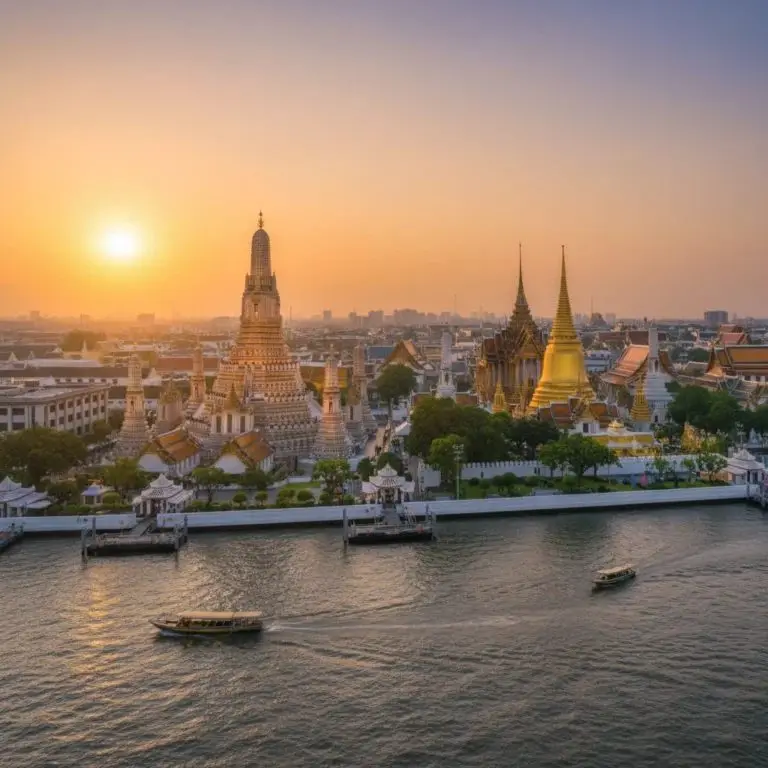
Have you ever wondered what the dazzling gleam of golden spires and the meditative coolness of porcelain mosaic, rising above the murky surface of the Chao Phraya River, have in common? Thailand is often painted as one continuous bright spot, but as soon as you take a step away from the beach resorts, a classic dilemma confronts you: whether to choose the majestic imperial might of the Grand Palace or to surrender to the magic of the dawn rays on the walls of Wat Arun. These are not just two temples - they are two different ways to feel the soul of Bangkok, where the pomp of kings collides with the serenity of spiritual heritage.
In our detailed comparison we will examine why, for lovers of history and architectural grandeur, the choice in favour of the palace seems obvious, whereas those seeking an atmospheric retreat from the city noise and the best shots for social networks give their heart to the Temple of Dawn. If your schedule in the capital is limited, this analysis will help you understand which of the shrines will leave a deeper trace in your memory.
Whom will you choose?
Grand Palace VS Wat Arun Temple (Temple of Dawn You have already voted. Thank you! Grand Palace 50% Wat Arun Temple (Temple of Dawn 50%Pros and cons: Grand Palace
✅ Pros- Majestic architecture and history
- Vast territory with diverse halls and gardens
- Central location, convenient to reach
- Rich decoration, impressive jewels
- Large number of tourists, especially in peak season
- Strict dress code must be observed
- Ticket prices may be higher than at other temples
- Some parts of the palace may be closed to visitors
Pros and cons: Wat Arun Temple (Temple of Dawn
✅ Pros- Stunning view of the Chao Phraya River and Bangkok
- Iconic architecture with characteristic spires
- You can climb one of the towers for panoramic views
- Unique atmosphere, especially at dawn
- Steep steps, the climb can be tiring
- It can be very hot and sunny
- Inside there are not as many exhibits as in the palace
- Dress code must be observed
Quick choice: Grand Palace versus Wat Arun Temple
If you want to see the brilliance and grandeur of the Thai monarchy, visit the Grand Palace. But if you are drawn by elegance and a mystical atmosphere, choose Wat Arun Temple.
Choose the Grand Palace if you are looking for an impressive architectural spectacle and a sense of royal scale, but head to Wat Arun Temple if you want to see one of the most picturesque and recognisable temples of Bangkok, especially beautiful at sunset.
Comparison of Bangkok's attractions
Criterion Grand Palace Wat Arun Temple (Temple of Dawn) Vibe/Atmosphere Majestic, historic Mystical, spiritual Season (best months) November — February November — February Beaches (characteristic) None None Budget $$ $ Whom it suits Families, Couples Couples, Solo travellers Accessibility (Difficulty of transfer) Medium (public transport, taxi) Easy (river tram, taxi)The price gambit: is it worth paying for royal scale or is it better to choose the dawn classic
The Grand Palace is the most expensive tourist site in Bangkok: an entrance ticket will cost you 500 baht. In contrast, Wat Arun offers a price tag of 200 baht. If at the palace you pay for monumentality and an enclosed territory, where even buying a bottle of water at triple the price becomes commonplace, then at the Temple of Dawn the main budget goes on logistics. To get to Wat Arun, you will have to cross the Chao Phraya River by ferry for 5-10 baht, whereas a taxi ride to the palace through the traffic jams can lighten your wallet by 200-300 baht.
If at the Palace you pay for a "premium" experience with perfectly clean paths, then at Wat Arun budget-friendliness has its flip side: there is much more bustle here, and the market rows adjoining the pier often look untidy. While inside the Palace you are surrounded by spotless golden stupas, at the foot of the Temple of Dawn you will encounter budget street food - a portion of noodles or rice with chicken will cost 50-70 baht. If you value comfort and are ready to pay extra for prestige, the Palace will live up to expectations; however, Wat Arun remains the ideal choice for those who want to save without losing the aesthetic pleasure of contemplating the architecture.
Grandeur and Radiance: The Contrast of Atmospheres of the Grand Palace and Wat Arun Temple
Arriving in Bangkok, you inevitably find yourself faced with a choice: to immerse yourself in the luxury and sacred aura of the royal residence or to experience the captivating radiance of the most famous temple of Thailand. The Grand Palace is above all a symphony of gold, emeralds and architectural grandeur, designed to demonstrate the might and wealth of the monarchy. Here every detail cries out about history, about ceremonies, about the steadfastness of traditions. The atmosphere is permeated with reverence, with a feeling of touching eternity. Unlike the more peaceful temples, here grandeur reigns, which can even somewhat overwhelm with its scale, but invariably evokes admiration.
Whereas the Grand Palace astonishes with its internal luxury and historical significance, Wat Arun Temple, or the Temple of Dawn, offers a completely different but no less powerful "wow effect". Its silhouette, adorned with thousands of fragments of porcelain and seashells, shimmers against the sky, especially captivating at sunset or dawn, when its rays are reflected in the water of the Chao Phraya River. If the Grand Palace is a celebration of gold and the most intricate mosaic, then Wat Arun is a play of light and colour, a promise of a new day and of hope. The amenities here are, of course, less royal, and the climb up the steep steps can become a real test on a hot day, but the view that opens up from the height, and the overall impression of this radiant wonder outweigh any inconveniences.
The value of both places is, of course, historical and cultural, but the sensations they give are different. At the Grand Palace you feel yourself a part of great history, you touch a dynasty. This is a place where you want to stand still in order to absorb every symbol, every painting. Whereas Wat Arun, despite its antiquity, is more about energy, about the contemplation of the beauty of nature and human mastery. Perhaps it will be a little more crowded here, especially at the foot, but the rapid climb to the top gives a feeling of seclusion with the sky and the city. Both temples are obligatory points on the map of Bangkok, but the choice between them is a choice between immersion in royal history and the enjoyment of radiant beauty.
The crossing to the shrines: Comfort and safety on the way to the Grand Palace and Wat Arun
When planning a visit to two iconic attractions of Bangkok - the majestic Grand Palace and the elegant Wat Arun Temple (Temple of Dawn) - the particulars of the transfer play a key role in shaping the overall impression of the trip. The Grand Palace, located on the eastern bank of the Chao Phraya River, offers many options for overland access, which can be both an advantage and a challenge. In contrast, Wat Arun is located on the western bank, and the way to it is inseparably linked with a short but picturesque river crossing, which makes the transfer to the temple an integral part of its charm. If here, at the Palace, you can choose between a comfortable taxi, a traditional tuk-tuk or a city bus, each of which is subject to the unpredictable traffic jams of Bangkok, then there, to Wat Arun, the main and most convenient way is the fast and regular ferry crossing across the river.
The comfort and duration of the way to these shrines differ significantly. The journey to the Grand Palace by overland transport can vary from relatively quick (outside peak hours) to a tiring and long stand in traffic jams, which lowers the level of comfort even in an air-conditioned car. An alternative is the river express boat to the Tha Chang pier, from where the Palace is a stone's throw away; such a trip, though it may be slower, is much more picturesque and cooler, bypassing the city bustle. Whereas for Wat Arun, the crossing itself from the Tha Tien pier takes only a few minutes, representing a pleasant, fresh and incredibly photogenic stage of the way. This short water trip rarely causes discomfort and, on the contrary, adds uniqueness to the whole experience. The safety of both types of transfer is generally high: overland transport is regulated by standard city rules, and the river ferries making frequent short trips to Wat Arun are well controlled and have proven themselves as a reliable means of transport for thousands of tourists daily.
Thus, the choice of transport to the Grand Palace provides greater flexibility, allowing you to adapt to personal preferences and the current traffic situation, but requires taking into account the possible influence of traffic on the duration and comfort. In turn, access to Wat Arun Temple, although it implies an obligatory water crossing, offers a more predictable, fast and unique experience. This brief river trip is not perceived as an obstacle, but rather as a pleasant addition to the excursion, making the way to the Temple of Dawn part of an unforgettable Thai adventure, in which the water arteries of Bangkok play no less a role than the destination itself.
The verdict: The ideal choice for your route around Bangkok
The choice between these two architectural pearls depends solely on your personal priorities and on what exactly you want to get from a walk around the Thai capital. The Grand Palace is a large-scale demonstration of monarchical grandeur, historical depth and exquisite art, requiring time and a certain dress code. Wat Arun, on the contrary, represents a more compact, refined and meditative experience, which gives incredible visual impressions thanks to its unique finish of coloured porcelain and its position on the riverbank.
Decide what is closer to you: the spirit of imperial luxury with golden roofs or the magic of ancient architecture in the rays of the setting sun. If time is limited, do not try to embrace the unembraceable; it is better to feel one place, but to the full, in order to leave a whole and deep memory of Bangkok.
- Choose the Grand Palace if you are a connoisseur of history, strive to see the main state shrine of Thailand and want to take photographs against the background of grandiose pavilions, golden chedis and majestic palace ensembles. This is your option if you are not frightened by a large number of tourists, you are ready for strict observance of the rules of dress and you want to immerse yourself in the atmosphere of supreme power and royal traditions.
- Choose Wat Arun Temple (Temple of Dawn) if you are looking for aesthetic pleasure, love unusual architecture with an abundance of small details and prefer a calmer, contemplative pace of walk. This is your choice if you dream of meeting the sunset on the embankment, strive to take striking shots against the background of the Chao Phraya River and prefer a more authentic space, less overloaded with crowds, where you can truly be imbued with the spiritual atmosphere of the city.
Frequently asked questions (FAQ)
Which main shrines of Bangkok are worth visiting to feel the royal luxury?To immerse yourself in the royal luxury of Bangkok, be sure to visit the Grand Palace and the temple of Wat Phra Kaew (the Emerald Buddha). These places astonish with their magnificence, golden decorations and exquisite architecture, reflecting the grandeur of the Thai monarchy.
Where in Bangkok can one find the grandeur of dawn connected with shrines?Wat Arun Temple (the Temple of Dawn) on the bank of the Chao Phraya River is the ideal place to meet the dawn and feel its grandeur. Its famous prangs, adorned with fragments of porcelain, shimmer in the first rays of the sun, creating an unforgettable picture.
How do the main shrines of Bangkok differ: Royal luxury and the Grandeur of dawn?The shrines embodying royal luxury (for example, the Grand Palace) impress with their scale, gold and richness of decor, demonstrating earthly power and status. The shrines connected with the grandeur of dawn (for example, Wat Arun) are often more elegant, have a symbolic meaning of the morning awakening and spiritual enlightenment, becoming especially beautiful at daybreak.
Is it possible to combine a visit to the royal shrines and the Temple of Dawn in a single day in Bangkok?Yes, this is quite possible, especially if you begin the day with a visit to Wat Arun at dawn and then head to the Grand Palace. The morning light will lend a special charm to both places, and you will be able to enjoy the contrast of royal luxury and spiritual beauty.
Which other temples of Bangkok are associated with royal luxury?Apart from the Grand Palace, it is worth paying attention to the temple of Wat Pho (the Temple of the Reclining Buddha), which also astonishes with its size and grandeur, as well as to the temple of Wat Suthat, known for its impressive statues and bell tower.
Are there temples where the grandeur of dawn is felt not only at Wat Arun?Although Wat Arun is the most famous, many other temples of Bangkok, located on the eastern side of the city or having pagodas, are also beautifully lit by the morning sun. For example, some temples on Rattanakosin Island can offer picturesque views of the dawn.
How does one get to the main shrines of Bangkok?Most of the main shrines of Bangkok are easy to reach by the elevated metro (BTS) or the underground metro (MRT), as well as by water transport along the Chao Phraya River. Taxis and tuk-tuks are also popular options, but one should agree on the price in advance.
When is the best time to visit the royal shrines of Bangkok?The best time to visit the royal shrines of Bangkok is the early morning, in order to avoid large crowds and the scorching daytime sun. It is also worth checking the opening hours, as they may change.
What clothing should one wear when visiting the shrines of Bangkok?When visiting all temples and royal sites in Bangkok, it is necessary to observe the dress code: shoulders and knees must be covered. Avoid short shorts, skirts, tight-fitting clothing and clothing with bare shoulders. Light but modest clothing is recommended.
Is it possible to take photographs inside the shrines of Bangkok?Taking photographs inside the buildings and directly of the statues of Buddha is forbidden in many shrines. Always pay attention to the signs and follow the instructions of the staff. Outside, taking photographs is, as a rule, permitted.