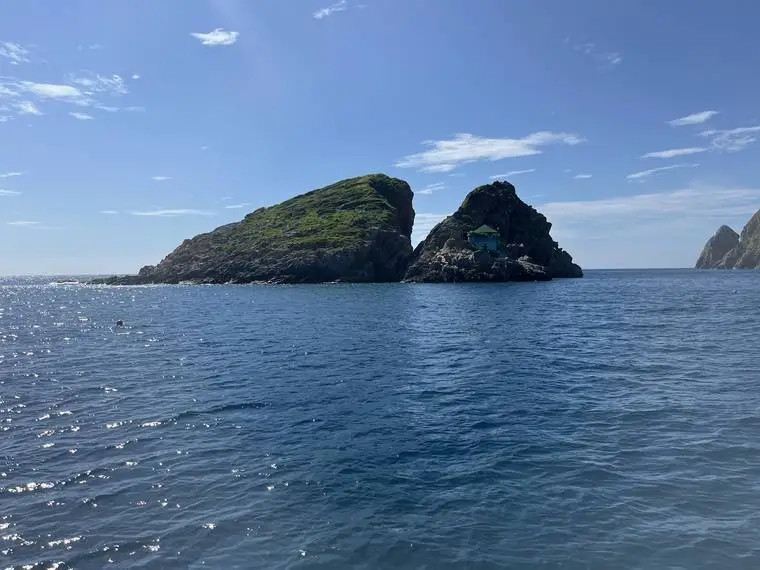
Nha Trang has a real season, and it is not the one the flight schedules suggest. The water is at its most usable from spring to the end of summer; the two months when boats are most often turned back are October and November. Below is the year in four blocks, with what each one changes about what you can actually book.
The year in one line. April-August: the window. September-October: the swell builds before the rain does. November-December: around 330 mm in November, the peak of cancelled outer-island departures. January-March: cool and dry, February the driest month at roughly 49 mm.
What does the year look like in four blocks?
| Period | What the sea does | What it means for booking |
|---|---|---|
| April-August | The clean window for snorkelling and diving around Hon Mun | Book the outer reef with confidence |
| September-October | Swell builds; October is already among the worst for cancellations | Ask what the alternative point is |
| November-December | November around 330 mm, the wettest month; peak of cancelled departures | Plan around the inner bays |
| January-March | Cool and dry; February the driest at about 49 mm | Good for boats, cooler for swimming |
April to August: the working window
This is the block the climate data points to for the outer islands, and it lines up with when the destination is busiest worldwide - interest peaks across June, July and August. If the point of the trip is Hon Mun, the reef and a full day out, this is the half of the year that delivers it without conditions. The 600,000 VND (about $23) shared snorkelling day and the $57 Deluxe Ocean Tour both run their full advertised routes most reliably here.

September to October: the swell arrives before the rain
September and October are the quietest months for arrivals and, counter-intuitively, not the calm ones on the water. October is already named among the two worst months for cancelled boat departures, because it is the swell rather than the rainfall that closes the crossing to the outer islands. A trip in this block is worth booking with the substitute point agreed in advance.
November to December: the wet peak
November is the wettest month on this coast at around 330 mm, and October and November together carry, according to Alma Resort and Local Vietnam, the highest number of cancelled tours of the year, because heavy swell makes the run to the outer islands genuinely unsafe. In December the monsoon eases, but boat trips are still cancelled on days of strong swell.
This is also, awkwardly, when the winter charter programme fills the resorts: flights into Cam Ranh from seven Russian cities start between 21 and 31 October. A full beach and a closed reef happen at the same time here, and knowing that in advance is what saves the holiday.
January to March: cool and dry
Rainfall is minimal, February is the driest month of the year at roughly 49 mm, and the sea settles. The trade-off is temperature rather than water: this is the cool end of the year for swimming, and the search interest reflects it. For boat days as opposed to beach days, it is a better block than its reputation.
What works regardless of the month?
Sheltered water does not care about the monsoon in the same way. The FlyGuru eFoil school, at 2,000,000 VND (about $77) for a 60-minute session, works off Maryna Beach Club, described by the operator as a safe bay without waves or currents.

South of the airport, the boat-and-SUP outing in Cam Ranh bay at 1,950,000 VND (about $75) for the small boat runs daily, and its operator publishes what happens when the weather wins: the deposit is refunded or the date is moved. And Sailing Club Divers states that it runs trips to its dive sites every day throughout the year, with one day and three dives at 100 USD.
What should you ask before booking a winter date?
Three questions cover almost everything: which point replaces Hon Mun if it is closed, whether the vessel changes with the weather, and what happens to the money. The answers vary sharply between operators, and only the third one is about the price.
What is the single best month?
Any of April through August. If you want the driest air rather than the warmest water, February.
Is it pointless to come in November?
No, but book the sheltered formats and treat the outer reef as a bonus if the day is calm.
Do prices change with the season?
Some operators say so directly: Kiterabbit notes on its own price page that prices may change depending on the season.
Does the kite season follow the same calendar?
No. From November to March that school moves its kitesurf teaching down the coast to Phan Rang.
Updated 4 September 2026. Rainfall from published climate summaries for Nha Trang, cancellation patterns from Alma Resort and Local Vietnam; seasonality of interest from Google Trends; operator statements and prices from the operators' own pages.