Nha Trang reads from the promenade as one long line of green humps, and the whole planning problem is hidden in that line: the humps sit at very different distances from shore, and a boat programme is really a decision about how far out you are willing to go. Hon Mun, the outermost of the standard stops, is 40 to 50 minutes away by speedboat. A shared day that reaches it is $50 per adult. A night of squid fishing in the bay south of the airport is 350,000 ₫ (about $13) per person, all in. A five-hour private sailing charter from Ana Marina is $1,390 for the boat. Every figure here comes from a named operator's own page, read in September 2026, and every one carries its unit.
- What a day costs by category, and where the rest of each category lives
- The bay read outward: Hon Mun, Hon Tam, Dam Bay and Hon Mot
- Ana Marina, the city, and Cam Ranh forty kilometres south
- The marine park fee: who keeps it inside the price and who does not say
- The season that closes the outer reef, and what still runs when it does
- Children measured in centimetres, and the questions to ask before paying
Important
The swell, not the rain, is what cancels a boat here. October and November carry the highest number of cancelled departures of the year because heavy sea makes the run to the outer islands unsafe, and November is the wettest month at around 330 mm. Operators answer that by moving the stop rather than the date: in bad weather the boat goes to a nearer reef instead of Hon Mun. Ask which point replaces it before you pay, not on the morning.
What does a day on the sea cost here?
Eight categories work in and around this bay, and they are quoted in two currencies, because the operators are. The Vietnamese-language boat companies price in dong; the dive centres, the day-tour brands and the charter fleet price in dollars. The table gives the cheapest published entry into each category with its unit, and the page where the rest of that category is listed.
| What you want to do | From | What the price buys | Where the rest is |
|---|---|---|---|
| Night fishing | 350,000 ₫ | per person, all in, a night in Cam Ranh bay | Fishing charters |
| Boat hire | 890,000 ₫ | for the boat, two guests, an hour and a half to two hours | Boat hire |
| Boat trips | $45 | per person, snorkelling at two sites, hotel transfer included | Boat trips |
| Diving | $50 | per certified diver, one dive at Hon Mun | Diving |
| Kitesurfing | $55 | per student, one hour one-to-one | Kite and wing |
| Surfing, eFoil | $65 | per student, two hours one-to-one on a surfboard | Surf and foil |
| Kayak, SUP | 1,950,000 ₫ | for the small boat with one to three guests, three to four hours | Sea kayaking |
| Yacht charter | $1,390 | for the boat, five hours, up to 28 guests | Yacht charter |
The two cheapest rows are not in Nha Trang at all: they are in Cam Ranh bay, forty kilometres down the coast past the airport, where the entry prices are the lowest in this guide and the operators' websites are in Vietnamese only. The most expensive row is the whole boat rather than a seat, and at twenty-eight guests it works out cheaper per head than any shared day above it. Between those two ends, the unit does most of the work: three rows price a boat and five price a person, and reading a per-boat figure as a per-head one is the cheapest mistake available here. One more wrinkle: the day-boat brand behind two of the city's programmes prices children by height rather than by age.
The bay, read from the shore outwards
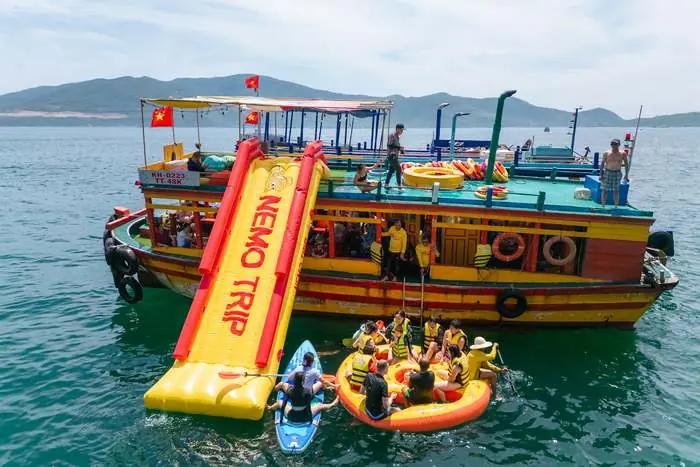
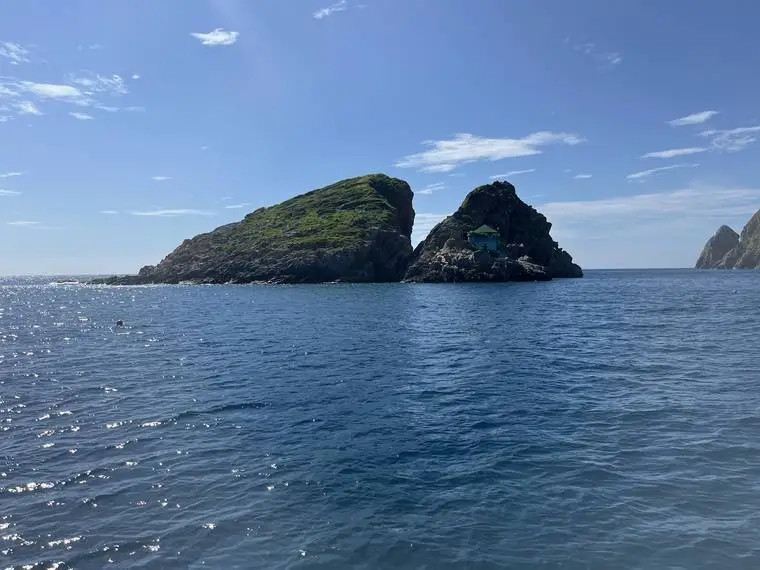
Distance is the price here, and it is also the risk. Hon Mun is the farthest of the standard stops and the reason most people get on a boat at all: a rock on the exposed side of the bay holds more life than a sheltered sand bottom, and the water out there is not pinned against a beach. The same exposure makes it the first thing dropped from the plan when the wind gets up. Hon Tam sits well inside the bay, costs less to reach and is the only island the day trips name that has a published land programme, the mud baths. Dam Bay and Hon Mot are neither destinations nor filler — they are the second and third anchorages that make a day a day.
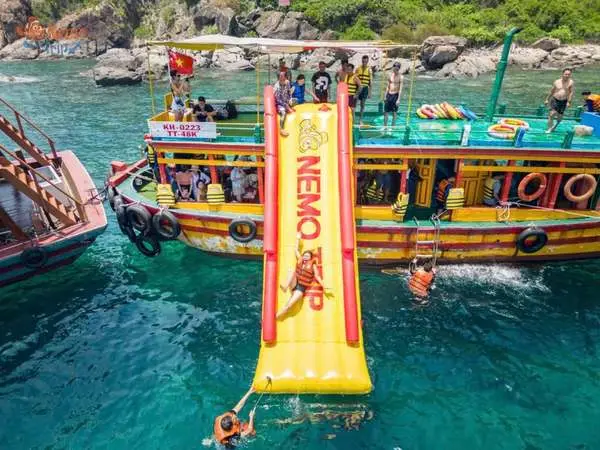
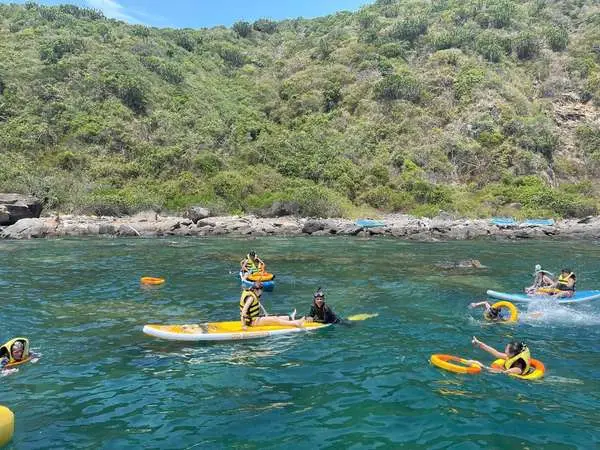
A shared programme covers two or three anchorages, never the whole bay. The longer of the two day boats runs 07:45 to 15:30 at $50 per adult, with snorkelling, fishing on the operator's tackle, a Vietnamese BBQ lunch and SUP or kayak time at Mini Beach; the entrance fees along the route and an English-speaking guide are inside that figure, and the powered water toys at the beach stop are not. Pick-up is from downtown hotels only, which the operator states as a limit rather than burying it.
Where do the boats actually leave from?
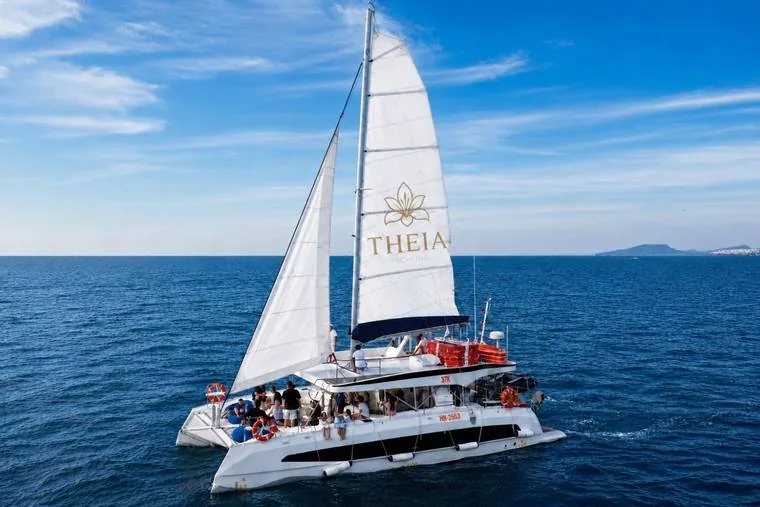
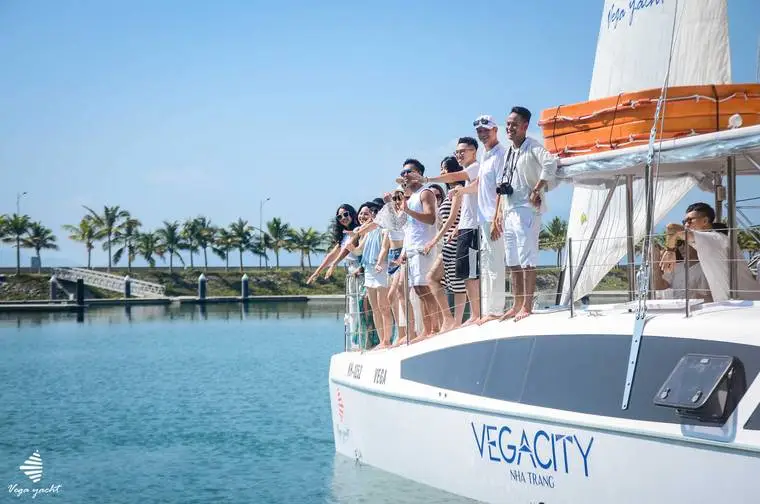
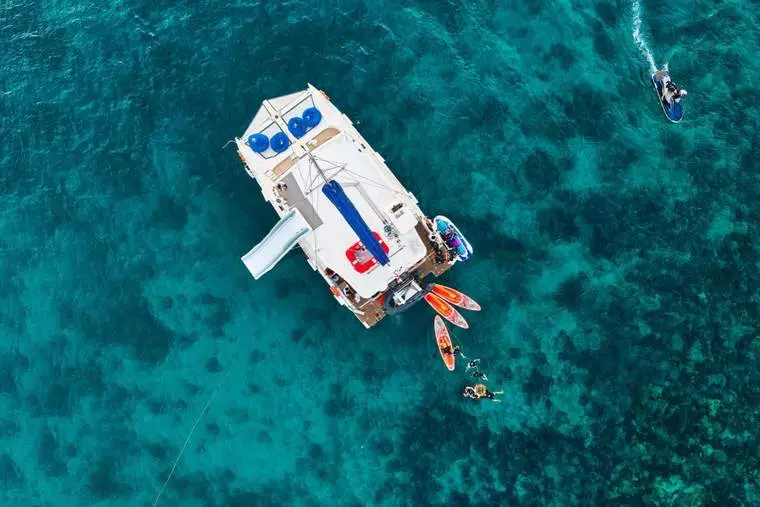
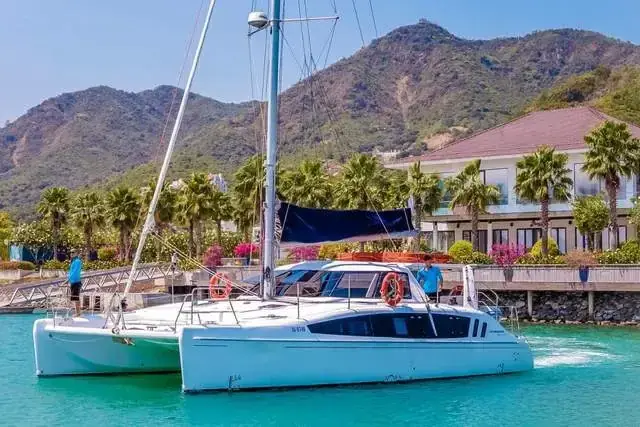
Three departure points cover almost everything sold here. Ana Marina, at 01 Nguyen Co Thach in the north of the city, is where the sailing fleet lies: a 13.6-metre catamaran built in 2021 goes out from there for five hours at $1,390 for the boat, up to twenty-eight guests, with round-trip hotel transfers, food and drinks, snorkelling gear, SUP boards, fishing tackle, an inflatable slide, a photographer and an English-speaking guide on the operator's included list. A second operator keeps a Seawind 1160 at the same marina and collects guests from their hotels at 08:45 for a day that runs to 14:30.

The second point is the city shore itself, where the speedboat charters and the day-tour pick-ups work. A whole speedboat to Hon Mun starts at 1,900,000 ₫ and the rate card runs up to 4,900,000 ₫ depending on which capacity band you book, the largest taking thirty-six to forty-five. The same operator's card is the clearest map of the bay anybody publishes, because every line on it is a real destination with a real price — and it is also the operator that publishes no inclusion list at all, which is the question to settle before paying rather than after.
The third point is not in Nha Trang. Cam Ranh bay lies forty kilometres south, past the airport, and works on a smaller scale: its sunrise and sunset boat is 890,000 ₫ (about $34) for the boat with two guests aboard, and its night of squid fishing is the cheapest line in this guide. It is the answer for anyone who lands late, or who wants a boat to themselves without a charter budget, and it is also where the two Vietnamese-only operators in this guide are based.
The marine park fee, and who keeps it inside the price
Hon Mun sits inside a conservation area, which raises the question every visitor asks at the buoy line: who collects the fee, and is it in the ticket already? The practical answer is the opposite of what people brace for. Every operator here that writes about the fee keeps it inside its published price and does not collect it separately on the day; the operators who say nothing about it are the boat-charter companies, which publish no breakdown of the fare at all. So the fee is not a hidden cost — it is a silence, and the silence sits with a particular kind of seller.
What does move between operators is the tax line and the drinks. A half-day of fun diving at Hon Mun for certified divers is $50 per person for one dive, with equipment, the island and conservation-area entrance fee, lunch, a snack and insurance included, and VAT and unmentioned expenses excluded. The same brand's boat days include the entrance fees along the route and charge for drinks with the meal. The brand's shorter bay day with the Hon Tam mud baths is $57 per adult. Read those lines together and the choice between a $50 boat day and a $50 dive day stops being a comparison of prices and becomes a comparison of what is left outside them.
Diving and snorkelling: twenty dollars between looking and standing
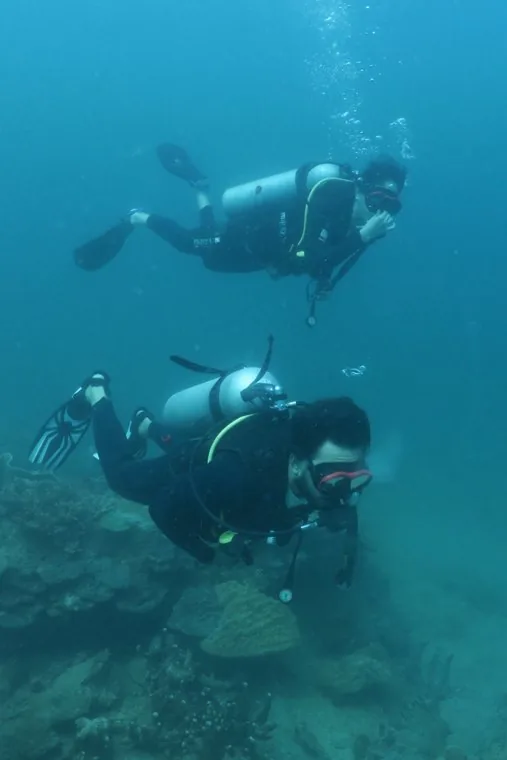
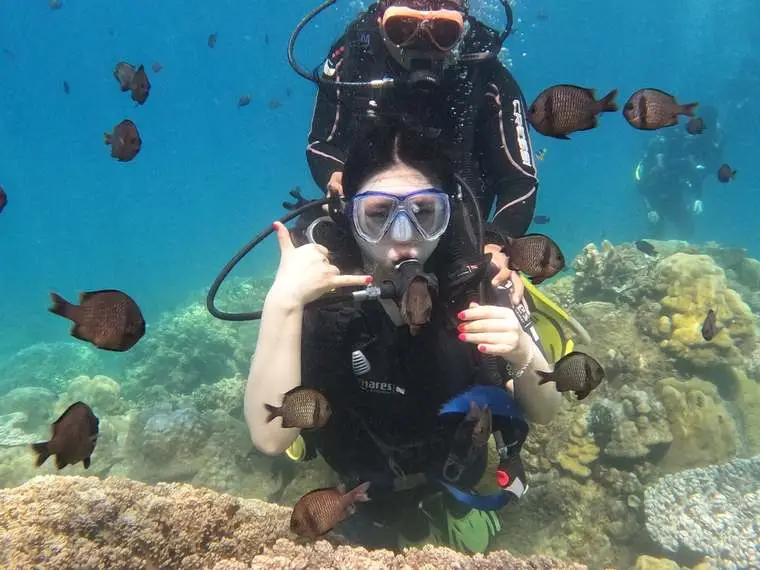
The reef here is shallow coral, and that single fact settles the beginner's question. A first dive is capped at twelve metres by the rules, and the reef is above that ceiling rather than below it, so a beginner sees the same bottom an experienced diver sees. What a certificate buys in this bay is not depth at Hon Mun but the rest of the sites — a rock, a cave, a wreck, a wall — which the dive centres name separately.
The price gap between looking down and standing next to it is smaller than the experience gap. Snorkelling at two sites is $45 per person with mask, snorkel and fins, a wetsuit and the return hotel transfer inside the programme; the same centre's first dive for people without any certificate is $95 per person for two dives of thirty-five to forty minutes down to twelve metres, with a maximum of two guests per instructor. The counter-argument for snorkelling is time: a snorkeller spends the better part of an hour at each stop, while a first-time diver gets two dives and a lot of boat.
Language is a real variable here in a way it is not on most coasts. One dive centre runs its whole site, its briefings and its instruction in Russian; the day-tour brand names an English-speaking guide in its inclusions; two of the boat operators publish in Vietnamese only. None of that is a quality signal — it is a matter of settling, before you book, which language you will actually be looked after in.
When should you come?
The year here falls into four blocks, and only one of them is unreservedly good for the outer reef. April to August is the clean window: this is when Hon Mun, the full route and a whole day on the water deliver what the brochure shows. September and October are quieter for arrivals and, counter-intuitively, not calmer on the sea — October is already among the worst months for cancelled departures, because it is the swell and not the rainfall that closes the crossing. November and December are the wet peak, with November around 330 mm and heavy sea, which is awkward because that is also when the winter charter programme fills the resorts. January to March is cool and dry, February the driest month at roughly 49 mm; a better block for boat days than its reputation suggests, and a cooler one for swimming.
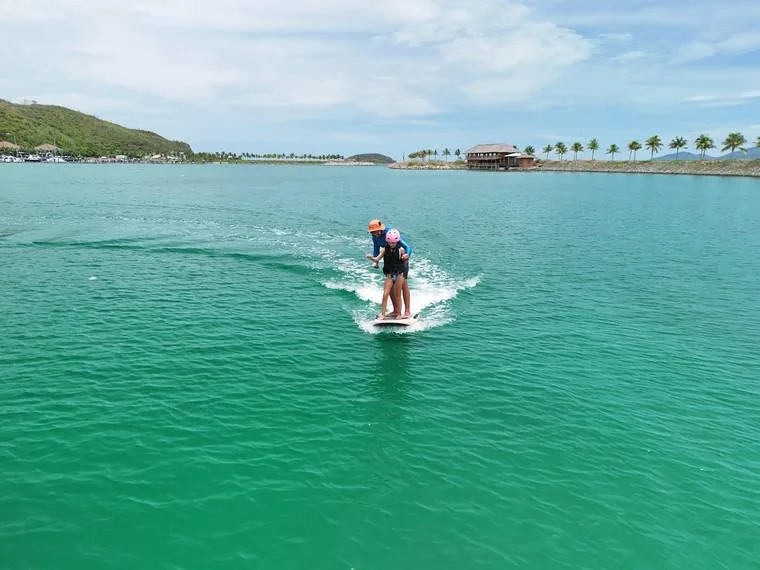
Sheltered water does not obey that calendar. A sixty-minute first lesson on an electric hydrofoil board is 2,000,000 ₫ (about $77) per student and runs off a beach club the operator describes as a bay without waves or currents; board, life vest and radio contact on the water are in the price, and the instructor coaches through an earpiece. The same logic applies south of the airport, where the small-boat days run all year and the operator publishes what happens when the weather wins: the deposit comes back or the date moves.
Wind and boards run on a different calendar
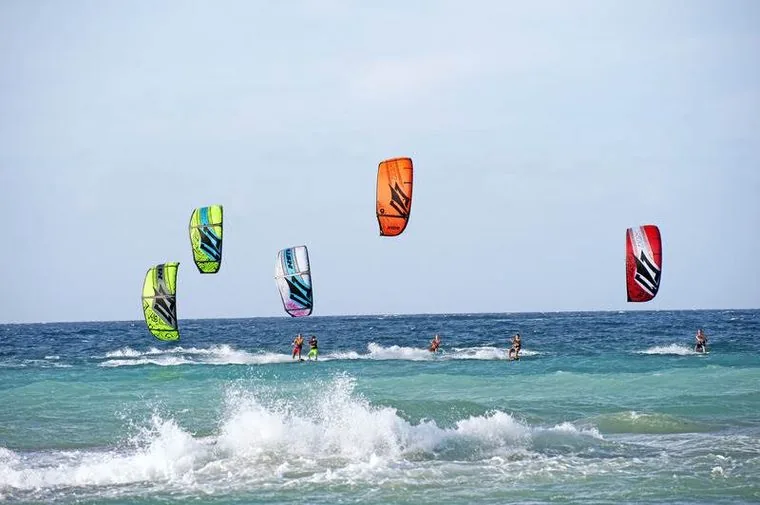
The one thing that genuinely leaves town in winter is kitesurfing. From November to March the school that teaches it does not teach in Nha Trang at all: it moves down the coast to Phan Rang, to a lagoon it describes as waist-deep, which it says halves the time a beginner needs. That is a two-hour drive rather than a beach walk, and it is the single most important line to read before booking a January kite lesson from a Nha Trang hotel.
A one-hour private kitesurf lesson is $55 per student with the full kit — kite, board, harness, helmet, buoyancy aid — and equipment insurance included; the group version on the same list is $35 per person. Surfing stays in town: two hours one-to-one on the central beach is $65 per student, with board, insurance, sunscreen and a rash guard, and a free ride on the instructor's motorbike when you are the only student. The school states on its own price page that all prices may change with the season, which is a rare and useful piece of honesty to plan around.
The powered boards are the third option, and they behave differently again. An electric hydrofoil needs neither wind nor wave, which is exactly why it works in a sheltered bay in November; the same school sells a five-hour safari north along the coast to Monkey Island and the wild Bounty beach, and takes riders on the instructor's approval rather than on a booking form.
With children, and without a certificate
The most useful thing to know about children here is that one of the two big day-boat brands prices them by height rather than by age: under a metre free, one metre to 1.39 m at seventy per cent of the fare, and from 1.4 m the full adult price. That is unusual, it is published, and it means a tall nine-year-old pays what an adult pays. The dive centres use years instead — snorkelling from six at one centre, a first dive from ten at the same one, fun diving from eight where a valid certificate is also required — and the eFoil school takes children from eight and sells under-fourteens their own shorter lesson at 1,500,000 ₫ (about $58).
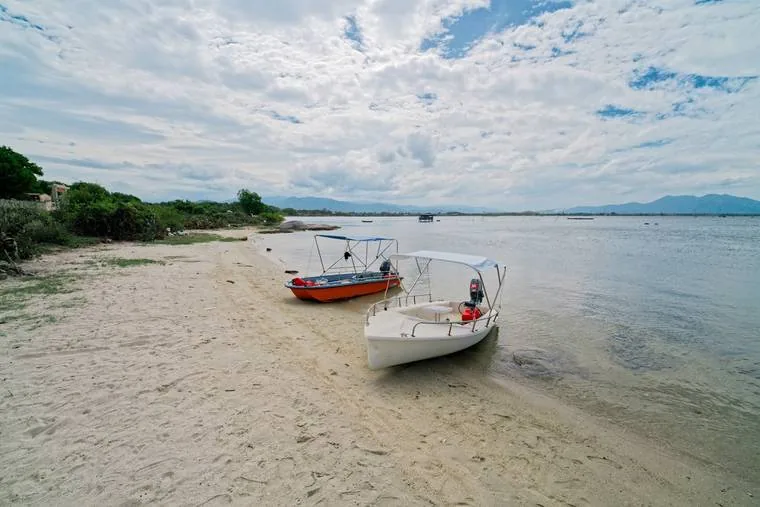
South of the airport the rule is different again. A private three-to-four-hour boat and SUP trip in Cam Ranh bay is 1,950,000 ₫ (about $75) for the small boat with one to three guests, with the speedboat, a SUP board, a guide, a life jacket, a dry bag, help with photos, fruit and water; it leaves at sunrise, in the morning or in the late afternoon. Children under five go free and from ten they pay the adult fare; between six and nine the page prints 1,560,000 ₫ against the same per-boat marking, which is worth settling before you book. What the price does not include is printed just as plainly: the transfer from the resort and 10 % VAT.
Without a certificate the water is still open. A first dive with an instructor needs no paperwork and no experience; a snorkelling trip needs neither, and one operator states that you do not even need to be able to swim, because the vest keeps you on the surface. Where the honest limit sits is not skill but sea state, and that is the same limit for everybody on the boat.
What to ask before you pay

Five questions cover almost everything that goes wrong here. First, which point replaces Hon Mun if the sea closes it, because the operators answer that differently and most of them answer it only when asked. Second, is the price per person or for the boat — the charter rate cards are per boat and by capacity band, and the day tours are per head. Third, what is genuinely inside: the entrance fees usually are, VAT and drinks with lunch often are not, and the boat-charter companies publish nothing at all on this. Fourth, what happens to the money — one Cam Ranh operator states that a weather cancellation means the deposit comes back or the date moves, and another publishes no cancellation terms at all.
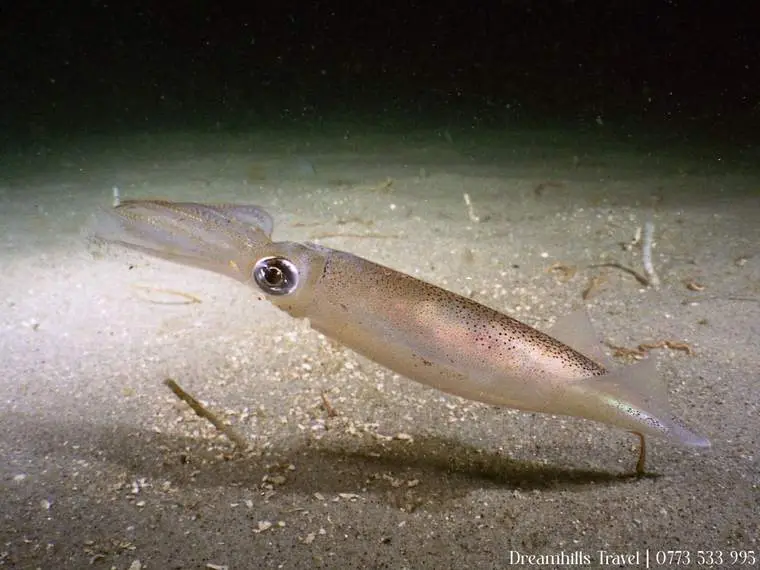
The fifth question is the transfer, and it has two halves. Is it included, and from where: one day-tour brand collects from downtown hotels only, one dive centre includes a return transfer within the city limits and charges extra for remote hotels, and the Cam Ranh trips leave the resort transfer outside the price altogether. Forty kilometres is not a walk. A night of squid fishing in Cam Ranh bay is 350,000 ₫ per person as an all-in package — boat, life jacket, tackle, someone to show you how to jig, and a spirit stove with instant noodles so you can cook what you catch — and getting to the boat is on you.
Prices in this guide are the operators' own, read from their pages in September 2026, and are confirmed at booking. The full lists sit on the boat trips, diving and yacht charter pages for Nha Trang.
Updated 27 September 2026.