A cenote day out of Cancún costs $219 per person for two tanks, and that number already includes the drive, the entrance fee and lunch. It is roughly twice what the same dive centres charge for two tanks in the sea, and the gap is not a markup: a cenote is a different place with a different day around it. Three things decide whether it is for you — the certificate, the format of the day and what the water actually looks like.
- What the cenote ladder costs, site by site
- Why a cenote is about twice a sea dive at the same desk
- Who is let in with a tank and who is let in with a mask
- How the day is built, from a 6:30 pick-up to mid-afternoon
- What fresh water changes compared with the reef
Important
Every figure below is taken from the page of the named operator and checked in September 2026. Cenote prices move by site, so compare lines within one rate card rather than across operators.
What a cenote day costs
The entry point is the two shallow, forgiving sites. Two tanks at Cenote Chac Mool or Cenote Chikin Ha with Only Bubbles are $219 per person, and the centre marks both as suitable for all levels of certified diver.
Above that, the price follows the site rather than the service. The ladder below is the operator's own list, and every line is the same two tanks with the same inclusions.
| Cenote | Price | Level the operator asks for |
|---|---|---|
| Chac Mool, or Chikin Ha | $219 | all levels |
| Dos Ojos | $239 | intermediate recommended |
| Dream Gate | $239 | advanced required |
| Kin Ha with Maravilla, or with Zapote | $239 | advanced required |
| Eden Garden with Little Brother | $249 | all levels |
| Tajmaha with Little Brother, or with Chikin Ha | $249 | intermediate recommended |
| The Pit with Nicte Ha, or with Dos Ojos | $259 | advanced required |
| Angelita with Carwash | $279 | advanced required |
Two conclusions follow. The cheapest line is not the beginner line by accident — Chac Mool and Chikin Ha are the two the operator opens to all levels. And the expensive end is gated by training, not by budget: Angelita and The Pit are advanced sites, and no amount of money substitutes for the level.
Why a cenote costs about twice a sea dive
Compare inside one rate card and the gap is plain. Cancun Scuba Center prints cenote diving with two tanks at $235 and reef diving with two tanks at $110; Only Bubbles asks $219 for the cenote against $129 for its reef and museum outings. At both desks the freshwater day is roughly double.
What the extra buys is mostly the day itself. A sea dive leaves from a Cancún dock and is back by lunch; the cenotes are inland, so the price carries a return road transfer, the cenote's own entrance fee, a torch each and a meal. Only Bubbles also puts a fully certified cave diver in front of the group, which a reef outing does not require.
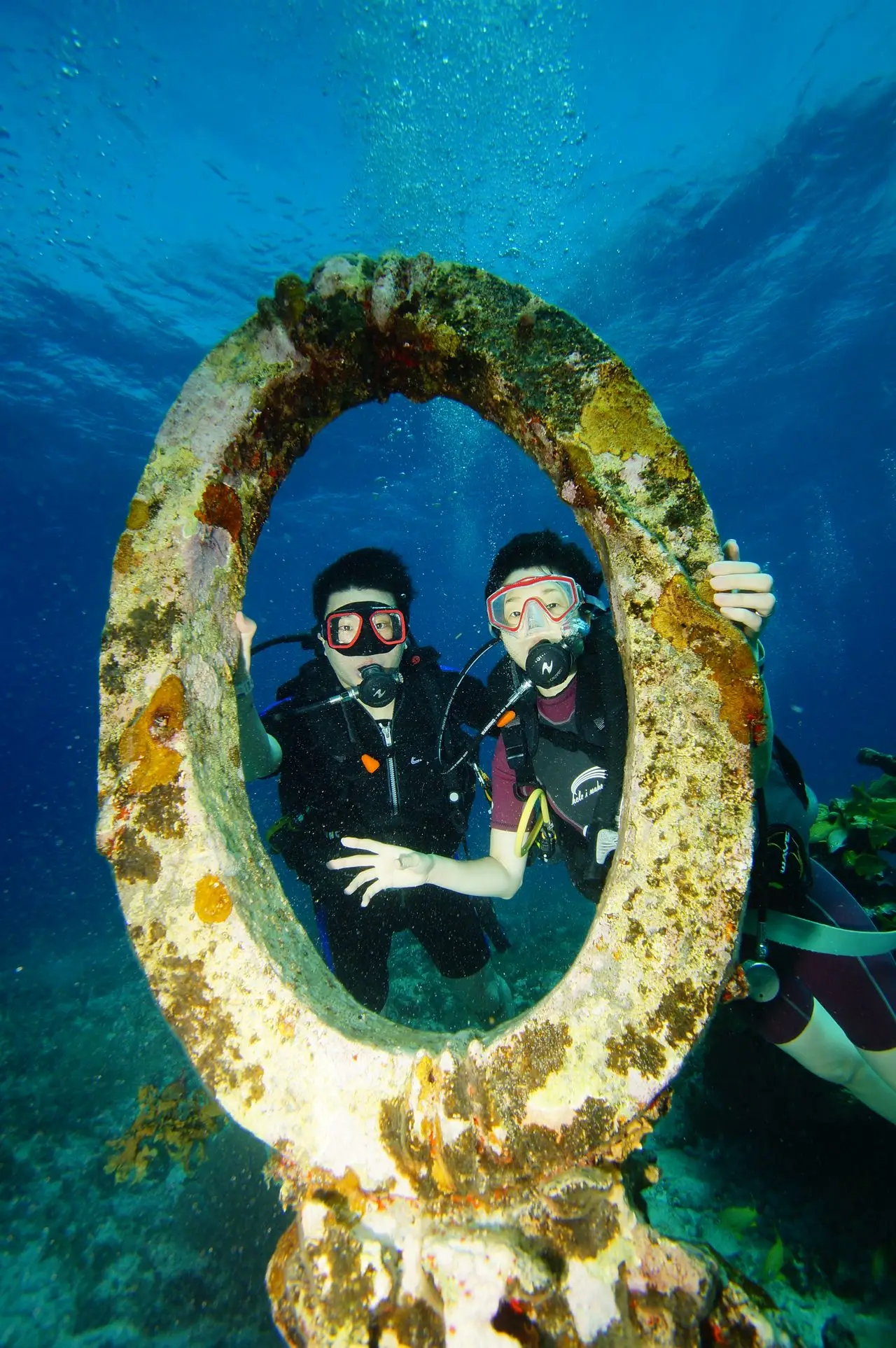
If a morning at sea is what you want instead, the comparison is in the museum: two tanks at MUSA with Cancun Scuba Center are $110 per person. Why that museum has no ticket of its own is explained in MUSA: there is no ticket, you pay the dive centre.
Who needs a certificate
With a tank — yes, and the card is checked
Only Bubbles states it as a condition of the activity: at least an Open Water Diver certificate or equivalent, and a valid scuba certification card to present. Anyone with asthma, heart or brain conditions, high blood pressure, lung lesions, diabetes, epilepsy or surgery within the past year needs a medical clearance signed by a specialist. After diving, wait 18 to 24 hours before flying.
With a mask — no certificate at all
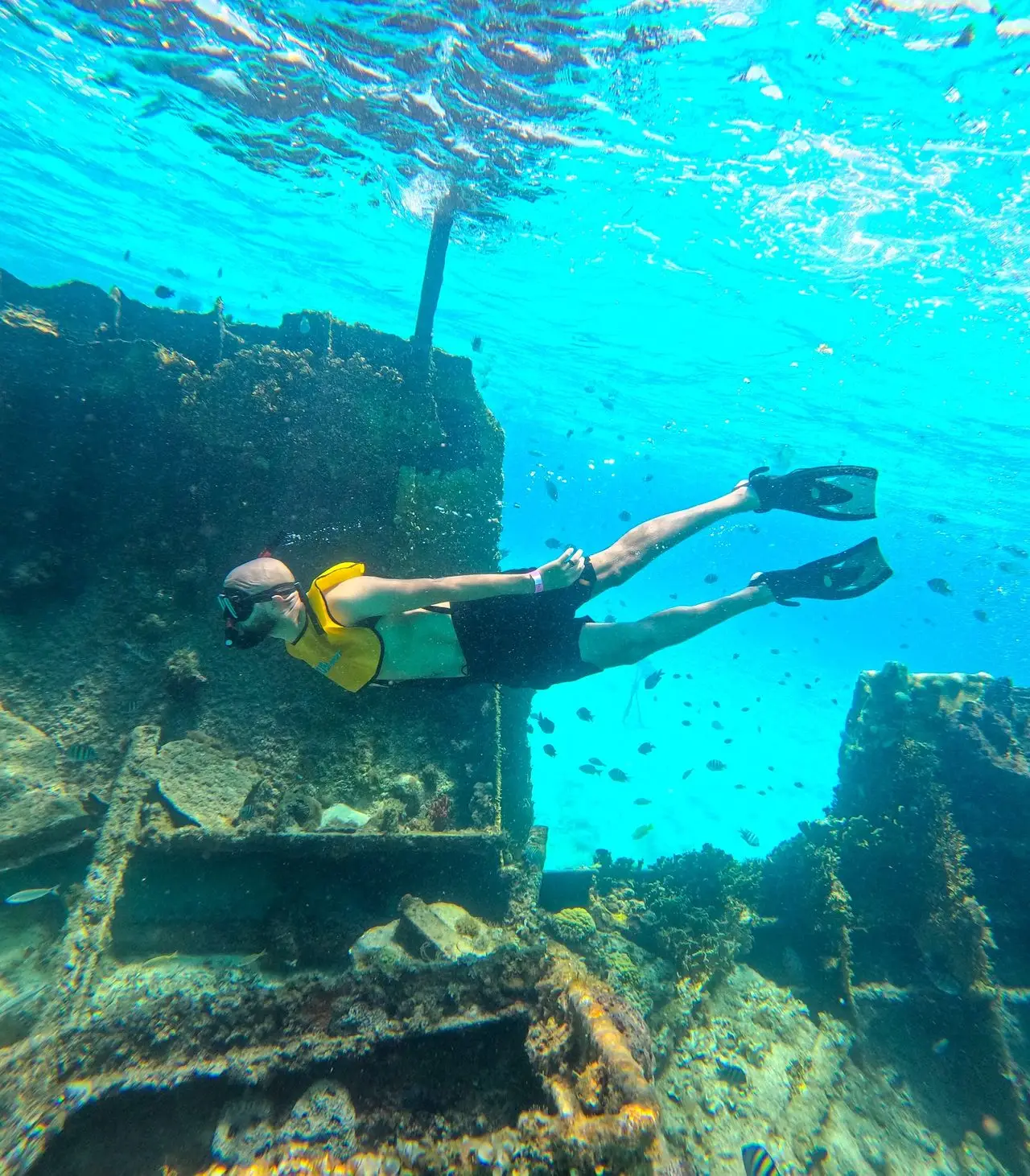
The cenotes stay open to everyone else through snorkelling. Only Bubbles runs Dos Ojos with a visit to a nearby bat cave for $99 per person, suitable for all levels, with hotel transport both ways, entrance fees, snorkel gear, wetsuit, torch and lunch inside the price. Cancun Scuba Center lists its own cenote snorkelling at $135.
Certified, but not for every cenote
The level line in the table is not decoration. Dos Ojos is marked intermediate recommended; Dream Gate, The Pit, Angelita and the Kin Ha combinations are marked advanced required. If you have an Open Water card and twenty logged dives, the honest first cenote is Chac Mool or Chikin Ha.
How the day is built
It is a full day and it starts early. Pick-up is between 6:30 and 7:30 depending on the cenote, and the return to Cancún falls between 3:00 and 4:30 in the afternoon. Guests staying in Playa Mujeres pay $30 extra for the pick-up.
Inside the price: return hotel transport, two tanks — either both in one cenote or one in each of two — the cenote entrance fees, equipment and wetsuit if you do not bring your own, a torch, tanks and weights, drinking water and lunch. Outside it: photographs and dive computer rental.
Cancellation is generous up to a point and then stops. A full refund applies up to 72 hours before the activity, half between 24 and 72 hours, and nothing inside 24 hours, with no reschedule available in that last day. Weather beyond the operator's control means a reschedule or a full refund.
What fresh water changes
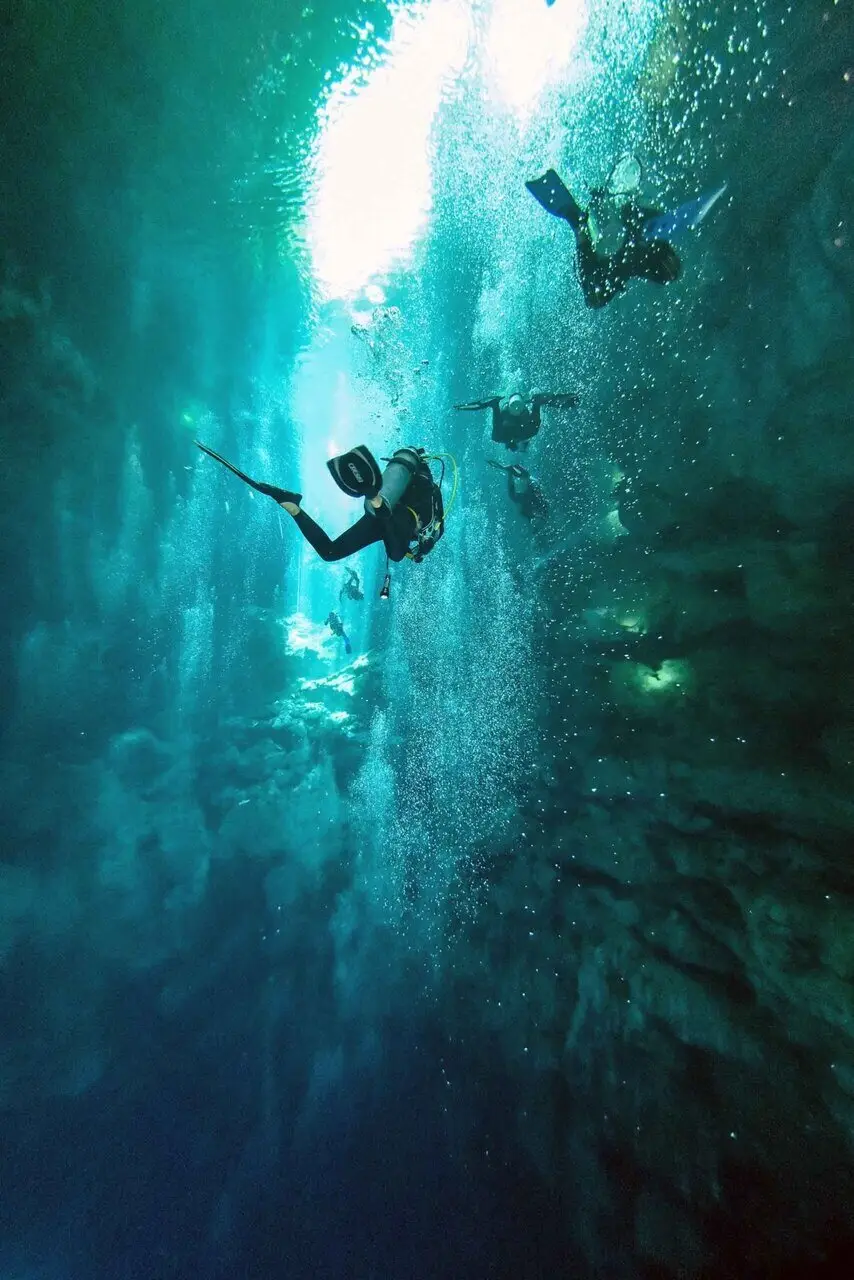
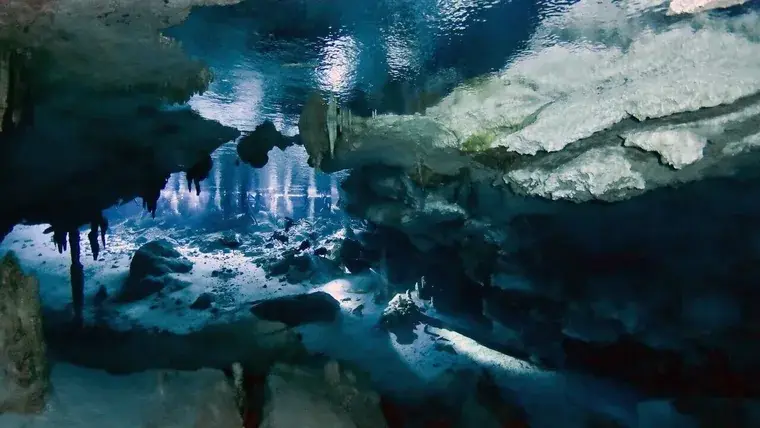
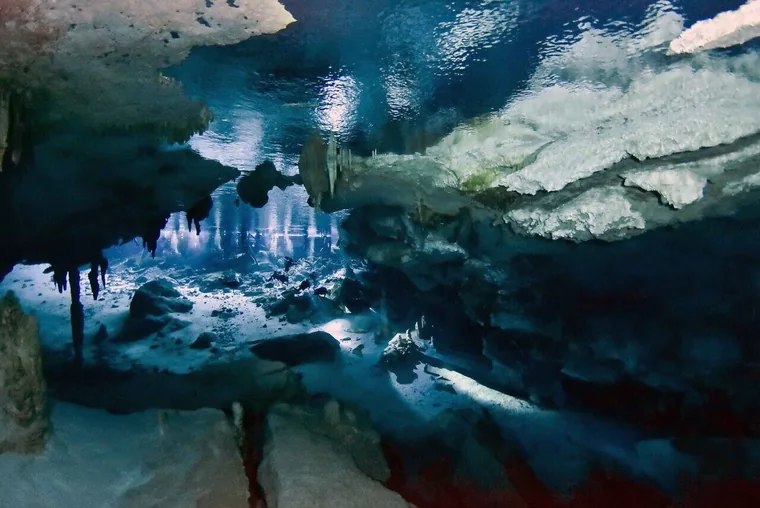
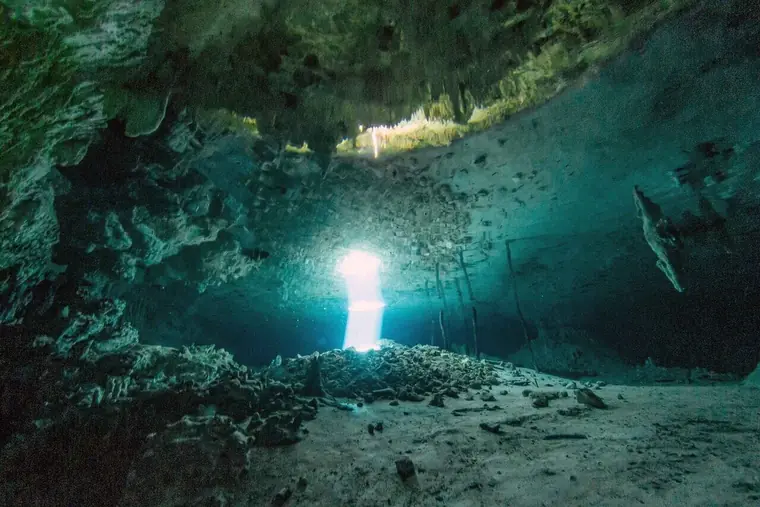
A cenote is a limestone sinkhole: the bedrock collapsed and exposed the groundwater beneath it. Rainwater filters slowly through the stone, so the water arrives free of suspended particles — the clarity people photograph is a side effect of geology, not of season.
What you look at is rock, not coral. Stalactites, stalagmites and the columns where they meet, and shafts of sunlight falling through the cavern openings. Two effects belong to cenotes alone: a halocline, where fresh water meets salt and the view shimmers and blurs, and a hydrogen sulphide cloud that hangs underwater like mist.
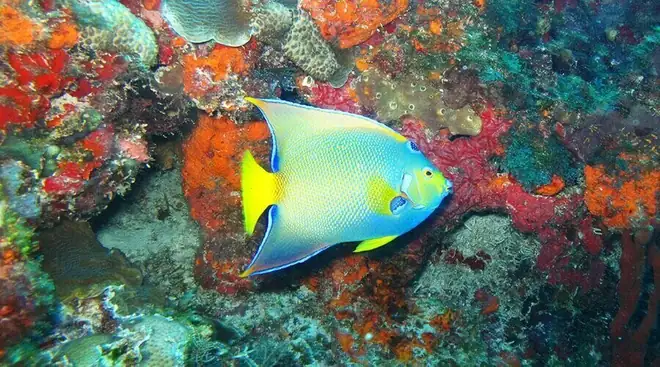
And what you will not get is the reef. No shoals, no sponges, no turtles — the marine life that fills a Cancún dive is simply absent here. That is why the two are not a cheap and an expensive version of the same outing, and why divers who have a few days usually do one of each.
Questions people ask before booking
Can a beginner dive a cenote?
Not without a certificate. Cenote diving is offered only to certified divers, and the card is checked. A beginner who wants to see one the same week goes snorkelling at Dos Ojos for $99, or does a Discover Scuba day in the sea first.
Is the cheapest cenote the worst one?
No — it is the most open one. Chac Mool and Chikin Ha are $219 because the operator lets all certified levels into them, while $259 and $279 buy sites that ask for an advanced card.
Is it worth it if I only have one dive day?
Then decide by what you want to see rather than by price. One day gives you either an inland cavern with light shafts and stone, or a morning on the reef with fish and sculptures — and the cenote will also take the whole day, not the morning.
Where can I compare the rest of the dive trips?
The Cancún dive cards, with their price units and what each one includes, are gathered in the diving section for Cancún.