Cancún and Cozumel sell the sea in eleven category pages, and a day on the water starts at $45 per person and runs to $1,495 for a catamaran to yourself. A place on a shared speedboat through the mangroves is $45. A place on a shared catamaran to Isla Mujeres is $97. Parasailing is $75 a flight, a jet ski in the Hotel Zone is 1,400 MXN per craft, two tanks at the MUSA underwater museum are $110, a cenote day is $219, and a private fishing boat is $359. Cozumel prices its own list partly in pesos: 1,100 MXN for the turtle-sanctuary snorkel day, 3,300 MXN for two supervised dives, 15,880 MXN for a private fishing boat. Below is the map of that market — who leaves from where, which fees are not in the price, when the season closes and what to settle before paying.
- The entry price in each of the eleven categories, and the unit the operator prints it in
- The fees that are not in the price: the marine park, the dock, the permit and the licence
- The Hotel Zone, the two marinas north of downtown, and Cozumel’s two clusters
- Minimum ages: three, five, ten, twelve, sixteen and eighteen
- The season, and the one date that closed on 17 September
Important
In Mexico the fee is the trap, not the price. Of the fourteen operator pages read for this guide, six publish a compulsory payment that sits outside the ticket and is usually taken in cash on the day — $20 per person for the marine park and the dock on the mangrove speedboat, $20 per person for the whale-shark bracelet, 200 MXN per person for the jet-ski permit and the environmental levy, $10 plus $5 per person for the fishing licence and the dock, 220 MXN per person for the Cozumel marine park. Two more say a fee applies and do not print the amount at all. Add the fee before you compare two prices, not after.
What people do on the water in Cancún, and what a day costs
Six categories, and the unit matters more than the figure. Boat days, parasailing and diving are counted per person. A jet ski is counted per craft, whichever of you rides it. Fishing and the sailing catamaran are counted per boat, with the number of guests already inside the rate. That is why $45 and $1,495 in the table below are not neighbouring numbers but money of a different kind.
| Category | From | Unit | Who holds this price |
|---|---|---|---|
| Boat days | $45 | per person, park fee on top | Jungle Tour Adventure, Hotel Zone |
| Parasailing | $75 | per person, a flight of about 10 min | Parasail Cancun, Playa Tortugas |
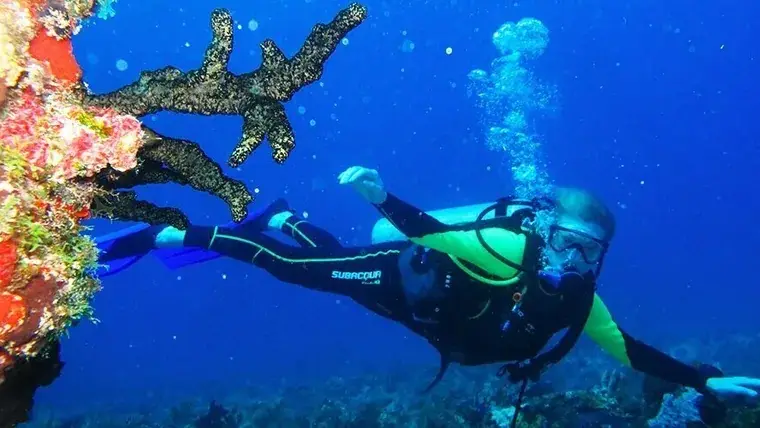
| Diving | $110 | per person, two tanks, certified only | Cancun Scuba Center, MUSA |
| Jet skis | 1,400 MXN | per craft for 30 min, one rider or two | The Jet Ski Brothers, Playa Tortugas |
| Fishing | $359 | per boat for up to 6 guests, 4 hours | Fishing Boats in Cancun, the panga Yemayá |
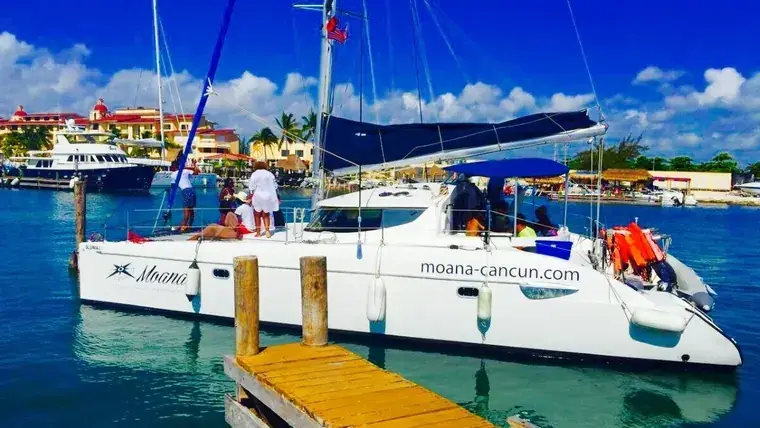
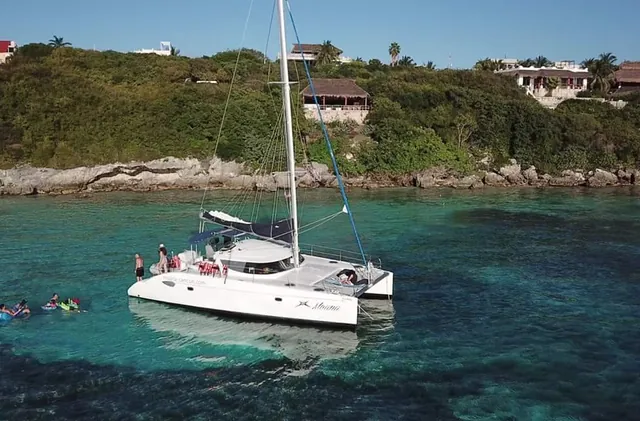
| Sailing charters | $1,495 | per boat for 4 hours, up to 15 guests | Moana Catamaran, Marina Hacienda del Mar |
Isla Mujeres: a seat for $97 or the whole catamaran for $1,495
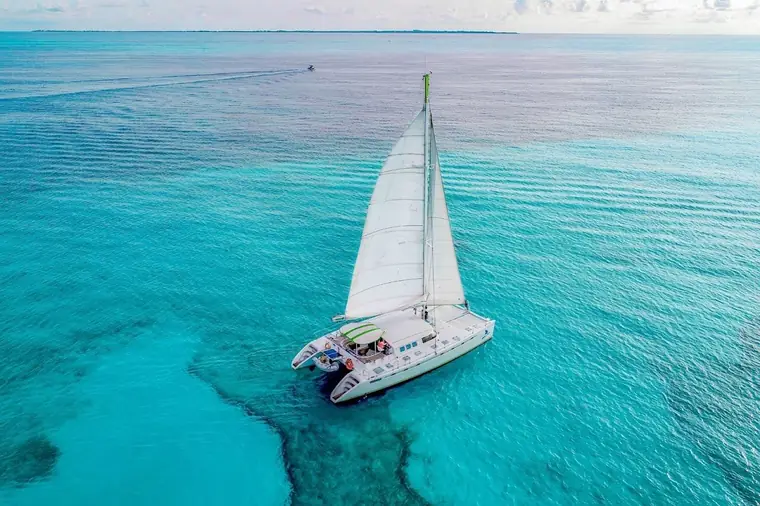
The island opposite the Hotel Zone is the standard sea day here, and it is sold in two completely different units. The shared one: a five-hour catamaran day to Isla Mujeres costs $97 per adult from twelve on the operator’s own page, marked down from $129 there, and that ticket already contains the compulsory federal dock and reef fee of $20 per person, lunch aboard, the open bar, the snorkel gear and the hotel transfer. Departures are 8:30, 11:30 and 14:30 from Marina Punta Norte and 10:00 and 13:00 from Marina Las Perlas; check-in is half an hour earlier, and neither marina has parking.
Two restrictions on that page are easy to miss. Knowing how to swim is compulsory, and snorkelling is allowed neither to children under ten nor to guests over sixty. Cancellation is free up to twenty-four hours before departure; inside that window the operator offers a new date, refunds only against a medical certificate and otherwise keeps 30%. If the Harbor Master closes the port, the refund is full.
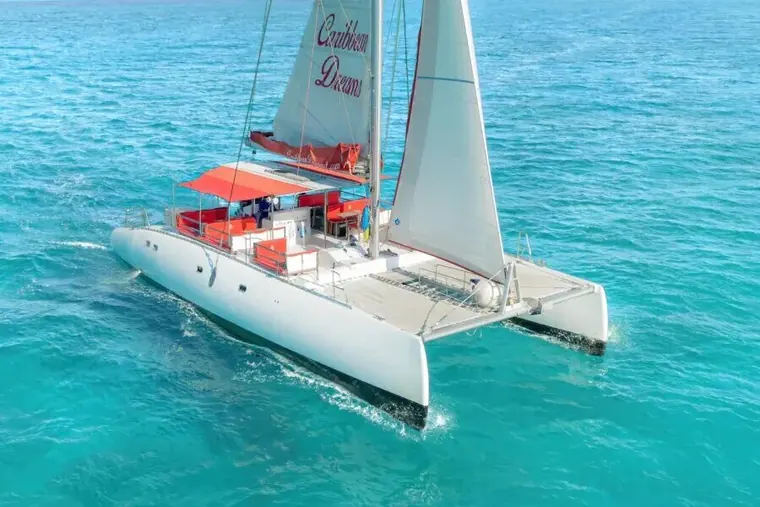
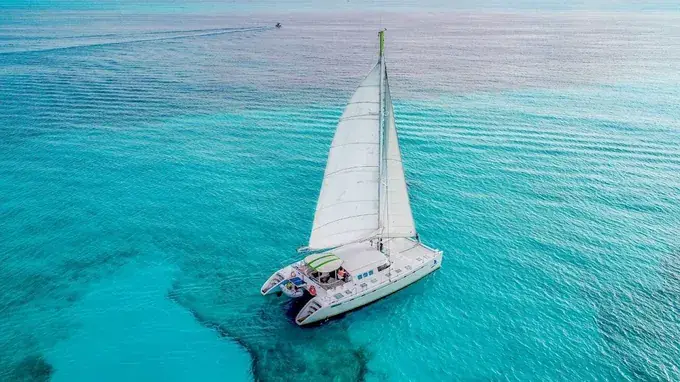
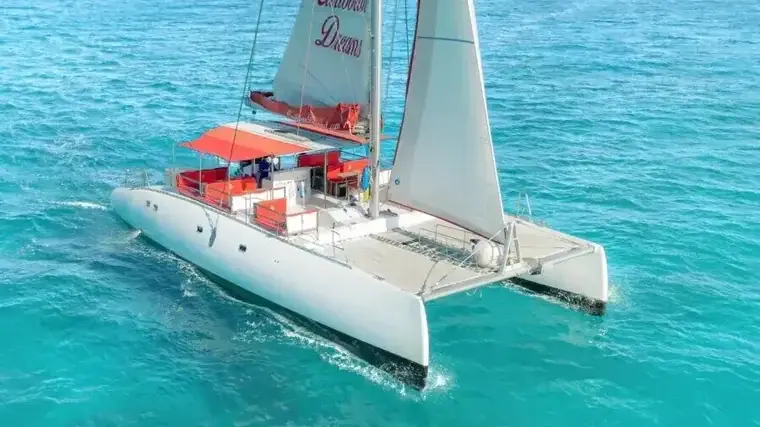
The private one changes the unit. A private sailing catamaran to Isla Mujeres costs $1,495 for the boat for four hours with up to fifteen guests, crew and open bar inside; six hours start at $1,830 and an extra hour at $360. Divided by fifteen that is under a hundred dollars a head, so the private boat is dear only if you bring four people. The dock fee is the catch: the operator states plainly that it is mandatory and not included, and does not print the amount anywhere on the page.
Mangrove channels: the speedboat you drive yourself
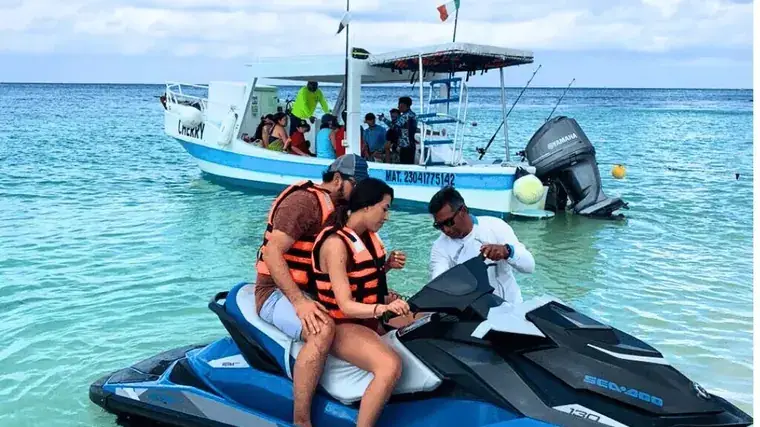
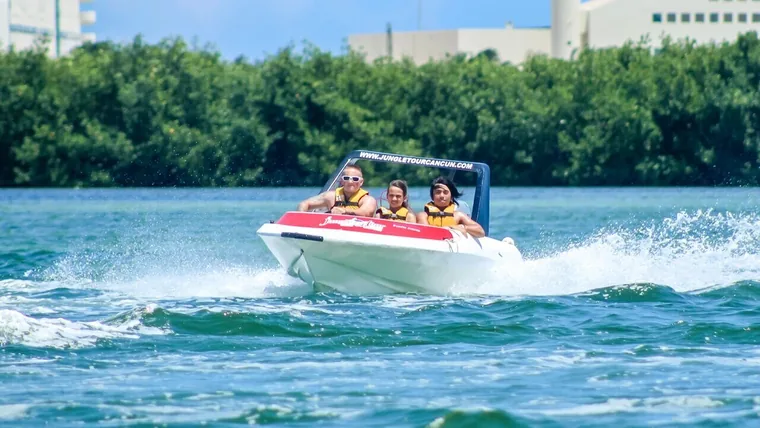
The cheapest way into the water here is not a big boat but a small one you steer. A two-hour speedboat and snorkel run through the Nichupté mangroves is $45 per person on the operator’s page, shown against a crossed-out $69, with two people sharing one boat and a minimum of two to book. A boat to yourself is $80, and if you book at the shared price with nobody to share with, the operator adds $35 at check-in. Forty minutes out through the canals, about forty-five minutes of snorkelling at the Punta Nizuc reef, then you drive back.
The fee is separate and is stated twice on the same page: $20 per person for the marine national park and the dock, payable in cash before boarding, with a reference to Article 198 of the Federal Rights Law. The age rule is printed as plainly: eighteen to drive, three to be aboard at all, and everyone between three and seventeen must have an adult in the same boat. The weight limits are 530 pounds per boat and 260 per person.
Diving out of Cancún: the MUSA museum and the cenotes
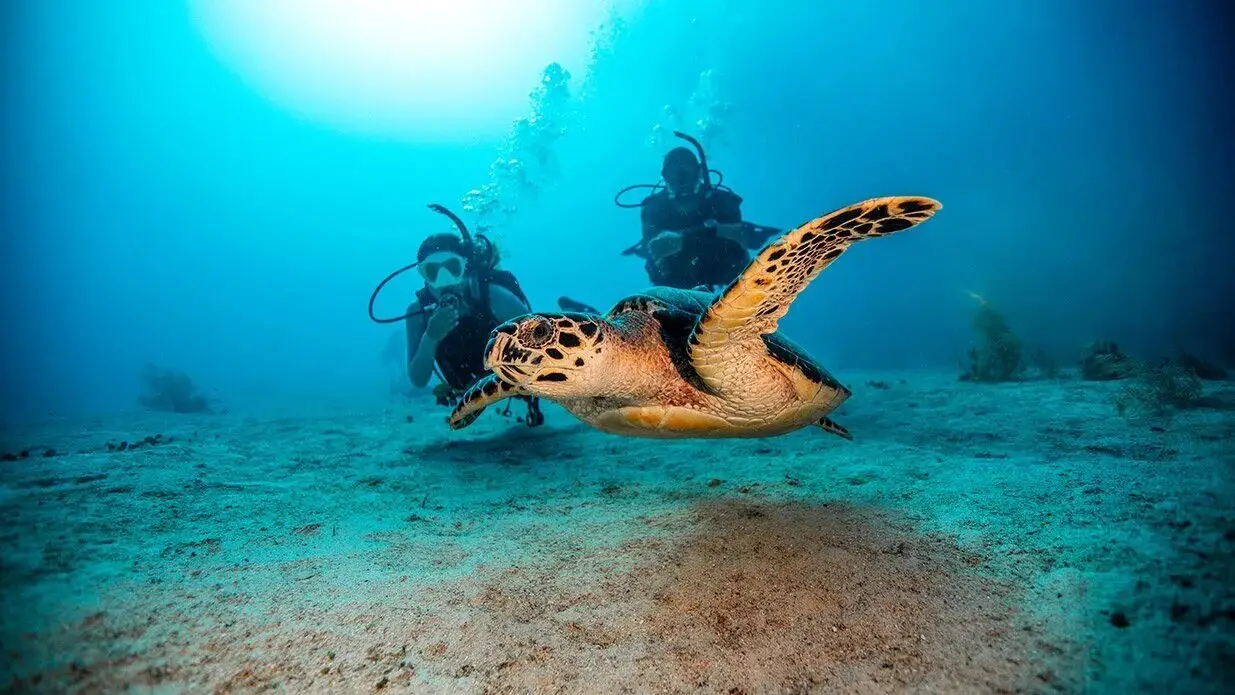
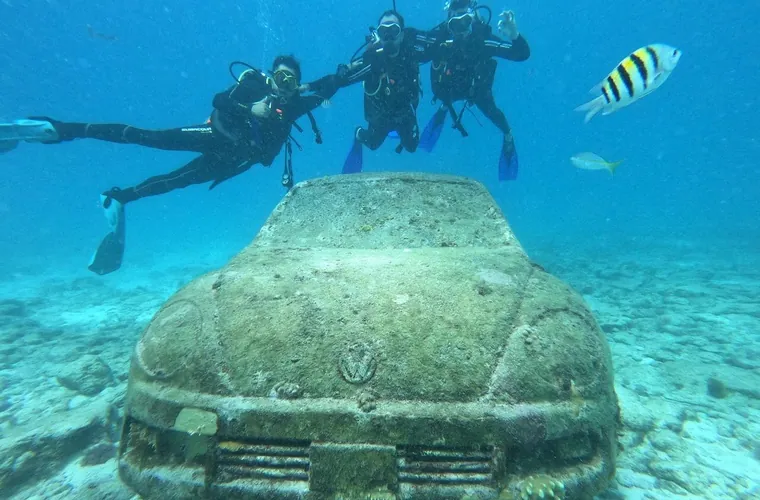
Cancún gives divers two entirely different days, and the price gap between them is more than double. The first is the underwater museum. Two tanks at MUSA cost $110 per person for certified divers on the centre’s own page; the same page prices the non-certified version at $120 with one tank and a lesson included. The sculptures were put there on purpose: the operator explains that the artificial habitat is meant to take the load of some 800,000 visitors a year off the natural reef of the national marine park.
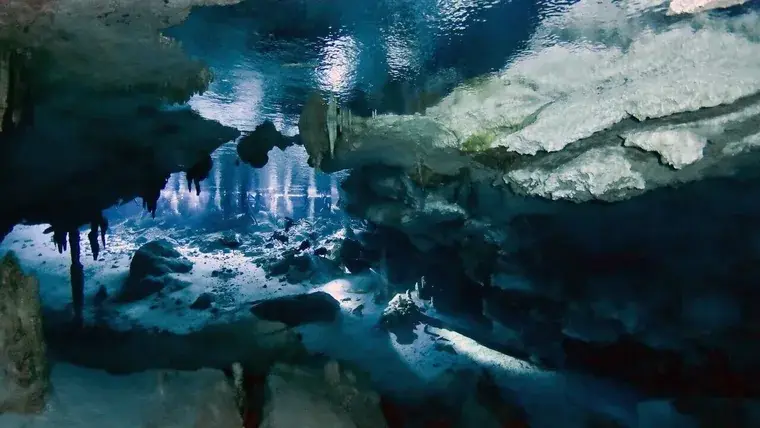
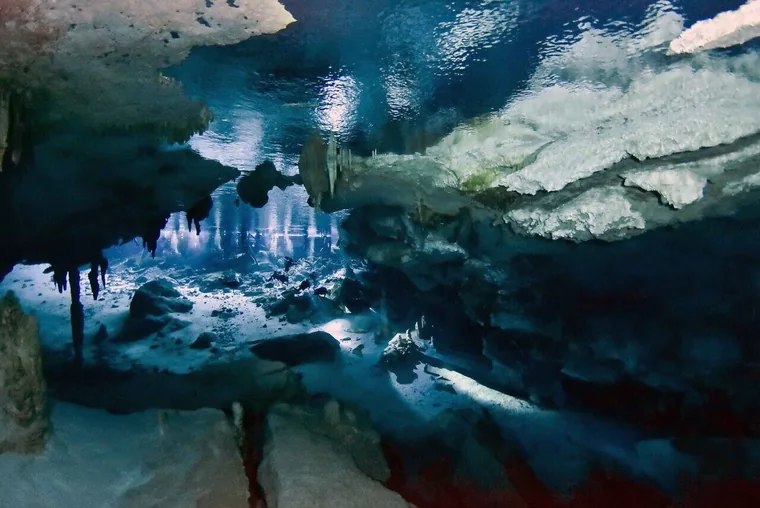
The second day is not in the sea at all. A two-tank cenote dive from Cancún is $219 per person for Chac Mool or Chikin Ha, and that is the bottom of a fixed price list of fourteen combinations that runs up to $279 for Angelita with Carwash. The entrance fees to the cenotes, the gear, the wetsuit, the torch, the water and lunch are inside; hotel pick-up runs between 6:30 and 7:30 and the return between 15:00 and 16:30, and hotels in Playa Mujeres pay $30 more. An Open Water card is required and has to be shown.
Fishing from Cancún: the price is per boat, the licence is per head
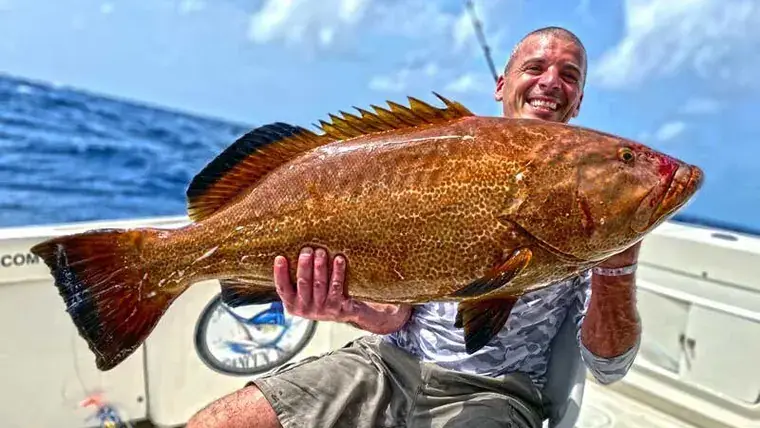
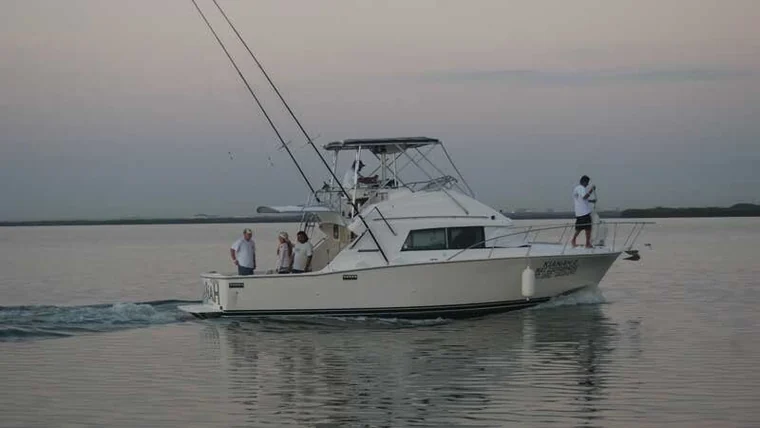
Fishing is where the unit flips most sharply. A private charter on a 35-foot Bertram starts at $780 for the boat — for one guest or for six, four hours of bottom fishing, with the 16% tax already inside and a certified captain and two mates aboard. The operator’s own range for its deep-sea options runs from $380 to $1,320, so $780 is a middle line, not the cheapest. On top, per person and not per boat, come the fishing licence at $10 and the dock fee at $5; tips and the ride to the marina are not included, though transport can be arranged at a flat round-trip rate.
Parasailing at Playa Tortugas: a ticket with no time on it
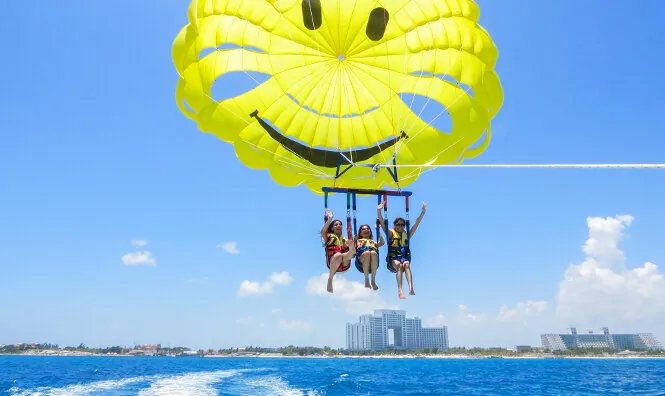
The lightest way into the air over the Hotel Zone. An open-time parasailing ticket at Playa Tortugas is $75 per person for a flight of about ten minutes, with no transfer and no fixed slot: the desk at Marina Adventure Bay works from 10:30 to 17:30 and you come when you like. The same price list gives $75 for the version with round-trip transport and $75 for the flight with the Isla Mujeres ferry included, and $85 from Playa del Carmen — so in Cancún itself the transfer costs nothing extra. The page publishes no fee payable on site.
Jet skis in Cancún: the price is per craft, the fee is per rider
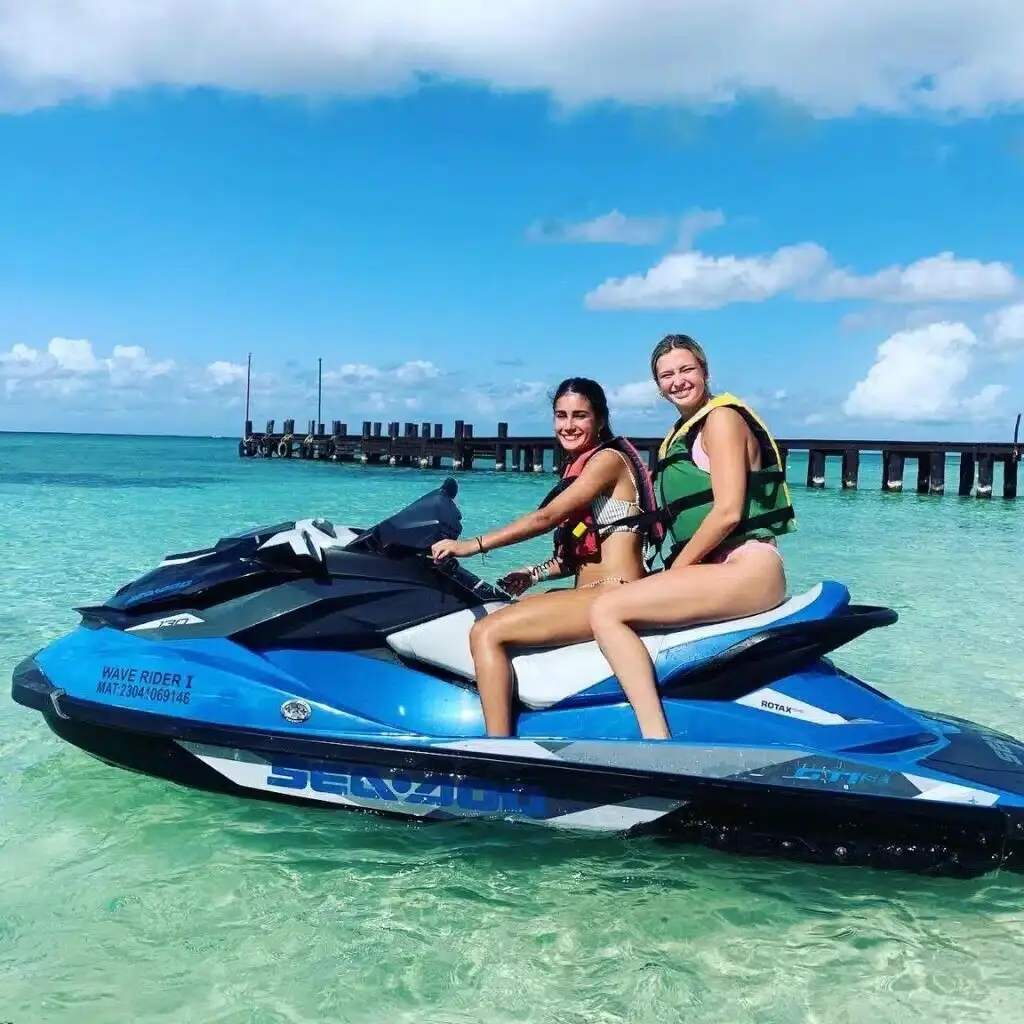
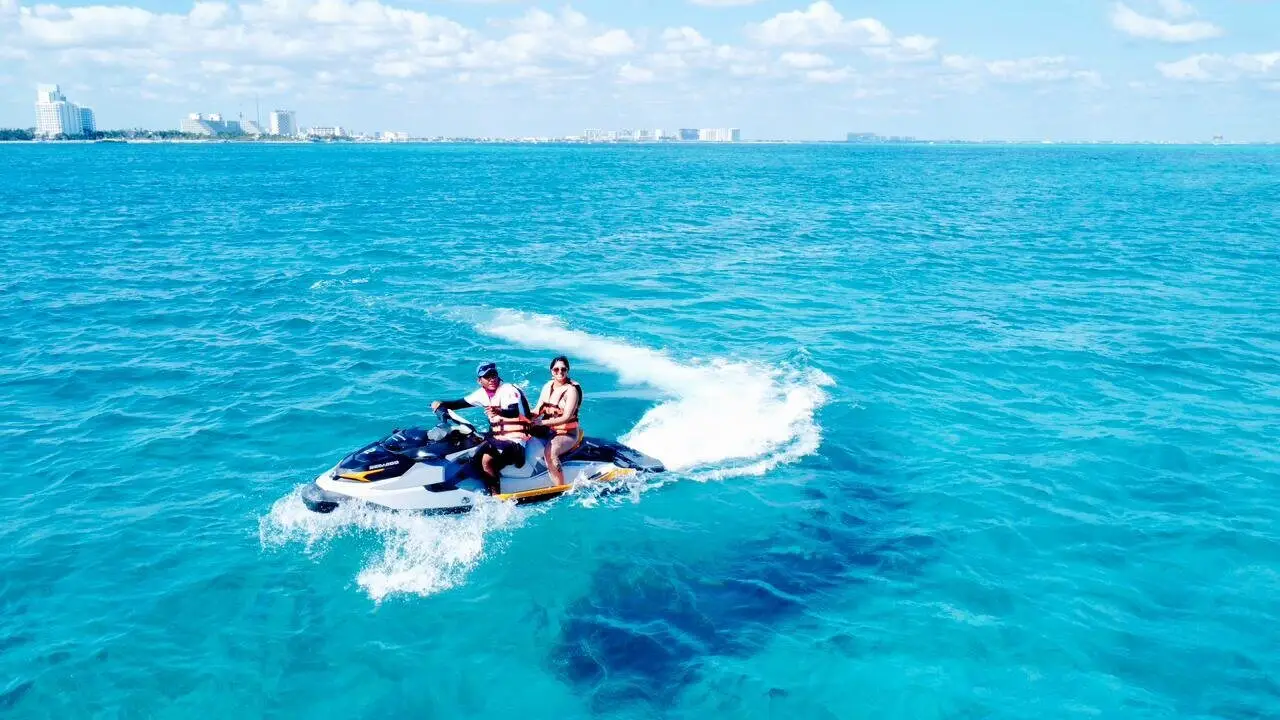
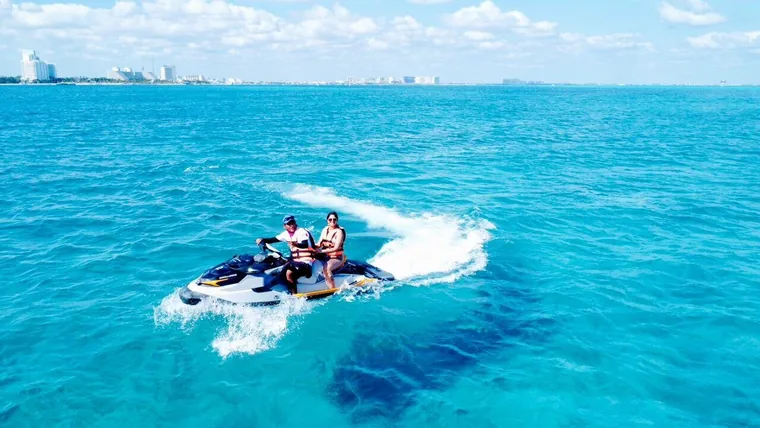
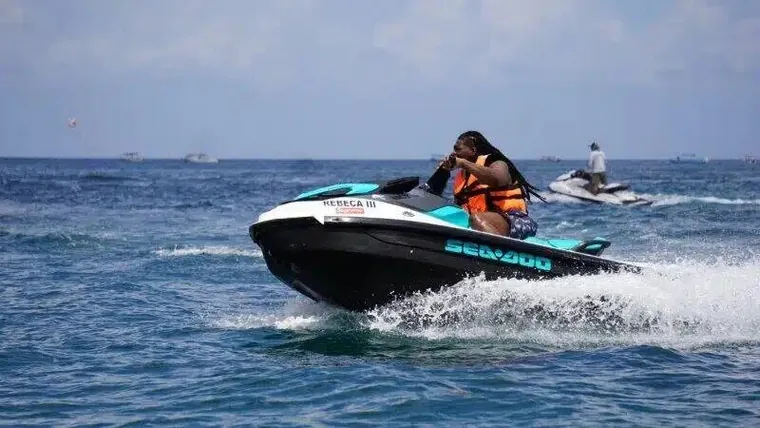
A thirty-minute jet-ski rental at Playa Tortugas is 1,400 MXN per craft — one rider or two sharing at 700 MXN each, and by the operator’s own estimate about seventy dollars. What is added to that is per person, not per craft: the watercraft permit, the licence and the environmental impact fee together come to 200 MXN per head. The driver must be eighteen with valid ID, two riders on one craft are capped at 400 pounds, and the operator is specific that it rides the open-sea side of the Hotel Zone and not the lagoon.
Cozumel: a young node, seven cards and five categories
Cozumel is an hour by ferry from Playa del Carmen and a separate node with its own operators, and it is far thinner than Cancún: seven cards against fifteen, five categories against six. That is worth saying plainly rather than dressing up — the island’s dive market is one of the biggest in the Caribbean, and what is collected here so far is a small slice of it. Two things are different from Cancún. Half the prices are printed in pesos, so comparing them with the mainland means converting. And the cruise piers, not the hotels, are the starting point: one operator states outright that cruise passengers are 90% of its customers.
| Category | From | Unit | Who holds this price |
|---|---|---|---|
| Diving | $74 | per person for SNUBA without a certificate; two tanks for certified divers from $135, park fee inside | Sand Dollar Sports; ScubaTony, Marina Fonatur |
| Jet skis | $75 | per craft for 30 min, not per rider | Jet Ski Cozumel, San Francisco Beach |
| Parasailing | $75 | per person, a flight of 15 min | Jet Ski Cozumel, San Francisco Beach |
| Boat days | 1,100 MXN | per adult, park fee on top | Cozumel Snorkel Center, Asta Bandera |
| Fishing | 15,880 MXN | per private 4-hour trip, up to 8 guests | Cozumel Snorkel Center, Marina Asipona |
Diving on Cozumel: two price lists, two ways with the park fee
The two dive operators collected here answer the same question differently, and the difference is not the headline figure. A two-tank reef dive on a six-diver boat costs $135 per certified diver, and the marine park fee and the taxes are already inside that figure — the operator says so on the same line. Rental gear is extra at $10 per item per day, and booking five trips or more drops the price to $125 a trip. Six divers per boat is the operator’s own rule, and the reason it runs three small boats instead of one big one.
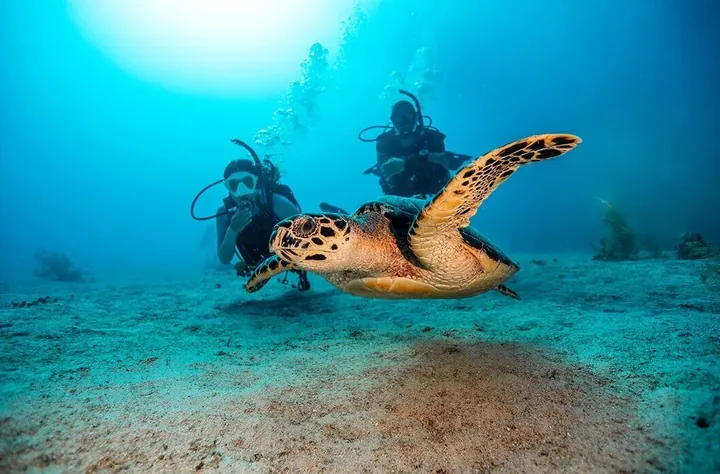
The second operator does the opposite. Discover Scuba on Cozumel — two supervised boat dives costs 3,300 MXN per person with the rental gear inside and no certificate needed, and that same 2026 price list prints $185 beside it, as it does 2,300 MXN and $130 for a certified two-tank morning. What is not inside is the marine park entry: the list says plainly that the prices exclude it, that it is $15 or 220 MXN, and that it is cash only. The operator meets you at 13:40 in the waiting area next to the drugstore at Marina ASIPONA Fonatur and does not collect anyone by road — dive operators on the island are not allowed to, so a taxi is the only way there.
Snorkelling and fishing on Cozumel: both prices in pesos
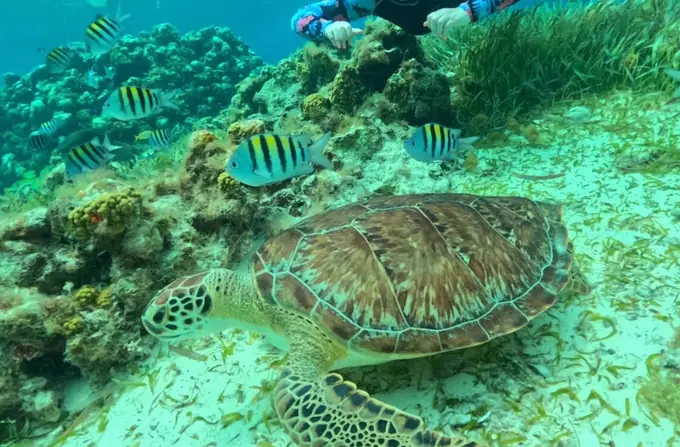
The turtle-sanctuary and El Cielo snorkel day costs 1,100 MXN per adult and 1,000 MXN per child, four hours, with the snorkel gear, fresh snacks and drinks included. Children under four are not taken at all, and the operator is equally direct about what else it does not suit: guests with back, heart or cardiovascular problems, recent surgery or pregnancy. There are no toilets on the boat.
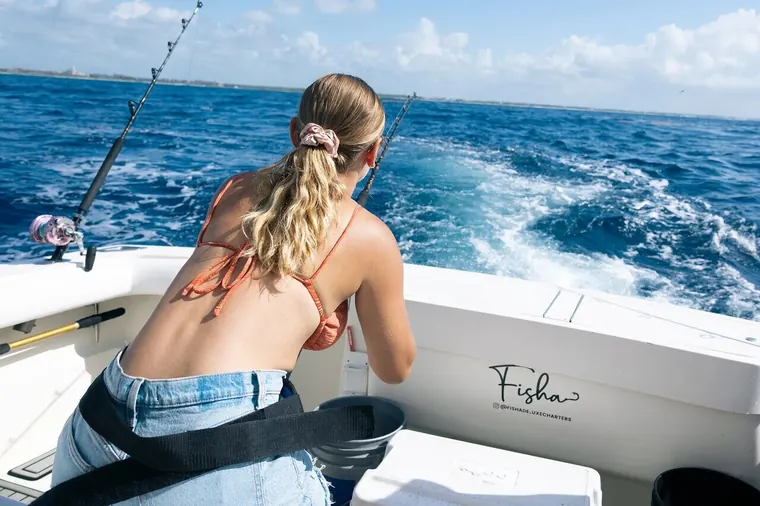
The same operator sells the island’s fishing, and it sells it whole. A private four-hour fishing trip for up to eight costs 15,880 MXN for the trip, not per angler: a 30-foot dual-console Pursuit with no strangers aboard, all the tackle, ice-cold drinks and freshly made Mexican food included, departures at 6:00, 7:00, 8:00 and 14:00 every day. The operator states there are no age restrictions on this one.
One number is missing from both pages, and it matters. The snorkel page says the marine park fee applies and that the Mexican government requires a daily entry payment from every single person who enters the water — and does not print the amount. The dive operator two paragraphs above does print it: $15 or 220 MXN. Whether the two figures are the same fee is not something either page states, so ask for the number in writing when you book.
Jet skis and parasailing on Cozumel: everything off San Francisco Beach
One operator holds both categories, from one check-in tent on the sand. A thirty-minute jet-ski rental at San Francisco Beach is $75 per craft, and the operator says in as many words that this is per jet ski and not per rider; an hour is $135. The riding area is a rectangle of roughly two thousand by one thousand metres straight out from the beach. Booking takes a 20% deposit online with the balance due on arrival in dollars, pesos or by card, and the reservation can be cancelled for any reason right up to the start time.
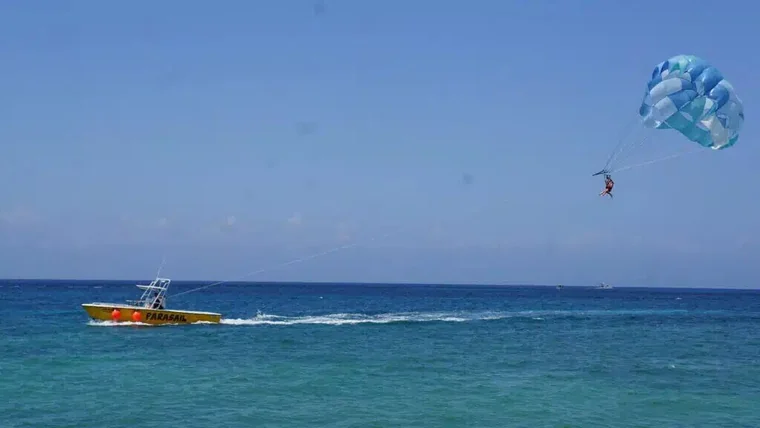
Parasailing from the same beach is $75 per person for a fifteen-minute flight, or $150 for two flying together in tandem — the same price a head either way. The take-off is seated from the boat’s stern platform and the landing is back onto it on your feet, so you can stay completely dry. The operator publishes the comparison itself: a cruise-line excursion is $100, online resellers charge $85, its own desk $75. Minimum age to fly is five, minimum weight 70 pounds, maximum 450.
Two details on this operator’s pages do not agree with each other, and both are small money. The free beach-club day pass that comes with any activity is called a $25 value on the parasailing page and a $20 value on the jet-ski page. And the taxi: the parasailing page gives a rate card of $25 for one to four people and $45 for five to eight from any cruise pier, while the jet-ski page says taxis outside the port typically cost $16 for up to four. Take the higher figure when you budget and the difference will be a pleasant one.
The fees that are not in the price
This is the table to read before the price tables. Of the fourteen operator pages behind this guide, six print a compulsory payment outside the ticket, two say a fee applies without naming the amount, two fold it into the ticket and say so, and the rest publish no extra fee at all. Where cash is stated, it is stated as cash only.
| What it is | How much | How it is paid | Who publishes it |
|---|---|---|---|
| Marine park and dock, mangrove speedboat | $20 per person | cash, before boarding | Jungle Tour Adventure |
| Federal dock and reef fee, Isla Mujeres | $20 per person | already inside the ticket | Cancun Sailing |
| Permit, licence and environmental levy, jet ski | 200 MXN per person | on top of the rental | The Jet Ski Brothers |
| Fishing licence and dock fee | $10 and $5 per person | on top of the charter | Kianah’s SportFishing |
| Dock fee, private catamaran | amount not published | mandatory, not included | Moana Catamaran Cancun |
| Cozumel marine park entry, diving | $15 or 220 MXN per person | cash only | Blue Note Scuba |
| Cozumel marine park fee, diving | inside the $135 | nothing to pay on the day | ScubaTony |
| Cozumel marine park fee, snorkelling | amount not published | from everyone who enters the water | Cozumel Snorkel Center |
| Cenote entrance fees | inside the $219 | nothing to pay on the day | Only Bubbles |
The whale-shark day belongs in this table too, even though its card is off the site for the season: the operator that runs it out of the Punta Sam ferry terminal charges $20 in cash per person at check-in for the deck and national marine park bracelet, on top of the tour price. Same amount, same currency, same moment — the pattern repeats across the whole destination.
Season: what is limited, and by what
None of the fourteen pages read for this guide publishes a month-by-month table, so the honest answer is assembled from what they do say. One operator names the wider calendar: the best stretch for parasailing on Cozumel is January through October, and the rainy season runs June to November with a higher risk of bad weather and of hurricanes. The rest describe weather as a cancellation clause rather than a season — a shared catamaran promises a full refund if the Harbor Master closes the port, a Cancún dive centre says it cancels whenever the port authorities do not let it go out, and a cenote operator reschedules or refunds in full for major storms and high wind.
One date is hard, and it is the one visitors most often come for. The whale-shark season is published by its operator as 1 June to 17 September, and its own booking page gives a slightly wider start — the last days of May. The 2026 season closed on 17 September, so the next departures are next summer, and that is also why the card is not on the site right now. Two versions of the same start date, a fortnight apart, are worth asking about in writing if you are planning around them.
Where the boats leave from: the Hotel Zone, two marinas, two clusters
In Cancún almost everything is strung along one road. Playa Tortugas at Kukulcán km 6.5 holds both the jet skis and the parasailing desk, which works 10:30 to 17:30. The mangrove marina is further out at km 14.6, in the car park of Fred’s House restaurant on the lagoon side, with check-in half an hour before departure. Sunset Marina at km 5.8 is the fishing berth, and transport there is not included though it can be booked at a flat rate. The dive centre sits at Punta Cancún on the lagoon and works by appointment only, because the team is usually out diving. The two exceptions are north of downtown: Marina Punta Norte and Marina Las Perlas for the shared catamaran, and Marina Hacienda del Mar on the Puerto Juárez–Punta Sam road for the private one. Cenote days do not use a marina at all — they pick you up at the hotel between 6:30 and 7:30.
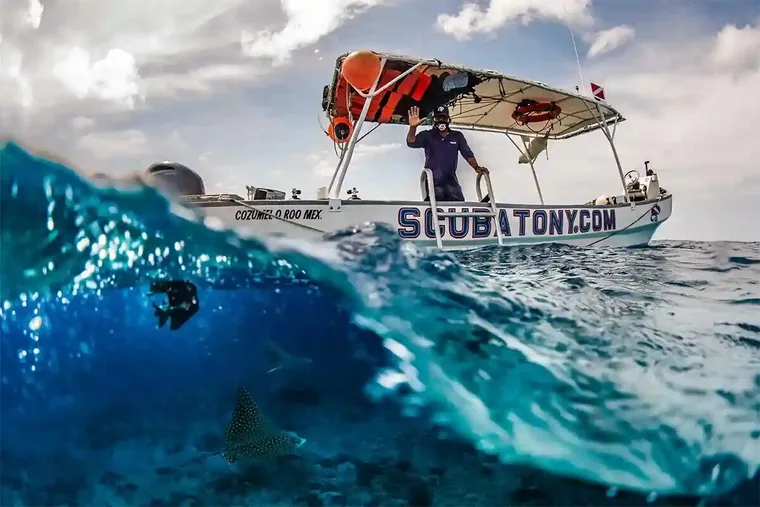
Cozumel splits into two clusters. The dive one is at Marina Fonatur and Marina ASIPONA on Costera Sur around km 6: neither dive operator picks anyone up by road — one says the island does not allow it, the other simply has no walk-in shop and sends written directions after booking, five to fifteen minutes by taxi from any of the cruise piers, and it collects guests of hotels inside the marine park by boat from their own pier. The surface cluster is at San Francisco Beach, Costera Sur km 14.5, next door to Chula’s, Carlos n’ Charlie’s and Paradise Beach: by the operator’s own timings that is twelve minutes by taxi from the International Pier, fourteen from Puerta Maya, sixteen from Punta Langosta and seventeen from downtown. Snorkelling and fishing board in the centre of town, at the Asta Bandera monument by the ferry terminal, a short walk from the Punta Langosta cruise terminal, or at the El Cid La Ceiba pier.
With children and for beginners: the thresholds that are printed
There is no single age here — there are nine different ones, and one page holds three of them at once. Read the threshold for the exact activity you are buying, not for the destination.
| Activity | Threshold | Who prints it |
|---|---|---|
| Mangrove speedboat | aboard from 3, driving from 18; everyone from 3 to 17 with an adult in the same boat | Jungle Tour Adventure |
| Shared catamaran to Isla Mujeres | adult fare from 12; no snorkelling under 10 or over 60; swimming compulsory | Cancun Sailing |
| Jet ski, Cancún | driver from 18 with ID; two riders capped at 400 lb | The Jet Ski Brothers |
| Jet ski, Cozumel | three figures on one page: a minimum age of 10, driving from 16, renting from 18 | Jet Ski Cozumel |
| Parasailing, Cozumel | from 5 years, 70 to 450 lb | Jet Ski Cozumel |
| Discover Scuba, Cozumel | from age ten; no certificate needed, minimum two to sail on the other price list | ScubaTony, Blue Note Scuba |
| MUSA and the cenotes | certified divers only; the museum also sells a non-certified version with a lesson | Cancun Scuba Center, Only Bubbles |
| Snorkelling and fishing, Cozumel | no children under 4 on the snorkel day; no age limit stated for the fishing trip | Cozumel Snorkel Center |
The jet-ski row on Cozumel is worth a second look. The restrictions block on that page gives a minimum age of ten, the FAQ underneath it says the minimum age to drive a jet ski on the island is sixteen, and the next answer says that in Mexico you must be eighteen to rent one. The weight limits on the same page disagree too: 300 pounds per person in one place, 350 pounds for driver and passengers together in another. Three ages and two weights is not a detail to resolve by guessing on the beach — ask before you pay a deposit.
Six things to settle before you pay
First, the unit. Per person, per craft or per boat — three different things, and here all three are in play at once. Second, the fee: which one applies, how much it is, and whether it is cash. Six of these pages take cash on the day, one of them cash only. Third, the deposit: the Cozumel surface operator takes 20% online with the balance on arrival, in dollars, pesos or by card, which means you need to know which of the three you will actually have. Fourth, the certificate: the museum dive and the cenote dive both require one and both say it will be checked, while the two Cozumel entry-level dives require none. Fifth, the cancellation window, because the four printed here are four different windows — twenty-four hours, forty-eight hours, seventy-two hours and any time up to the start. Sixth, the transfer: the shared catamaran and the cenote day include it, the fishing charter and the private catamaran do not, and one dive centre only takes bookings by appointment.