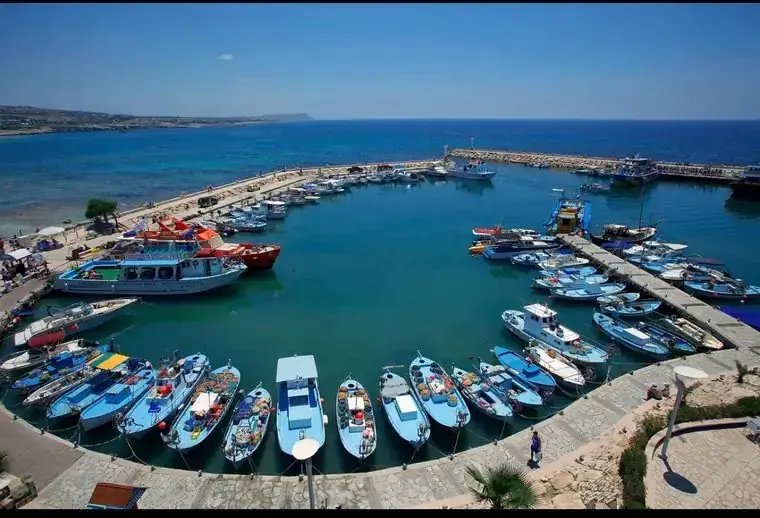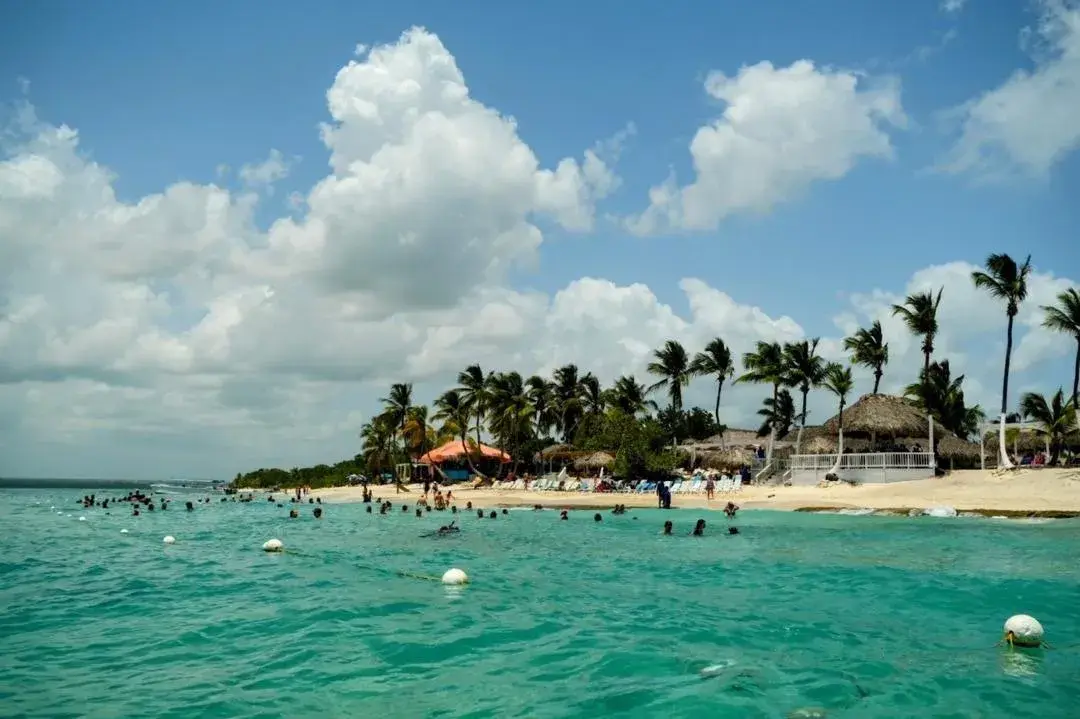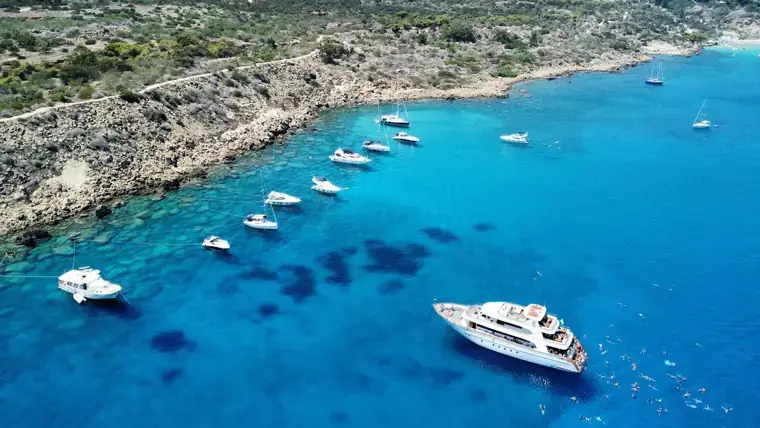
Three sources name three different seasons for Ayia Napa and Protaras, and all three are right, because they are talking about different things. The state treats the water as bathing water from 1 May to 31 October. Lifeguards stand on the beaches from April to October. A dive centre in Protaras opens in mid-April and closes in the first week of November. The distance between those calendars is most of the answer to when you should come.
- The official bathing season, who sets it and what it actually covers
- Air temperature and rainfall for all twelve months at the Paralimni station
- When the sea is warm, and when it is 17 °C
- The months the operators themselves put in writing
- How May differs from October if you came for the sea
- What winter really changes
What follows is the record month by month, and then the four calendars that usually get piled into one.
When is the official bathing season in Cyprus?
The Republic of Cyprus fixes it: 1 May to 31 October. Inside those months the Department of Environment checks bathing water at least once a month for enterococci and Escherichia coli, under harmonising law 57(I)/2008 and Directive 2006/7/EC; the Medical Services take the samples and the State General Laboratory runs the analysis. Bathing areas are redefined before every season — in the 2018 season 112 of them were monitored across the country.
That is a water-quality rule, not a ban on swimming and not an operators' timetable. A second official period sits next to it and gets confused with it constantly: the tourism ministry's beach pages for this coast all say that lifeguards are on duty from April to October. April is inside the lifeguard period and outside the bathing season. Both statements are official, and they are about different things.
What do the monthly numbers say?
The station that matters here is Paralimni: Protaras belongs to that municipality and Ayia Napa is about ten kilometres away, so this is the coast itself and not Cyprus in general. The Cyprus Department of Meteorology supplies the figures to the World Meteorological Organization, averaged over 2002–2011. The set holds four columns only — mean high, mean low, rainfall and days with rain — and a day with rain is counted from 0.2 mm.
| Month | Mean high, °C | Mean low, °C | Rain, mm | Days with rain |
|---|---|---|---|---|
| January | 15.9 | 8.1 | 97.3 | 8.9 |
| February | 16.4 | 8.0 | 58.1 | 7.7 |
| March | 19.1 | 9.5 | 27.0 | 4.8 |
| April | 22.3 | 12.1 | 17.1 | 4.5 |
| May | 26.5 | 16.3 | 7.3 | 1.5 |
| June | 30.4 | 20.7 | 0.1 | 0.2 |
| July | 32.9 | 23.4 | 0.0 | 0.0 |
| August | 33.3 | 23.8 | 0.8 | 0.1 |
| September | 31.0 | 21.1 | 6.0 | 1.5 |
| October | 27.6 | 17.4 | 16.2 | 2.8 |
| November | 22.2 | 12.7 | 32.8 | 4.3 |
| December | 17.9 | 9.6 | 68.4 | 6.9 |
Read across the year and three things stand out. The mean daily high stays above 26 °C from May to October, running from 26.5 at one end to 27.6 at the other. Rain almost disappears from June to September — 0.0 to 6.0 mm in a month, and at most a day and a half with any. And more than half the annual total falls in December, January and February.
Mean high and low, rainfall and days with rain by month: Cyprus Department of Meteorology through the World Meteorological Organization, station Paralimni, averaging period 2002–2011, read on 8 September 2026. That ten-year run is not the 1991–2020 climate normal, and a day with rain is counted from 0.2 mm, a lower threshold than many European summaries use. The set gives no sea temperature and no wind for this station.
How warm is the sea, and how much sun is there?
The state set carries no sea temperature for this coast, so the figures below come from a secondary climatology for Larnaca and are an order of magnitude rather than a measurement of your week. The sea is warmest in July, August and September at 27–28 °C, and coldest in February and March at about 17 °C. By October it is still around 25 °C, and it does not drop below 17 °C at any point in the year.
Sunshine runs the other way round and moves less than people expect: about five and a half to six hours a day in December and January against twelve and a half in June and July, from the same secondary source. Winter here is rain and 15–18 °C in the daytime rather than cold — January at Paralimni averages a high of 15.9 °C with 97.3 mm of rain across nearly nine days.
Which months do the operators name themselves?
Most of them name none. Months are simply not printed on the price and booking pages here, so the honest answer to “is it open in November” is to write to the centre and ask. A few do put it down, and once you line them up next to the two official periods, the picture stops contradicting itself.
| Period | Who states it | What it covers |
|---|---|---|
| 1 May – 31 October | Department of Environment, law 57(I)/2008 | monitoring of bathing water quality |
| April – October | Deputy Ministry of Tourism, beach pages | lifeguards on duty on the beaches |
| mid-April – first week of November | Poseidon Dive Centre, Protaras | its own diving season in Protaras |
| April – October | CYCRUISES, the Santa Napa boat | when its cruises usually run; the 2026 schedule opens on 31 March |
| all year | MUSAN, the underwater museum | diving at that one site, 8–10 m deep |
So the coast has no single opening and closing date. The water rule runs May to October, the lifeguards April to October, and the operators who do publish months run a little wider at both ends — mid-April on one side, the first week of November on the other. The museum's “all year” is an advertising line about one shallow site off Ayia Napa, and it says nothing about boats, jet skis or parasailing.
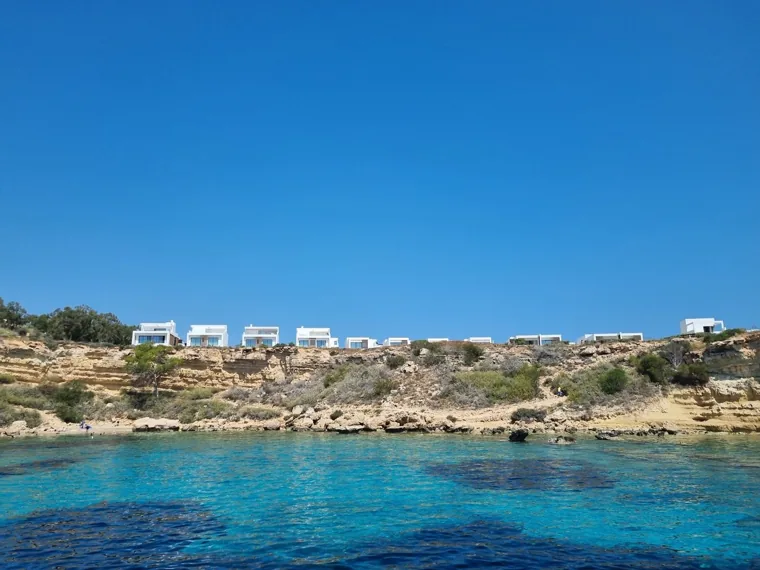
Month by month: what each part of the season gives you
May and June
May opens the bathing season and the record backs it: a mean high of 26.5 °C, 7.3 mm of rain across a day and a half, and about eleven hours of sun. The water is the part that lags — around 20 °C in May against 24 °C in June — so May suits a day out on a boat better than a long swim. June is the first month with essentially no rain at all: 0.1 mm.
July and August
The two hottest months and the two driest: 32.9 and 33.3 °C by day, 0.0 and 0.8 mm of rain, with the sea at 27–28 °C and nights near 23–24 °C. It is also when the boats fill up. One harbour operator labels its day-tour price as a low-season starting figure that rises with the date.
September and October
The part of the year the record likes best. September still gives 31.0 °C by day and 6.0 mm of rain, the sea is at its warmest, and October holds 27.6 °C with the water around 25. Rain comes back slowly: 16.2 mm across under three days in October. Departure times begin to move in autumn, so confirm yours the day before.
November to April
The bathing season is closed and the lifeguards are gone, but no source says the coast shuts. November still reaches 22.2 °C by day; December, January and February bring 68.4, 97.3 and 58.1 mm of rain with highs of 15.9 to 17.9 °C, and the sea is at its coldest in February and March at about 17 °C. The museum site advertises diving all year, and the cruise company's 2026 calendar opens on 31 March.
How does the month change what you can book?
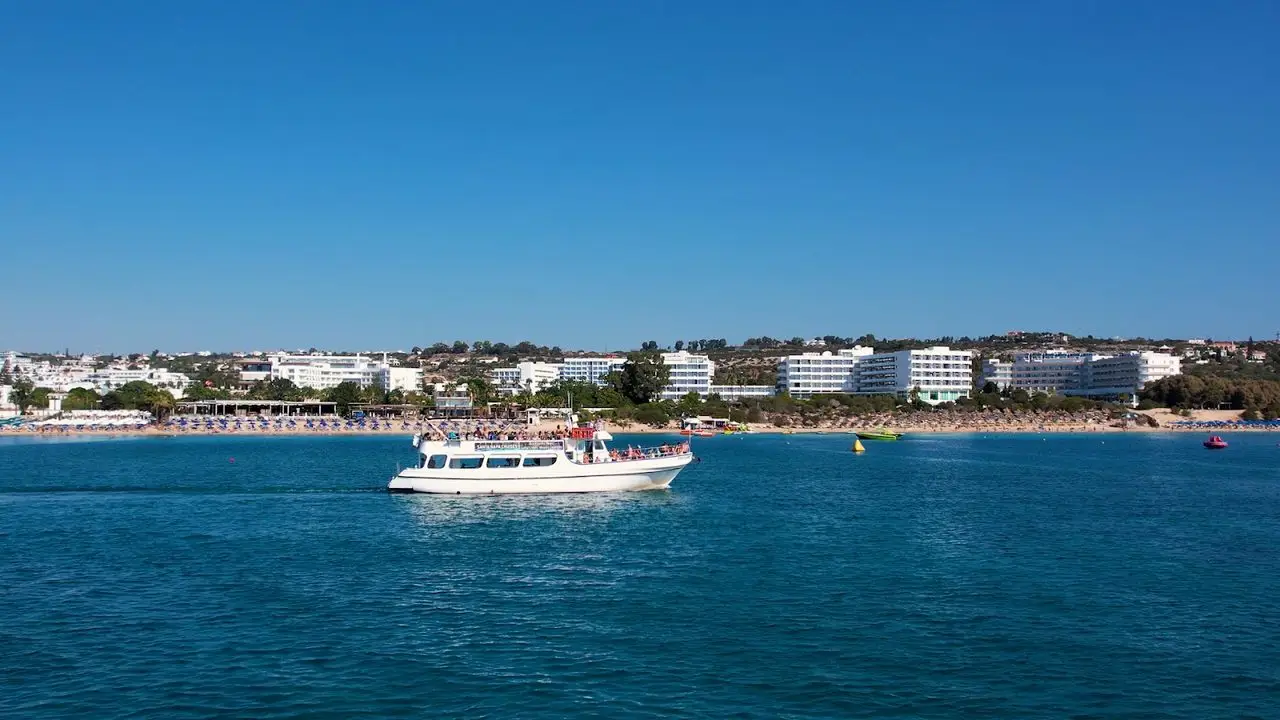
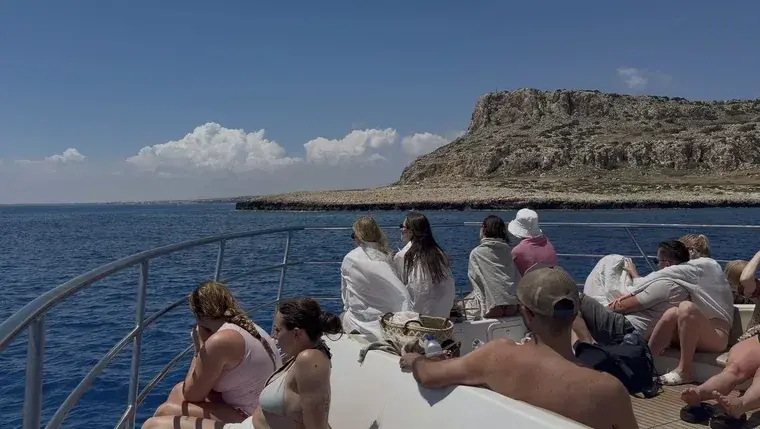
In high summer the harbour day is the default. The Scubacat morning cruise leaves Ayia Napa at 9:00 for two hour-long swim stops with a barbecue cooked on deck, €45 per adult and €25 per child aged 2 to 10. The quieter alternative, the Santa Napa chill and relax cruise, sails Tuesday, Wednesday, Friday and Saturday from 10:30 to 14:30 at €35 per adult. Above the water, parasailing off Sunrise Beach in Protaras is a 10-to-12-minute flight from €60 for one and €80 for two in the harness together — a summer format that answers to the wind rather than to the calendar.
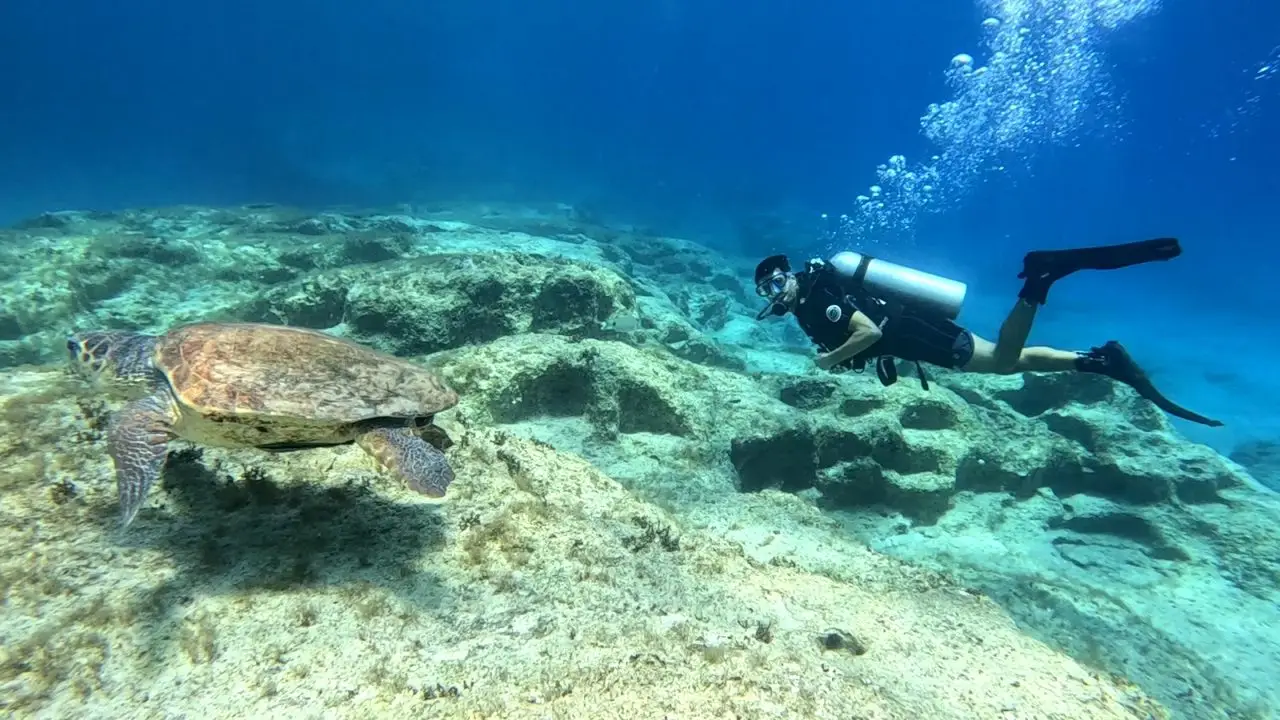
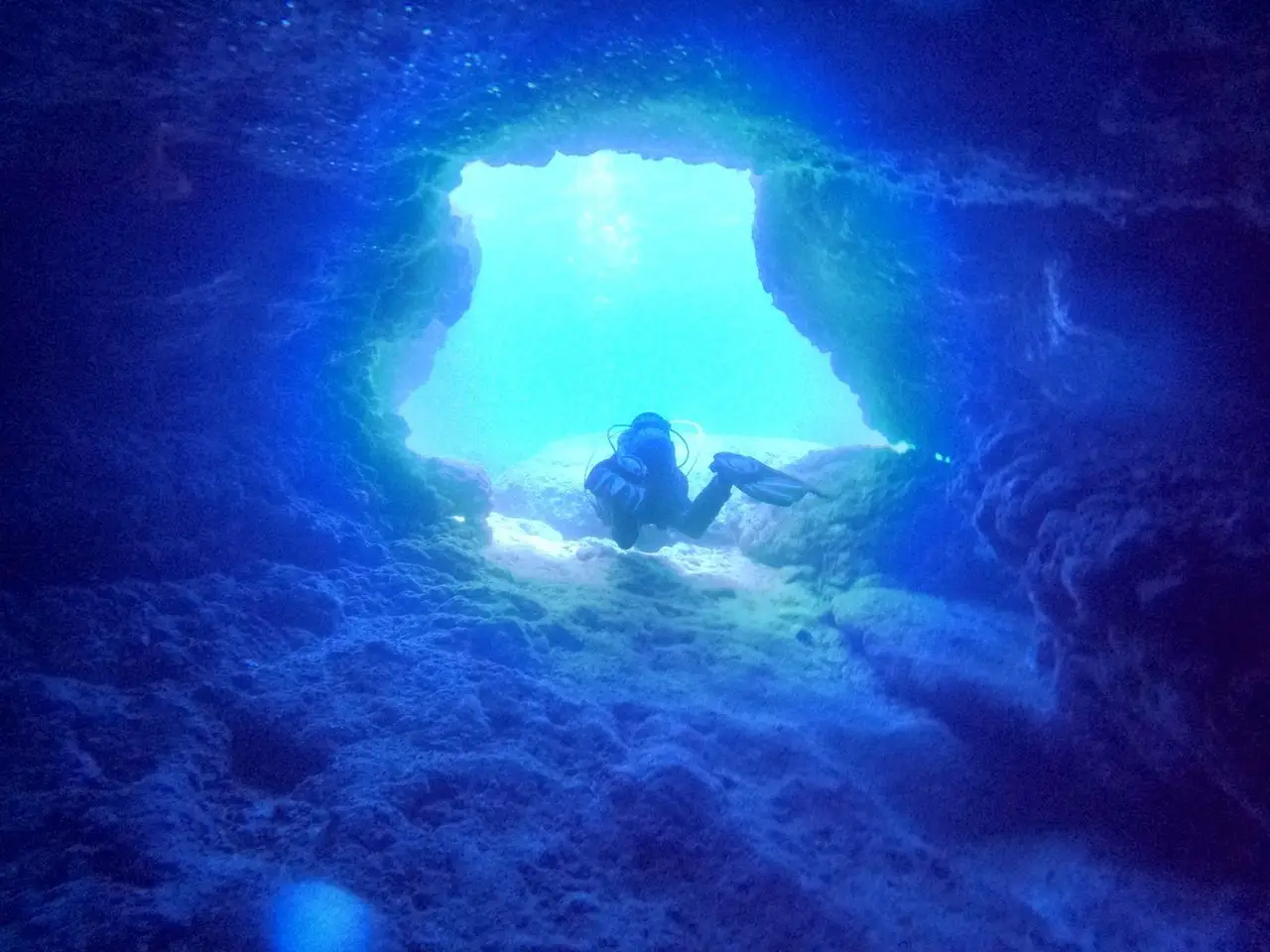
Diving is the part of the calendar that stretches furthest. Two guided shore dives at Cape Greco with the Protaras centre are €105 per person with full gear and guiding, and no boat is involved — this is the centre that publishes its season as mid-April to the first week of November. If nobody in the party is certified, a first dive at Green Bay with the Ayia Napa centre is €110 per person: a programme of up to three hours, from ten years up.
Questions that come up before booking
Until which month can you swim in Cyprus?
The official bathing season ends on 31 October, and the lifeguards stay until the end of October too. October still gives a mean high of 27.6 °C and a sea around 25 °C, so the last month of the season is a working beach month rather than a formality.
Is May worth it?
May opens the bathing season with a mean high of 26.5 °C and 7.3 mm of rain. The catch is the water: around 20 °C, against 24 °C in June. For boat days and diving May works well; for long swims June is the safer bet.
What works in winter?
No source says the coast closes. The underwater museum advertises diving all year at its own site, and the cruise company's 2026 calendar starts on 31 March. Beyond that, months are not published here, so ask the operator directly before you count on a winter date.
Which months have the least rain?
June to September at the Paralimni station: 0.1, 0.0, 0.8 and 6.0 mm a month, with no more than a day and a half of rain in any of them. July is the driest in the set, with no rainfall and no rainy days recorded at all.