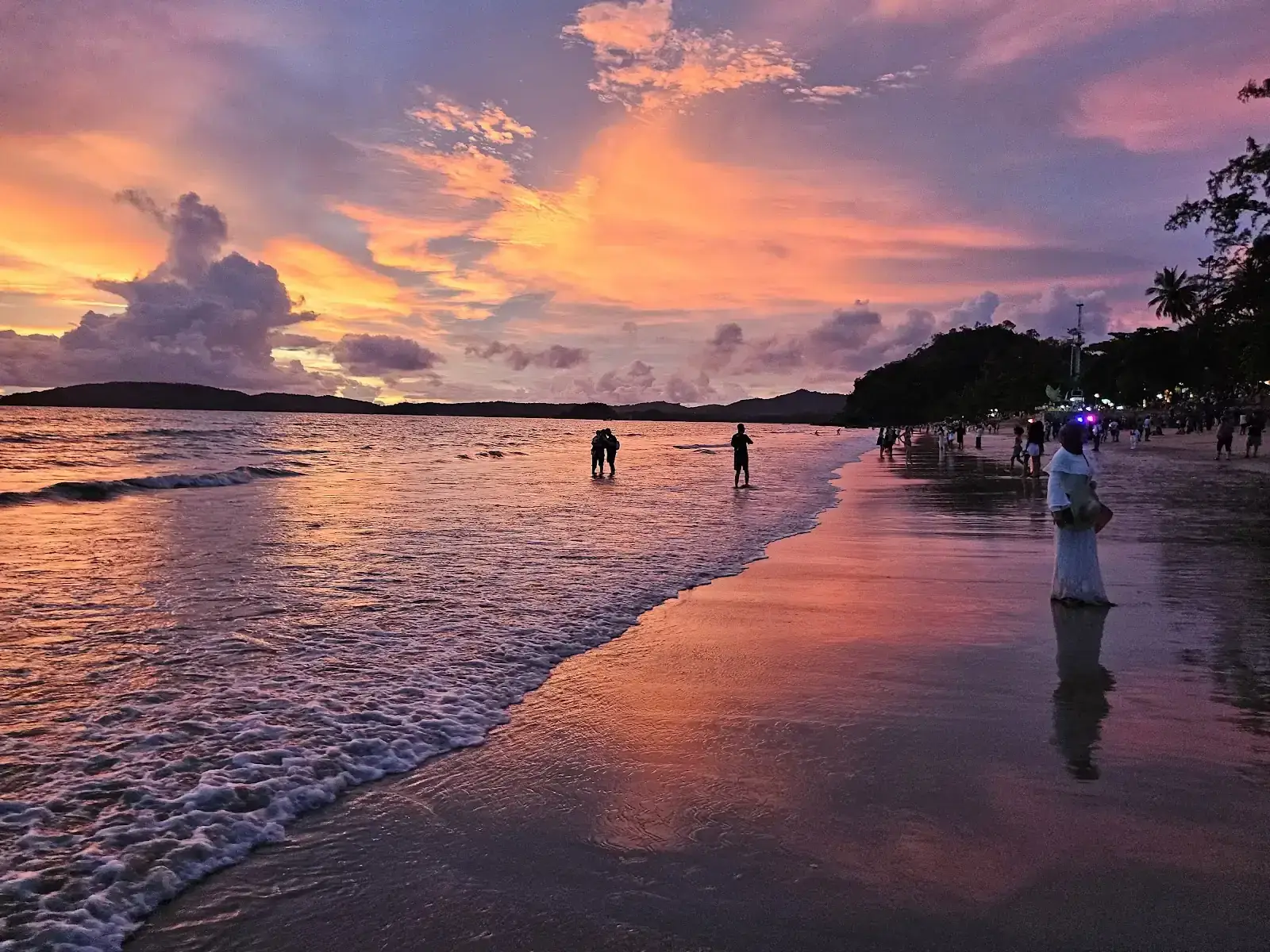
Krabi's year splits in two, and the line is not drawn by the tourist calendar. It is drawn by the southwest monsoon, which turns a coast of five rainy days a month into a coast of twenty-two.
- Which months are dry and which are not
- Rain, rainy days, sunshine and sea temperature for all twelve months
- What the monsoon does to the sea off Ao Nang
- What closes on a fixed date and what closes only by weather
- How August and September change a Phi Phi day
- What is worth asking an operator before booking out of season
What follows is the month-by-month record, the two different kinds of closure, and the places where the season lands on a booking rather than on a mood.
Which month should you pick if the dates are still open?
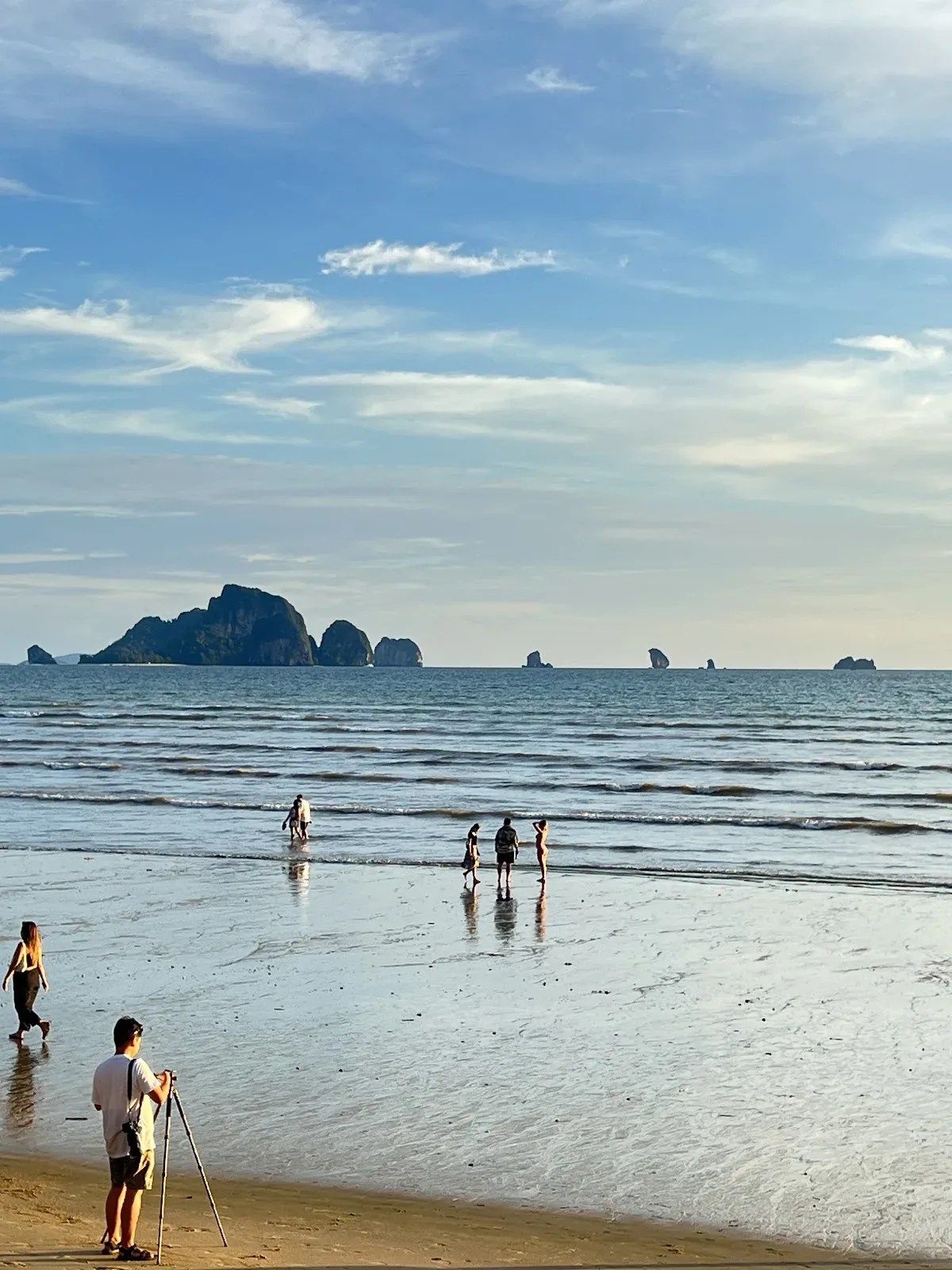
The dry season runs from December to March; the rainy season is the southwest monsoon, from May to October. Inside the dry stretch the reference climatology singles out December to February as the best of it, and calls late December through March or April a good window for a beach holiday.
The two shoulder months behave differently from each other. In March and especially in April, ahead of the monsoon, the number of downpours grows while the sea keeps warming. In November, after the monsoon, rain is still heavy — noticeably so in the first half of the month — even though November is where the high season is usually said to begin.
What do the numbers say, month by month?
One table answers most of the planning questions: how much rain falls, how many days carry it, how much daylight there is to spend and how warm the water is.
| Month | Rain, mm | Rainy days | Sun, h/day | Sea, °C | Air min / max, °C |
|---|---|---|---|---|---|
| January | 30 | 5 | 6.5 | 28.0 | 21.6 / 32.9 |
| February | 45 | 5 | 7.5 | 28.5 | 22.0 / 34.2 |
| March | 100 | 9 | 6.5 | 29.0 | 23.0 / 34.3 |
| April | 145 | 12 | 6.0 | 30.0 | 23.6 / 34.1 |
| May | 170 | 16 | 5.0 | 30.0 | 23.7 / 32.9 |
| June | 195 | 16 | 5.0 | 30.0 | 23.3 / 31.9 |
| July | 200 | 18 | 5.0 | 29.5 | 23.0 / 31.5 |
| August | 265 | 18 | 5.0 | 29.0 | 22.9 / 31.4 |
| September | 275 | 19 | 5.0 | 29.0 | 22.9 / 31.2 |
| October | 325 | 22 | 3.5 | 29.0 | 22.4 / 31.3 |
| November | 180 | 18 | 4.5 | 29.0 | 22.5 / 31.1 |
| December | 70 | 10 | 6.0 | 28.5 | 21.7 / 31.4 |
Read the millimetres as an order of magnitude rather than as a measurement of your week. A second dataset, taken at a different station over a different period, puts October at 338 mm across 22 days and February at 46 mm across 3. The exact figures disagree; the shape of the year does not. In October it rains almost every day, in February on a handful of them.
Rainfall, rainy days, sunshine, sea and air temperature: climatologies published by climatestotravel.com from Thai meteorological data, air temperatures for 1981–2010, read on 5 September 2026. The second dataset is weather-and-climate.com for 1990–2020.
What does the monsoon do to the sea itself?
Krabi faces the Andaman Sea directly and takes the southwest wind head-on, which is why the monsoon is wetter here than on the gulf side of the peninsula. During those months the sea can turn rough and dangerous currents are possible.
Tropical cyclones are a rare visitor. Systems forming nearby tend to move away into the Bay of Bengal, most often between April and June and again between October and December, and typhoons arriving from the east usually pass to the north — although they occasionally reach this far from the middle of October to about 20 December.
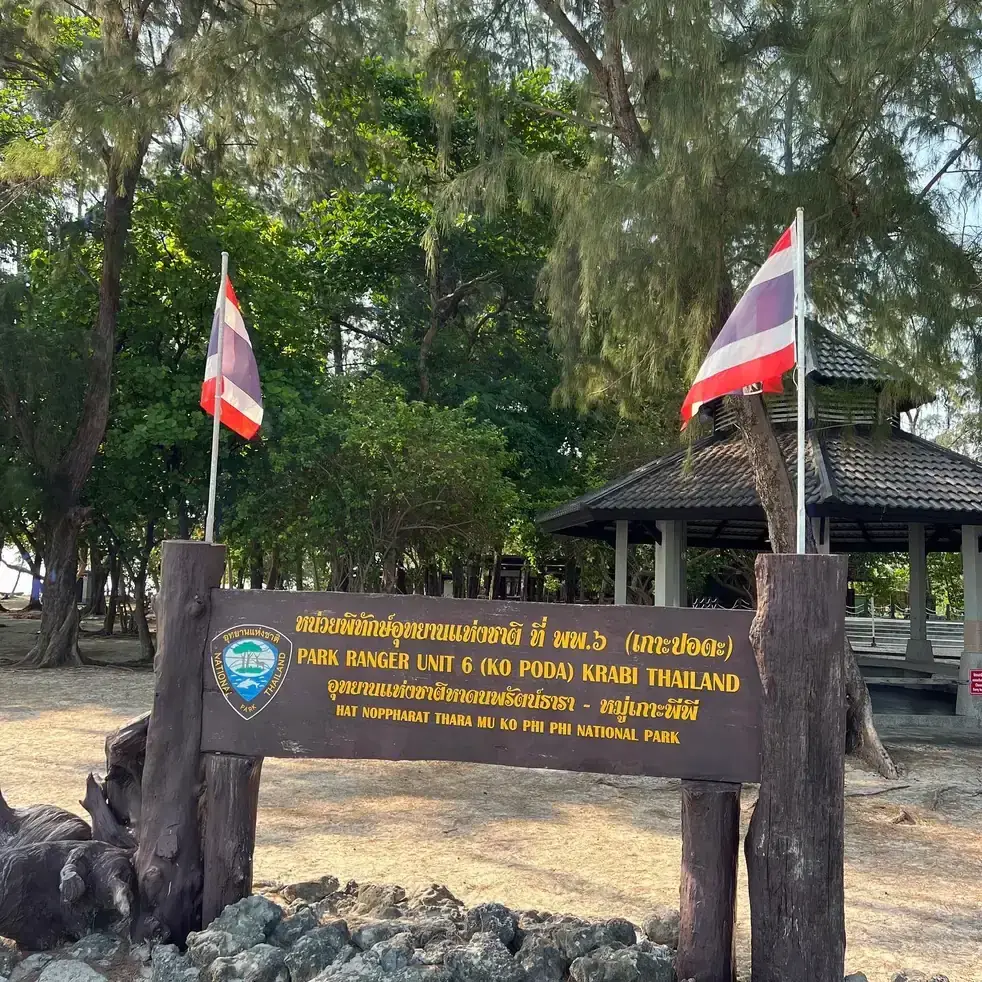
There is also a day-by-day layer that no climate table carries. The Hat Noppharat Thara – Mu Ko Phi Phi national park issues one-off warnings against going out on named dates; one such warning covered 23–26 October 2025. Monthly figures for wind strength and wave height are not what these tables carry, so the forecast decides the day — check it the evening before and again at breakfast.
What closes on a date, and what closes only by weather?
Two different mechanisms are at work here, and mixing them up is what ruins itineraries.
| Place | Closed | On what basis |
|---|---|---|
| Maya Bay, Loh Samah and Loh Ko, Phi Phi Lei | 1 August – 30 September | Announced by the park, for habitat recovery and monsoon safety |
| The smaller islands of Mu Ko Lanta | 16 May – 14 October | Annual seasonal closure of the park's small islands |
| Koh Rok, the twin islands | 1 June – 30 September | Annual seasonal closure |
| Hong, Lading and Pakbia, in Than Bok Khorani | No published closed season | Outings are called off by the weather, not by the calendar |
One caution about the last row: the Department of National Parks sets the closure dates afresh every year, park by park, in its annual order — so confirm the dates above with the park or the operator before a non-refundable booking.
Important
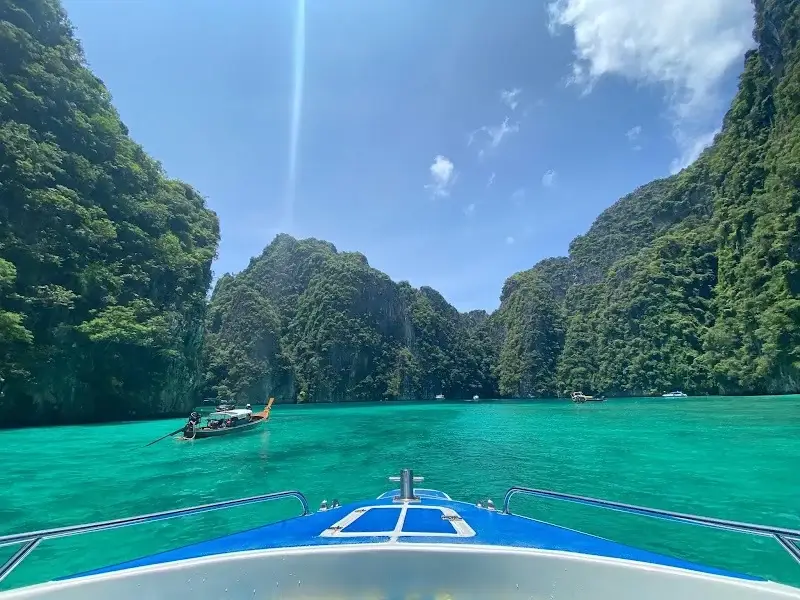
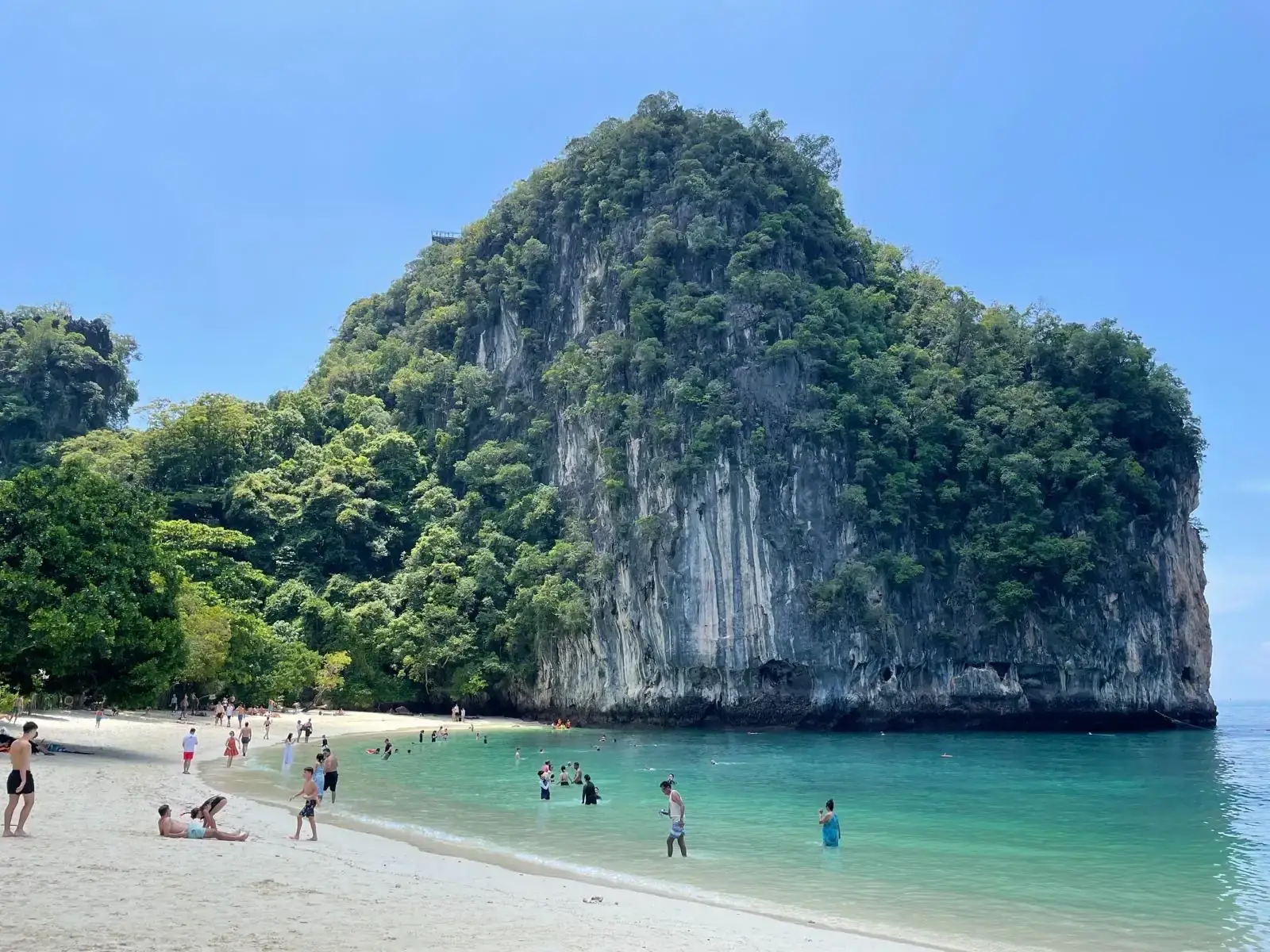
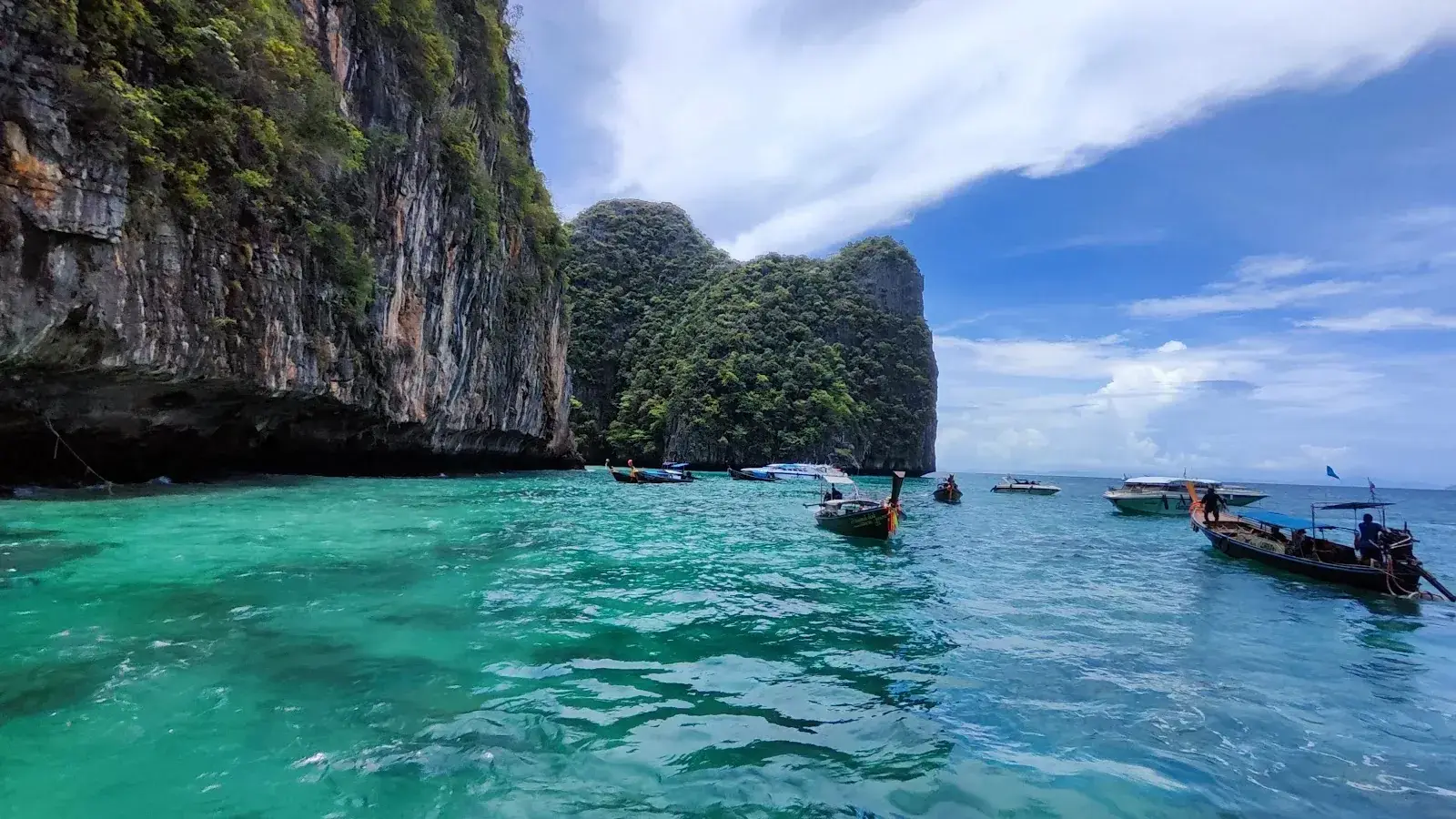
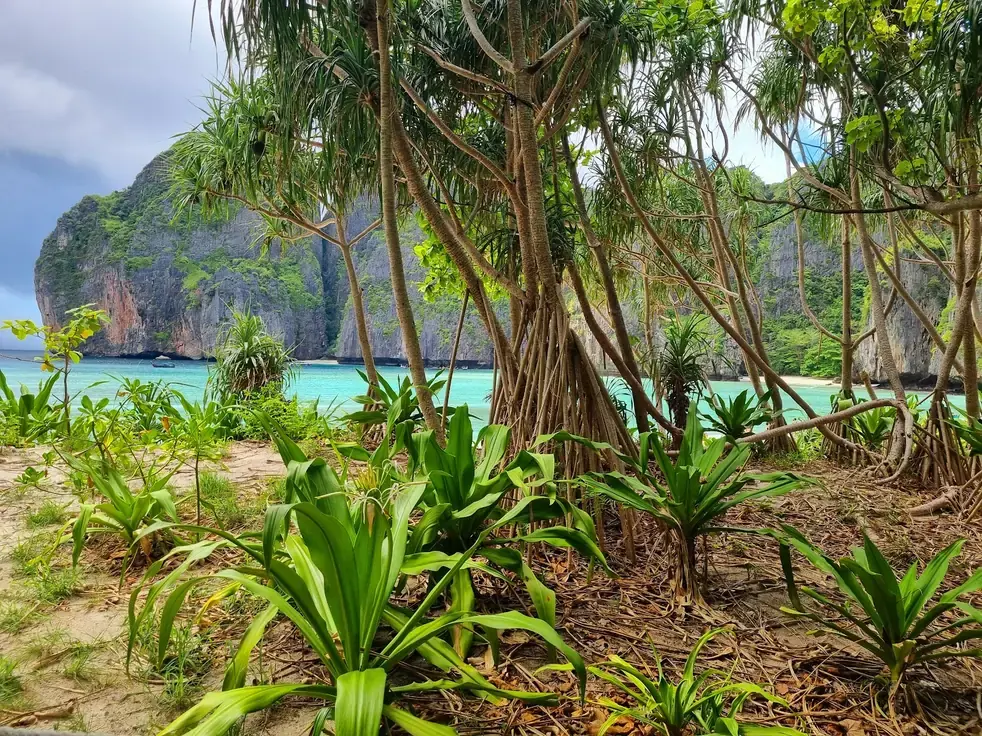
If your dates fall in August or September, Maya Bay is shut — 1 August to 30 September, every year, together with Loh Samah and Loh Ko. The rest of the park keeps working and Phi Phi trips still run, but what an operator puts in place of the bay differs from operator to operator, and that is a question to ask before paying rather than after.
How does the month change what you can actually book?
The Phi Phi day is where it shows first. Wangsai Speedboat's speedboat trip is built around Maya Bay, Pileh Lagoon and Bamboo Island at ฿1,500 (about $42) per adult, so the August–September window changes the programme rather than the price.
Closer to shore the season bites less. The 4 Islands day from Ao Nang run by Barracudas Tour leaves at 09:30 and is back at 15:30, and its four stops sit close enough to the beach to be seen from it — a much shorter exposure to open water than a Phi Phi crossing.
And not all of Krabi is open sea. Koh Tour paddles a freshwater canal at Klong Rud from ฿695 (about $19) per adult and the Bor Thor sea caves, about an hour's drive inland, from ฿1,795. Krabi Sea Cruise's sunset cruise runs on Mondays, Wednesdays and Fridays only, and on a short trip a fixed weekday decides more than the month does.
Questions that come up before booking
Is Krabi worth it in the wet season?
The sea is at its warmest then — 30 °C from April through June — while sunshine drops to about five hours a day and rain falls on 16 to 22 days a month. Sheltered and inland programmes are less exposed to that than a long crossing, but the far islands are exactly where the seasonal closures bite.
What happens if the weather turns on the day of the trip?
The terms differ by operator and belong in the booking conditions rather than in a climate table. What is documented at park level is that going out can be advised against on specific dates, so a trip may be moved or called off on the morning.
When is the water warmest, and when is it coolest?
Warmest at 30 °C in April, May and June; coolest at 28 °C in January. The annual spread is about two degrees, which is why water temperature is rarely the thing that decides a Krabi month.