Krabi's national park fee is ฿200 (about $6) or ฿400 (about $11) per adult for the four islands and Phi Phi and ฿300 (about $8) per adult for the Hong Islands, fees as of September 2026, and it is charged per person, in cash. Children pay half where the trip prints a child rate: ฿100 or ฿200. Trips from the same beach print different figures — the four-islands longtail states ฿200, the Phi Phi speedboats ฿400 — and a day that takes in Hong and the four islands pays two parks, ฿500 per adult and ฿250 per child. Neither figure is a mistake, and the reason is written into two different documents.
- Why the same coast has a ฿200 (about $6) rate and a ฿400 rate
- What each Krabi park charges an adult and a child
- What individual trips state about the fee, side by side
- Who collects the money, when, and why it has to be cash
- What divers pay on top of the entrance
The fee is small next to the price of a boat and large enough to leave a family short of cash on a pier, which is the only reason it deserves an article.
Why is the fee ฿200 on one trip and ฿400 on another?
Because two rates apply to one park. The Department of National Parks scale in force since 7 June 2022 puts Hat Noppharat Thara – Mu Ko Phi Phi in its group 2, at ฿200 (about $6) for a foreign adult and ฿100 for a foreign child. A separate, older announcement of 22 November 2007 sets a special rate for the island zone of that same park — Phi Phi Lei, Koh Mai Phai (Bamboo), Koh Yung, Koh Bida and Koh Poda — at ฿400 and ฿200.
That is the whole puzzle. A trip that lands on those named islands falls under the higher figure; a trip inside the park that does not, falls under the general one. In 2017 the park's advisory board reaffirmed the ฿400 (about $11) and ฿200 rate after Krabi operators asked for it to be cut to ฿200 and ฿100.
| Park or zone | Foreign adult | Foreign child | Where the figure comes from |
|---|---|---|---|
| Hat Noppharat Thara – Mu Ko Phi Phi, general scale | ฿200 (about $6) | ฿100 (about $3) | Group 2 of the Department of National Parks scale, in force since 7 June 2022 |
| The island zone of Mu Ko Phi Phi: Phi Phi Lei, Bamboo, Koh Yung, Koh Bida, Koh Poda | ฿400 (about $11) | ฿200 (about $6) | A separate departmental announcement of 22 November 2007 |
| Mu Ko Lanta | ฿200 (about $6) | ฿100 (about $3) | Group 2 of the same scale |
| Than Bok Khorani — Hong, Lading and Pakbia | ฿300 (about $8) | ฿150 (about $4) | Group 3 of the same scale |
Koh Poda appears by name in the 2007 announcement, and Poda is one of the stops on the classic four-island route — which is why a page quoting ฿200 (about $6) for that route is worth a question rather than a shrug.
What do individual trips say about it?
Below are the figures printed on the trip pages themselves, not an average of them.
| Trip and operator | What the trip page states | How it is handled |
|---|---|---|
| 4 Islands by longtail, Barracudas Tour | ฿200 (about $6) adult, ฿100 child | Outside the price, paid on the day |
| Phi Phi by speedboat, Wangsai Speedboat | ฿400 (about $11) foreign adult, ฿200 child | Outside the price, paid at check-in |
| Early Bird Phi Phi and the 4 Islands, Koh Tour | ฿400 (about $11) adult, ฿200 child | Outside the price, paid on the day |
| Koh Hong plus the 4 Islands, Krabi Ezy Trails | ฿300 (about $8) / ฿150 for Than Bok Khorani and ฿200 / ฿100 for Hat Noppharat Thara – Mu Ko Phi Phi, so ฿500 and ฿250 in one day | Outside the price, two parks in one day |
| Koh Hong in a small group, Krabi Vip Tour | ฿300 (about $8) per person | The operator states it is included in the price |
| Private longtail to the Hong Islands, Thalassa Tour | ฿300 (about $8) per person | The operator states it is included in the price |
The Barracudas four-island day and the Koh Tour Early Bird both call at Poda and state different amounts, so confirm which one your booking will be charged before the boat leaves. The Krabi Ezy Trails day shows what a two-park itinerary costs: Hong sits in Than Bok Khorani, the four islands sit in Hat Noppharat Thara – Mu Ko Phi Phi, and a day that visits both is two separate tickets.
Two of the rows say the fee is included. Krabi operators describe a different standard practice for boat trips — the money goes to the ranger directly and is not built into the tour price — so where a page says «included», it is worth asking what exactly the operator will hand over on the day and whether anything is still due in cash. The Krabi Vip Tour small group and the Thalassa private longtail both state the ฿300 (about $8) Hong ticket inside their price. Some pages also list accident insurance among the inclusions — the Barracudas four-island day is one — and the scope of that cover is a question for the operator.
Who takes the money, and when?
Since June 2015 park fees on Krabi island trips have been paid in cash at the park entrance. The guide collects the money at the start of the day and hands it to the ranger on arrival; group and private boat trips are described as not permitted to build the fee into the tour price, which is how the collection stays transparent. Land-based group tours work the other way round and do include their park fees.
That description comes from the operators rather than from the department, and two independent operators state it in the same words. What follows from it in practice is short.
- The fee is paid in cash, in baht, on arrival, to a ranger
- It is charged per person, not per boat
- On Hong the payment buys a wristband for the day
- One Hong payment covers Hong, Lading and Pakbia on the same day
Why cash, and where do you get it?
The Hong operator is explicit: baht in cash, on the spot, no cards and no QR payment. There are no cash machines or exchange counters on the islands at all; the nearest cash machine to the Ao Nang boats is in Ao Nang itself, about five minutes' walk from most of its hotels. A child rate exists everywhere, but the age bracket is written differently on different operator pages, so that is a question for the booking rather than a number to assume.
Important
Draw the baht before you leave the mainland, counted per adult and per child separately. On a two-park day such as the Krabi Ezy Trails itinerary that is ฿500 (about $14) for an adult and ฿250 for a child in fees alone, on top of whatever the trip itself costs.
What do divers pay on top?
Diving adds a second layer, and Krabi dive centres publish it in their own price lists.
| Dive centre | What its own price list says about park fees |
|---|---|
| Aqua Vision Diving Company | ฿400 (about $11) at the Ao Nang bay islands, ฿600 at Phi Phi, outside the trip price |
| Local Diving Krabi | ฿400 (about $11) per diver at the Ao Nang islands, ฿600 at Phi Phi, outside the price |
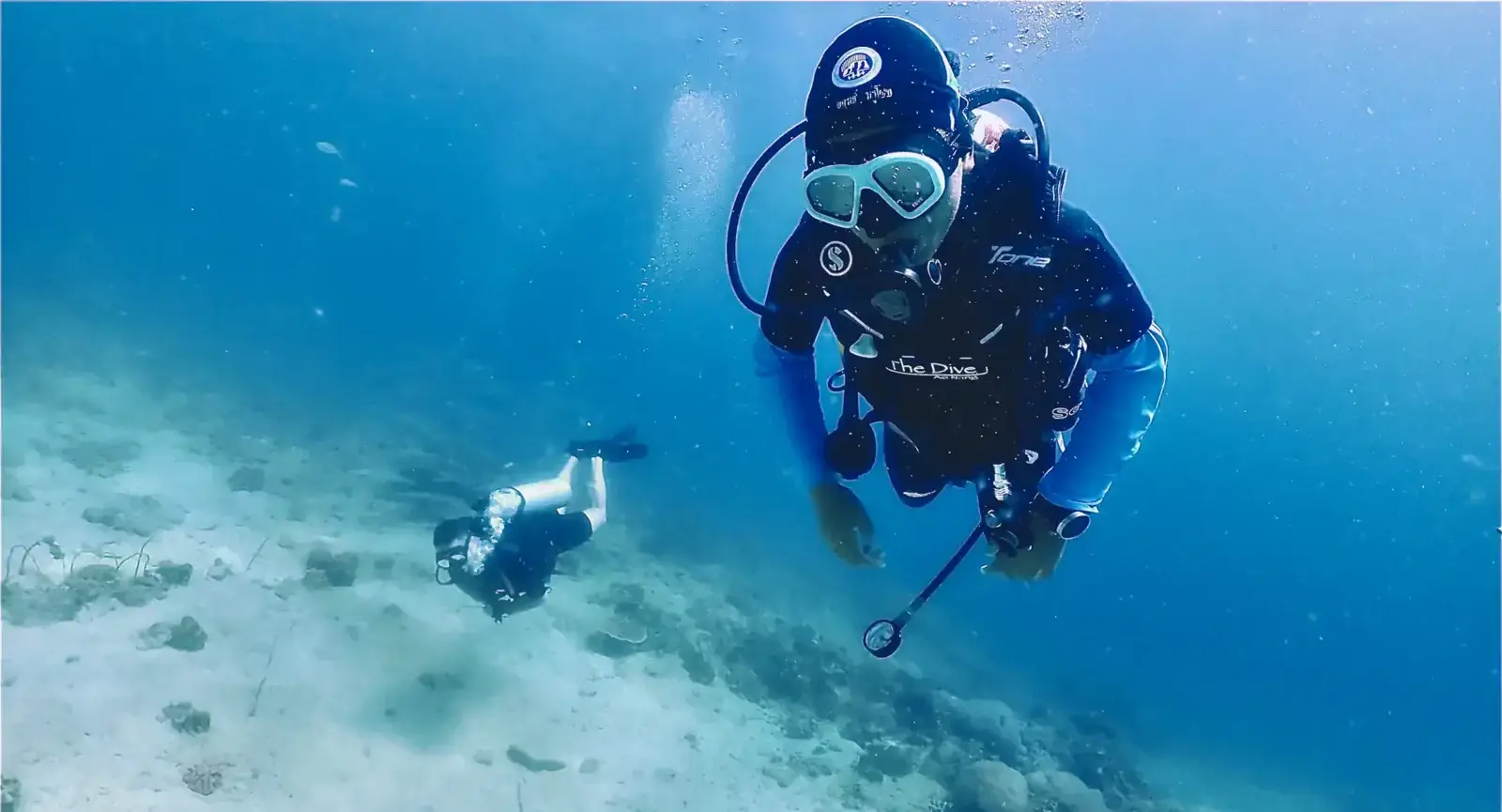
| The Dive Ao Nang | ฿400 (about $11) entrance valid three days, ฿100 for under-fourteens, plus a ฿200 per person per day diving fee |
| Sawasdee Divers Krabi | ฿600 (about $17) on the first day and ฿200 on the second, collected only if the rangers come aboard |
| Kon-Tiki Krabi Diving & Snorkeling Center | ฿600 (about $17) adult and ฿200 child at the rates published for its King Cruiser and Shark Point trip |
The pattern is consistent: an entrance ticket plus a per-day surcharge for going under. The surcharge itself is published by the dive centres rather than by the park, so the amounts above are each centre's statement about its own trips — ask your centre which of them applies on your day.
Two details in that table are worth carrying over. The Dive Ao Nang states its ฿400 (about $11) entrance is valid three days, which matters if you dive on consecutive days; Sawasdee Divers Krabi states the fee is collected only if the rangers actually come aboard, which means the amount may or may not be spent.
Where is there no park fee, or a different one?
Not everything on the water in Krabi sits inside a marine national park, and the exceptions are worth knowing before you carry cash for nothing.
- Kon-Tiki states on its Ao Nang archipelago snorkelling day that no marine park fee applies to that route
- Koh Tour's Klong Rud paddle has its own entrance of ฿50 (about $1) for an adult and ฿20 for a child, paid on arrival — not a national park ticket
- On Koh Tour's Bor Thor sea caves the entrance fees are stated as included in the trip price
If you reach a mainland park site under your own steam rather than on a trip, the official scale adds the vehicle separately: ฿30 for a four-wheeled car and ฿20 for a motorcycle.
Questions that come up at the pier
Can the fee be paid by card?
For Hong, no: the operator states cash in baht only, with neither cards nor QR accepted. The other Krabi parks say nothing about card payment on the pages that publish their rates, so carry cash everywhere.
Is the fee charged per boat or per person?
Per person. On Hong the ranger issues a wristband valid for the day once you have paid, and that single payment covers Hong, Lading and Pakbia rather than each island in turn.