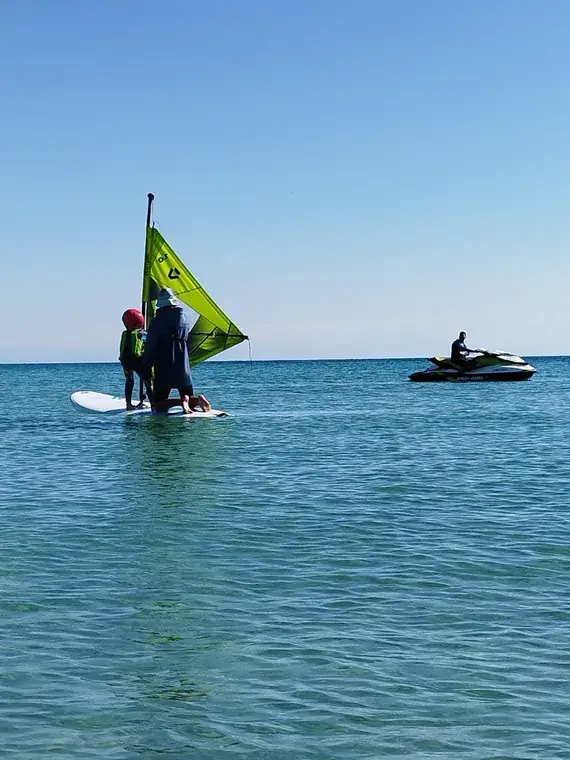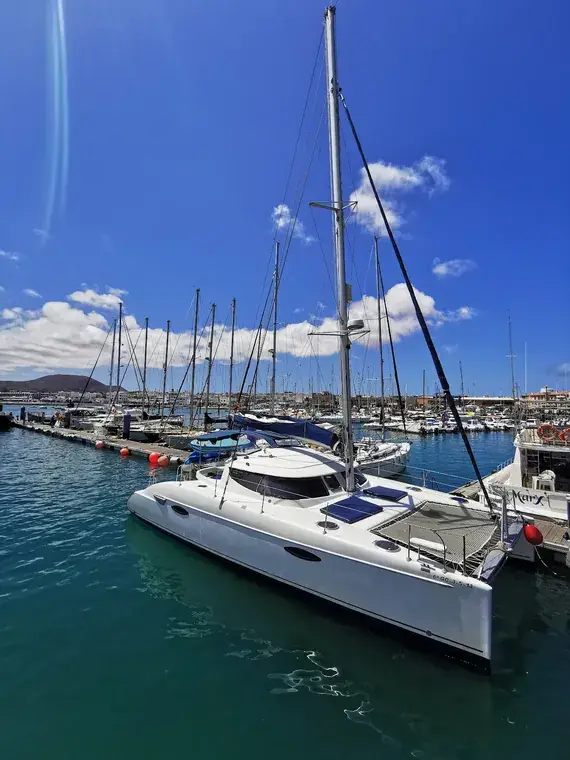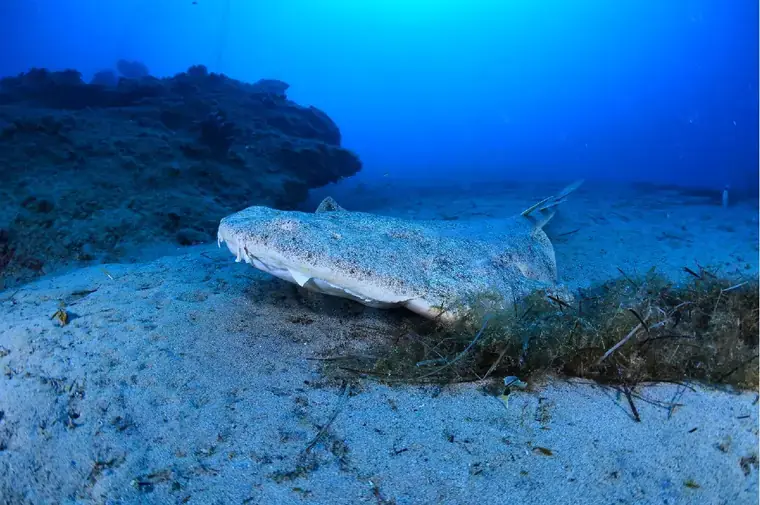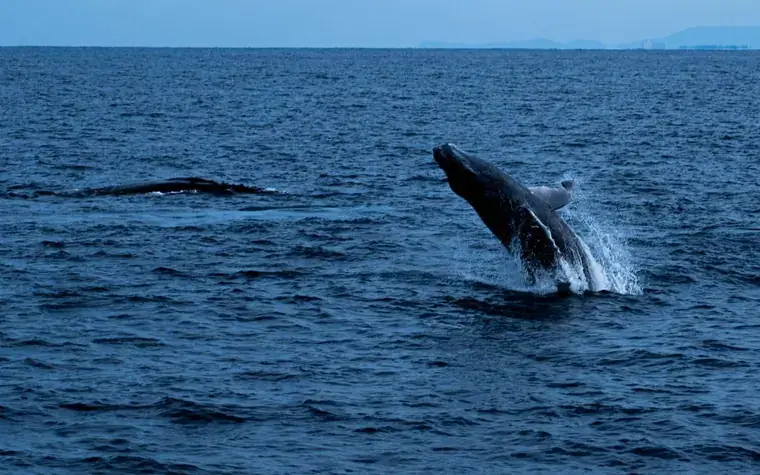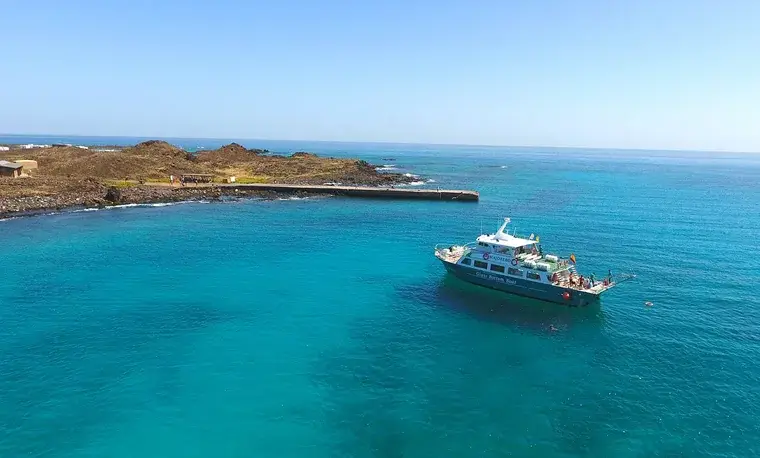
A boat ticket takes you across the water. It does not take you onto the island. Isla de Lobos is a natural park with a cap on how many people may stand on it at once, and the only document that opens the landing stage is a free authorisation from the island's Cabildo — applied for online, days rather than months in advance.
- Who issues the permit, what it costs and where to apply for it
- What the limit actually says, and why «400 a day» is not it
- How far ahead the calendar opens and what arrives in your inbox
- Whether an operator's booking covers you
- How you cross from Corralejo, and what each trip costs
- What is allowed on the islet and what is not
What follows comes from the Cabildo's own pages, its visitor manual and the park's management plan — with the places where those sources leave a question open marked as open.
Why does a small islet need a permit?
Isla de Lobos lies in the Bocaina strait, 2 km off Fuerteventura and 8 km from Lanzarote, and the whole of it — dunes, salt flats and the 127 m volcanic cone of La Caldera — is Parque Natural Islote de Lobos. The Cabildo's own booklet gives the park 467.9 hectares and a perimeter of 13.7 km, while other official pages round the islet to roughly 4.5–5 km², so read the size as an order of magnitude rather than a measurement.
The protection is layered. Until 1994 the islet was part of a larger park together with the Corralejo dunes; that year it was reclassified as a park in its own right, a classification carried into Decreto Legislativo 1/2000. The whole territory is an Área de Sensibilidad Ecológica, and within the EU's Natura 2000 network it is both a ZEPA for birds and a ZEC. Its management instrument, the Plan Rector de Uso y Gestión, was published in the Boletín Oficial de Canarias No. 239 on 12 December 2006, and the islet sits inside the Fuerteventura Biosphere Reserve declared by UNESCO in May 2009.
The visitor cap comes from that management plan — not from the UNESCO label.
Do you need the permit, and what does it cost?
Yes, and it is free. Since 15 January 2019 anyone wishing to visit the park has had to obtain an authorisation from the Cabildo de Fuerteventura in advance; the Cabildo said at the time that a visitor without one, or one who overstays the slot, is liable to sanction. The system in use now is a web app — LobosPass, at www.lobospass.com — introduced by the Cabildo in January 2020. Its welcome screen calls the authorisation gratuita in as many words, and reminds you that you are entering protected ground.
Two things follow from that. The old address, permisodevisitaisladelobos.entrees.es, no longer answers at all: a page that still sends you there is out of date, and so is whatever else it tells you about the rules. And any site charging a fee to «process» the permit for you is not the Cabildo — the document itself costs nothing.
How many people are let in — and is it really 400 a day?
The management plan caps the capacity of the natural park at 200 simultaneous visitors. To hold to that, the Cabildo runs two shifts — 10:00 to 14:00 and 14:00 to 18:00 — each with the same figure of 200 people present at any one time. A single applicant may request authorisations for a maximum of three people, for one day and one shift.
This is where the much-repeated «daily limit of 400» comes from, and it is a sum nobody at the source performed. The shift figure limits how many people stand on the islet simultaneously; it is not a turnstile count, and how many individuals pass through a shift does not follow from it. Adding the two shifts together produces a number the Cabildo has never published.
The 200 is also softer than it looks. In its own strategic environmental assessment for a revision of the plan, the Cabildo writes that the plan sets that maximum «without providing justification», that the standing capacity does not match the real load, and that the notion of carrying capacity is being replaced by one of public-use capacity. The rule, in other words, is under review.
The live shift configuration inside LobosPass we could not read — the app serves it through its own interface — so check the figures on lobospass.com before you travel rather than trusting any page, this one included, to be current.
Permit rules, shifts and the visitor cap as published by the Cabildo de Fuerteventura: the announcement of 11 January 2019, the visitor manual, the Parque Natural Islote de Lobos booklet, the strategic environmental assessment of the plan revision, and the text of the LobosPass web app — all read on 7 September 2026.
How do you apply, and what is checked on the islet?
The Cabildo's manual describes a short form. The calendar shows three days starting with today and the two shifts, morning and afternoon; you choose one shift on one day, state how many authorisations you need, and then enter each visitor's name, surname, DNI or passport number, date and shift. The permits arrive by email with a locator and a QR code.
How deep that calendar goes is the one thing the sources disagree about. The Cabildo's 2019 announcement and its own manual both describe three days; a licensed Corralejo carrier writes «from three days before»; a good deal of secondary writing says five. The safe reading is the part all of them share — the window opens days ahead, not months, so the permit is something you handle during the trip rather than while booking flights, and the current depth of the calendar is whatever lobospass.com shows you.
On the islet the authorisation is validated by the park's own staff. Printed on paper or shown as a QR code on a phone, both work. Cancellation goes through the locator, the email address and the phone number given — and it cancels every authorisation issued under that code, so a group that cancels for one person cancels for everyone.
If you book a trip, does the operator's ticket cover you?
Not by itself. A licensed carrier on the Corralejo–Lobos route puts it plainly on its own page: to visit Isla de Lobos you must hold an authorisation from the Cabildo de Fuerteventura, requested at lobospass.com, up to three places per application — and at the landing it is the authorisation that has to be shown, as the only document granting access to the island. A boat ticket is a boat ticket.
Operators do have a channel of their own. LobosPass carries a separate group application with a CSV upload of visitors, and when the Cabildo launched the app in 2020 it addressed shipping companies and tour operators as users of the system. What the Cabildo does not publish is the conditions attached to that group route — which is why «the operator will sort the permit out» cannot be stated as a general rule on anyone's behalf.
So the question to ask is about your operator, in writing, before you pay. The answers differ. On the OBY catamaran to Lobos the free Cabildo permit is added to the ticket on request over WhatsApp, and the operator asks you to message when you book rather than on the morning of the trip. On the kayak crossing to the islet the operator states that obtaining the authorisation is its own job and part of the day.
FuerteCharter builds an «Authorizations Isla de Lobos» step into the booking form of the trips that put you ashore: it files the request with your booking at no extra cost, and if you decline, the form points you to lobospass.com.
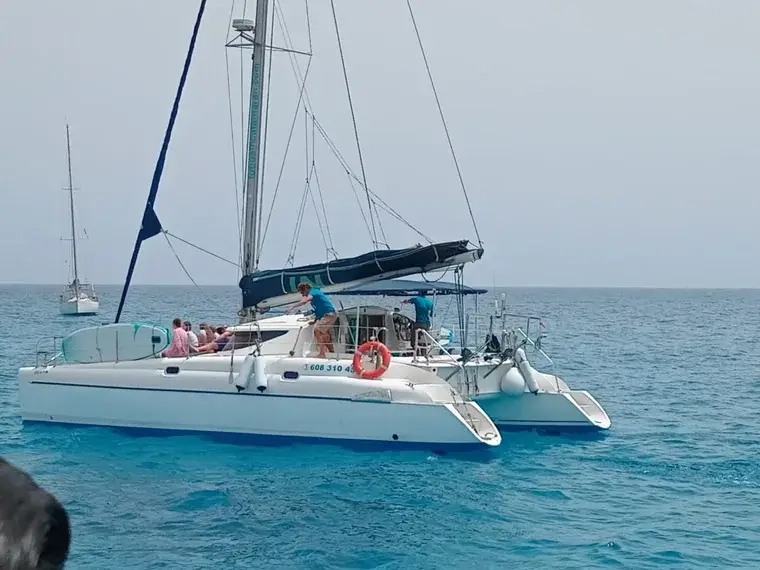
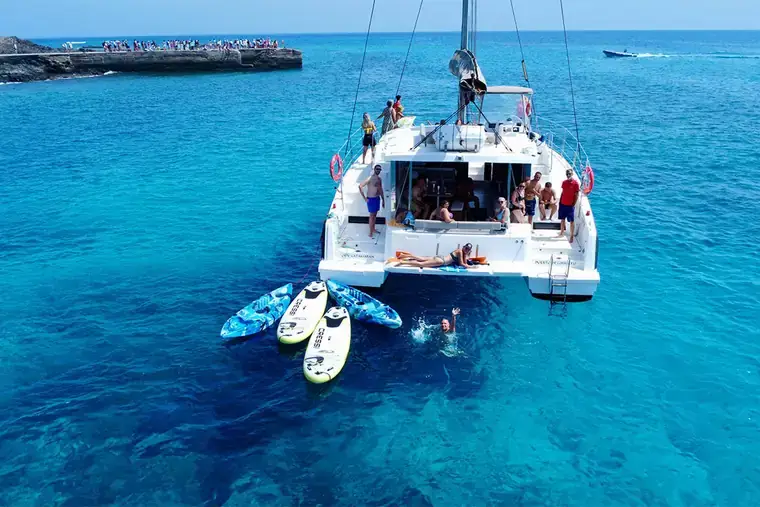
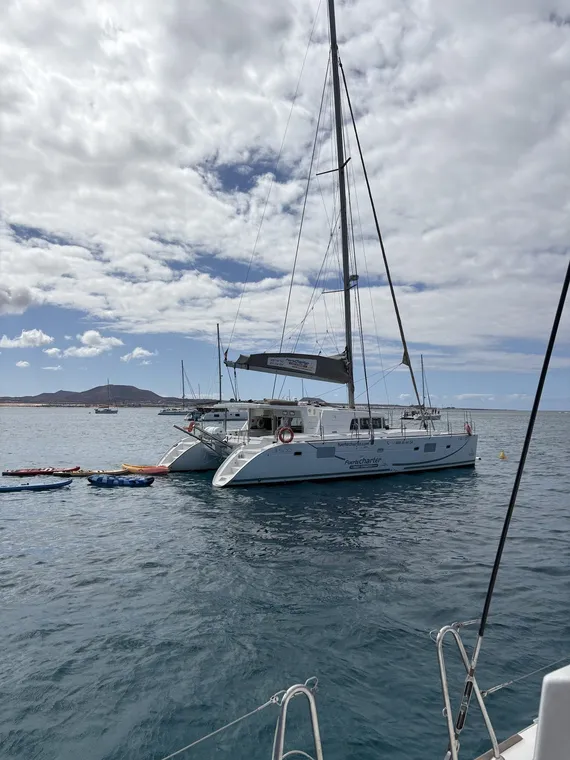
The two catamaran departures below anchor off the islet rather than landing on it, so if walking on Lobos matters to you, agree that with the operator before booking.
How do you get across, and what does it cost?
The islet is reachable only by sea, and only from Corralejo: the island's tourist board says so, and the harbour's own page puts the Lobos anchorage under fifteen minutes away. What changes is the boat under you and what the day is built around — so it is worth comparing three things at once: where you leave from and for how long, what it costs, and what is said about the permit.
| Trip | From, and how long | Price | What is said about the permit |
|---|---|---|---|
| ECO ferry | Office in Corralejo, twenty minutes each way, six departures a day | €17 per adult, €11 per child aged 4–11 | The operator files the access requests with your booking at no extra cost, or reminds you about lobospass.com if you apply yourself |
| Shared catamaran | Corralejo dock, four hours | €65 per adult, €45 per child aged 3–11 | An anchorage off the islet, not a landing — ask before booking if you want to walk |
| The whole catamaran | Corralejo dock, 10:00–14:00 or 14:15–18:15 | €520 for the boat, up to ten people | The same: going ashore needs the Cabildo permit, agreed in advance |
| Catamaran with paella | Corralejo dock, departures 10:00 and 14:30 | €69 per adult, €41 per child aged 3–12, under-threes free | The free Cabildo permit is added to the ticket on request via WhatsApp |
| Kayak crossing | Corralejo, 9:00 to 15:00, from 16 years | €60 per person | The operator states that it obtains the authorisation and that it is part of the trip |
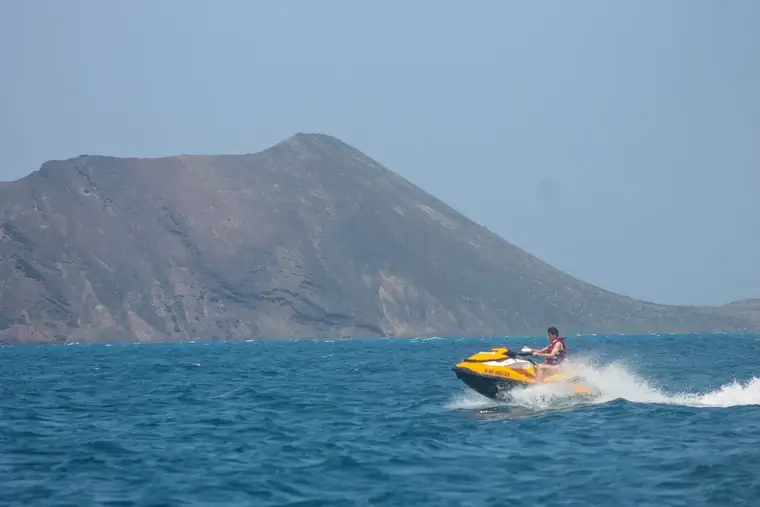
| Jet ski loop | Corralejo harbour, 90 minutes | €145 per jet ski with one rider, €160 with two; the operator's standard prices are €169 and €189 | A circuit of the islet with no landing; the visitor permit does not come up |
| Guided dives at Lobos | Dive centre in Corralejo, departures 08:30 and 10:30 | from €50, the unit not stated on the page | The centre's pages do not discuss the visitor permit |
Two of those lines are worth reading twice. The shared catamaran and the whole-boat charter come from one operator and the same four hours, and €520 is exactly what eight seats at €65 cost — with the ten-guest maximum on board, a full boat works out at €52 a head. The jet ski, by contrast, is a circuit of the island rather than a visit to it: the operator's pages describe stops in the water and no landing, which is also why the visitor permit never comes up on them.
The diving day is priced with a question left open. The centre prints «from €50», covering the boat ride to the site, a 10- or 12-litre tank of air or nitrox with weights and a certified guide, but does not say whether that figure is per dive or per day; equipment rental and the compulsory diving insurance are named as extra. Ask when you book. Departures are at 08:30 for more experienced divers and 10:30 for all certified levels, with the boat returning to the centre in between, so the day can be one dive or two.
What is allowed on the islet, and what is not?
Allowed, by the Cabildo's booklet: cycling on the prepared tracks, walking the marked trails, and rod fishing with crab-gathering for bait — the last only along the stretch of shore between Punta Marrajo and Roques del Puertito, by way of Puertito.
Not allowed: rod fishing and shellfish gathering at La Caldera, at Las Lagunitas and in the bathing zones; landing anywhere other than the jetty and Puertito; bringing cats or dogs; walking off the permitted trails; lighting fires or stacking anything burnable; noise and hunting; climbing La Caldera during the breeding season; putting up advertising; and damaging or removing anything of cultural, geological or biological value. Collecting material for research, and any filming or photo session, are authorisable uses — that is, each needs a permit of its own, which the visitor authorisation does not cover.
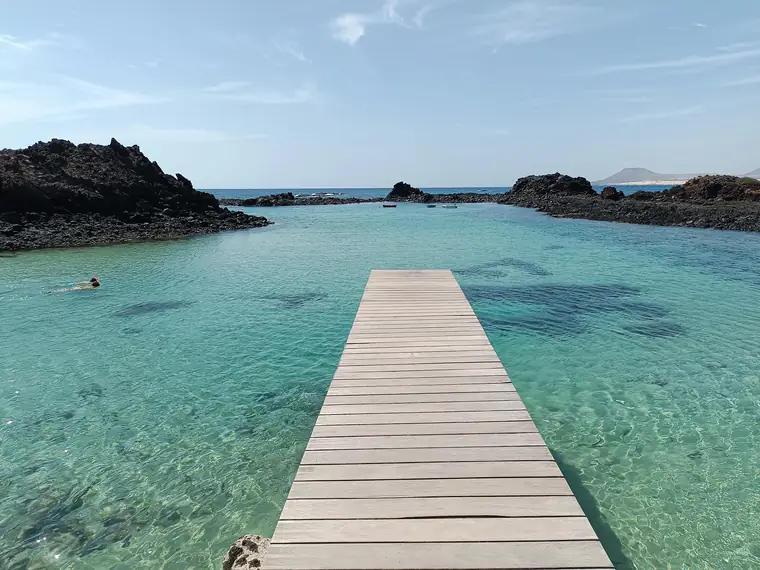
The layout of a day there is small. The jetty is a stone mole about 60 metres long at the southern tip of the islet, and it is the way in; La Concha beach is ten minutes' walk from it and has no lifeguard. The loop from the jetty to the Martíño lighthouse and back by way of Puertito runs about 7 km, near enough three hours at a walking pace. There is one restaurant, it takes no bookings, and water and food travel with you.
The nature is the reason for all of the above: more than 130 plant species, some of them endemic, among them the islet's own Limonium bollei; nesting Cory's and little shearwaters, storm petrels, Bulwer's petrel, osprey and yellow-legged gulls; Gallotia atlantica lizards and Tarentola geckos. One thing not to expect is the animal in the name — the monk seal colony that gave Lobos its name is gone.
Questions that come up before booking
Does a boat ticket count as the permit?
No. The Cabildo's free authorisation is the only document granting access, and park staff check it at the landing. Some operators add it to your booking — the ECO ferry as a step in its form, the OBY catamaran on WhatsApp request, the kayak crossing as part of the day — but only where they say so themselves.
How much does the permit cost?
Nothing. LobosPass, the Cabildo's web app at lobospass.com, calls the authorisation free in as many words. Sites charging a fee to arrange it are not the Cabildo, and the old address permisodevisitaisladelobos.entrees.es no longer answers at all.
Is the limit really 400 people a day?
The Cabildo's figure is 200 people present at once, in each of two shifts, 10:00–14:00 and 14:00–18:00. It has never published 400: that is the two shifts added together. And the Cabildo is itself reviewing the 200, so check before you travel.
How far ahead can I apply?
Days, not months. The Cabildo's announcement and its manual both describe three days starting with today, one shift per day and up to three people per application; some secondary sources say five. Check the current depth of the calendar on lobospass.com.
Can I take my dog?
No. Bringing cats and dogs into the park is prohibited, and carriers apply the same rule on board. Landing is only at the jetty or at Puertito, and walking off the permitted trails is not allowed either.