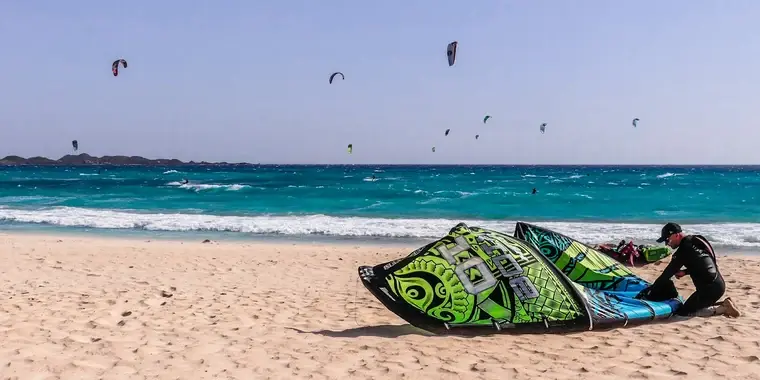
The trade wind blows over Fuerteventura all year, and that one fact splits the island's visitors in two. One of them is looking for the month when it blows least. The other is looking for the month when it blows hardest. Both are reading the same table.
- Air, sea, sun, rain and average wind for all twelve months
- Which months are the calmest and which are the windiest
- Why a monthly average says little about an afternoon on a spot
- What the trade wind does in the south and what it does in the north
- How cold the water gets, and when it is at its warmest
- What calima is and what it changes about a day on the water
What follows is the month-by-month record read twice — once for a beach week, once for a board — and the points where the season lands on a booking rather than on a mood.
Which month should you pick if you are going for the beach?
The climate is very mild and desert-like: winters are very mild and spring-like, summers warm and sunny. Daytime temperatures run from about 21 °C in January to 27–28 °C between July and September. Rainfall on the coast adds up to less than 100 mm a year, and almost all of it falls between October and March. By the AEMET normals for 1981–2010 the average daily high moves through 7.2 °C across the whole year — 20.6 °C in January against 27.8 °C in August.
The reference climatology names May to mid-October as the best window for a beach holiday and for surfing, and adds that so little rain falls that the window stretches into the second half of October and into November, while the sea is still relatively warm. Winter is often sunny and the temperatures are pleasant, but not always warm enough for the beach.
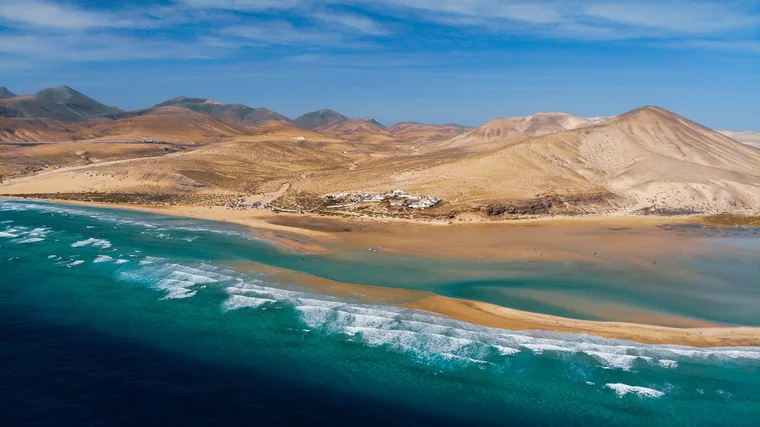
One more thing the tables cannot show: the northern coast and the northern slopes catch local cloud and fog, and the sunniest coast is the southern one — that is the source's qualitative judgement, while the measured columns below come from the airport station on the east coast.
What do the numbers say, month by month?
One table answers most of the planning questions: how warm the days are, how warm the water is, how much sun there is to spend, how much rain falls and how hard the wind blows on average.
| Month | Air min / max, °C | Sea, °C | Sun, h/day | Rain, mm | Wind, km/h |
|---|---|---|---|---|---|
| January | 14.8 / 20.8 | 18.9 | 6.5 | 15 | 18.6 |
| February | 14.9 / 21.1 | 18.2 | 7.0 | 10 | 20.3 |
| March | 15.5 / 22.3 | 18.2 | 8.0 | 10 | 20.7 |
| April | 16.4 / 23.2 | 18.7 | 8.5 | 5 | 22.4 |
| May | 17.6 / 24.7 | 19.5 | 9.0 | 0 | 22.6 |
| June | 19.4 / 26.2 | 20.6 | 9.5 | 0 | 23.9 |
| July | 20.9 / 27.5 | 21.3 | 9.5 | 0 | 25.9 |
| August | 21.8 / 27.9 | 22.0 | 9.5 | 0 | 23.6 |
| September | 21.4 / 27.5 | 22.7 | 8.5 | 0 | 19.7 |
| October | 20.0 / 26.5 | 22.6 | 7.5 | 10 | 17.1 |
| November | 17.9 / 24.2 | ≈21 | 6.5 | 15 | 18.2 |
| December | 16.2 / 22.1 | 20.1 | 6.0 | 20 | 18.0 |
Read the millimetres as an order of magnitude rather than as a measurement of your week. Two reference periods disagree in the detail: the AEMET normals for 1981–2010 give 98 mm across 15.7 days with rain, while the 1991–2020 series in the table gives 85 mm across 14 days. The shape of the year is the same in both, and in both June, July and August carry no rainfall at all. One cell is deliberately rounded: for November the same source prints the sea at 21.5 °C in one place and 21.4 °C in another.
Air, sea, sun, rain and wind by month: climatology published by climatestotravel.com for the Puerto del Rosario airport station, 1991–2020, read on 7 September 2026. The 1981–2010 normals are AEMET's for the same station, Fuerteventura Aeropuerto, C249I.
Where does the wind come from, and when is it strongest?
Fuerteventura lies especially open to the north-easterly trade winds, the alisios, which blow steadily all year and hardest in the second half of the day. They also raise the wave that surfers come for. That is why the question about the calendar is really two questions with one answer.
By the monthly averages at the airport station, July is the windiest month at 25.9 km/h and October the calmest at 17.1 — under nine km/h between the two ends of the year. Converted, that is roughly 14 knots against 9. But a monthly mean at a weather station is not the strength of the wind on a spot in the afternoon, which is markedly higher.
The island's tourist board puts it in months rather than in figures: sailing is possible all year, but May to September is when the trade wind is strongest and most constant — the same answer it gives for kitesurfing and for windsurfing. That is an editorial recommendation and not a measurement, and it matches the table only in part: May, at 22.6 km/h, sits barely above April at 22.4, and September at 19.7 is already lighter than March.
Two readers, one table
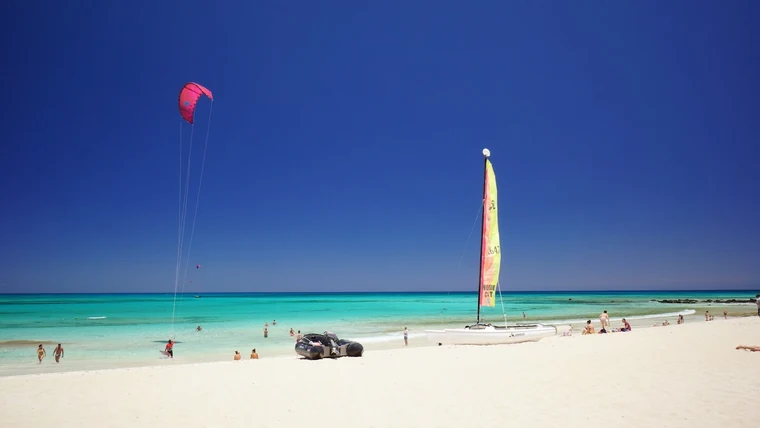
The same column is a warning to one traveller and an invitation to the other. So here is the table read both ways.
If the wind is the thing you want less of
October is the calmest month on the record at 17.1 km/h, and it is also near the top for water at 22.6 °C, with days reaching about 26.5 °C. November, December and January stay under 19 km/h as well, but by January the sea is down to 18.9 °C and there are only six to seven hours of sun a day. Whatever the month, the wind builds in the afternoon, so the quieter half of the day is the morning. And a sheltered bay changes more than the calendar does: the north catches cloud, the south is the sunnier side.
If the wind is exactly what you came for
May to September is the answer for both boards, and July is the peak by the numbers. In the south, Playa de Sotavento next to Costa Calma is one of the best windsurf spots in the Canaries precisely because it holds two things at once: a very safe zone for beginners and a zone by the main breaking wave for the advanced. The bottom is sand and the wave, usually a left, breaks very close to shore.
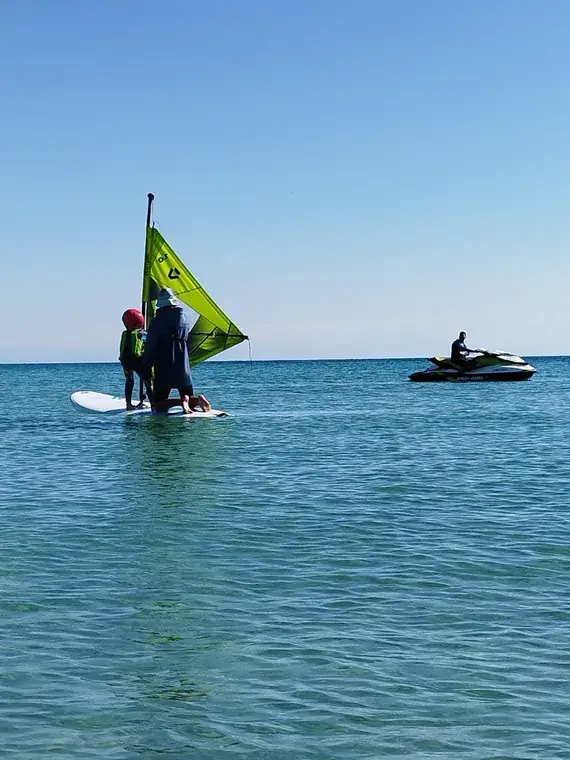
Matas Blancas, a bay beach nearby, is where the tourist board sends people who are starting out, children and adults alike, especially between March and August.
In the north, Flag Beach in Corralejo is wide and sandy with an easy entry, working on N, NW and NE winds, especially in spring and summer and regardless of the tide; schools, rental and repair sit around it. Playa El Burro, also in Corralejo, is a kite spot where the N–NE trade is most regular in summer — the wave is a short left, good for jumps, best ridden at low or mid tide, and the volcanic reef is hard on gear; there are no services by the beach, only parking.
Bristol, on the way out of Corralejo, runs on a different calendar: its season is winter and spring, and the spot is for advanced windsurfers only.
One number from that coast travels badly. The tourist board's spot page says the summer north-easterlies at Sotavento can exceed 50 knots — that is a peak in exceptional conditions, not a working strength, and the monthly means above are 9 to 14 knots once converted. Pack a kite for the second figure. The lagoon at Sotavento is also the world tour's address: the PWA Fuerteventura Grand Slam ran on 17–26 July 2026, its 38th edition, freestyle from 17 to 21 July and Slalom X from 22 to 26.
The dates move — 18–27 July in 2025, 25 July to 3 August in 2024 — so check the tour calendar for the year you travel. And some beaches carry restrictions to protect swimmers and nature, set beach by beach.
How cold does the water get?
The sea moves through about four and a half degrees over the year: coolest in February and March at 18.2 °C, warmest in September at 22.7 °C. Winter sits at 18–19 °C, which is a different proposition from a summer swim, and the number that matters for a snorkelling stop is not the same one that matters for a beach day.
The useful detail is that the warmest water arrives at the end of the season rather than in the middle of it. September at 22.7 °C and October at 22.6 °C are both warmer than July at 21.3 °C, because the ocean lags the air by a couple of months. Those are also the two months in which the wind is easing — 19.7 km/h in September, 17.1 in October, against 25.9 in July. If the water is what you are here for, the shoulder is where the record points.
What is calima, and what does it change?
Every so often a hot, dry wind arrives from Africa carrying Saharan dust and sand. It cuts visibility, brings anomalous heat and usually lasts three or four days. Fuerteventura is among the most exposed of the islands — it lies closest to the Moroccan coast — and the inland districts feel the heat of it more than the coast does. For a day on the water it matters mostly through visibility and air quality.
The other thing a climate table does not show is the swell. In autumn and winter, Atlantic depressions send big waves from the west and the south — not trade-wind waves — and surfers value them. The strongest heat waves, by contrast, fall between May and October. The coldest nights of the year are usually in February, around 10–11 °C, on days that reach 18–19 °C, so a winter evening on the coast wants a jacket.
How does the month change what you can book?
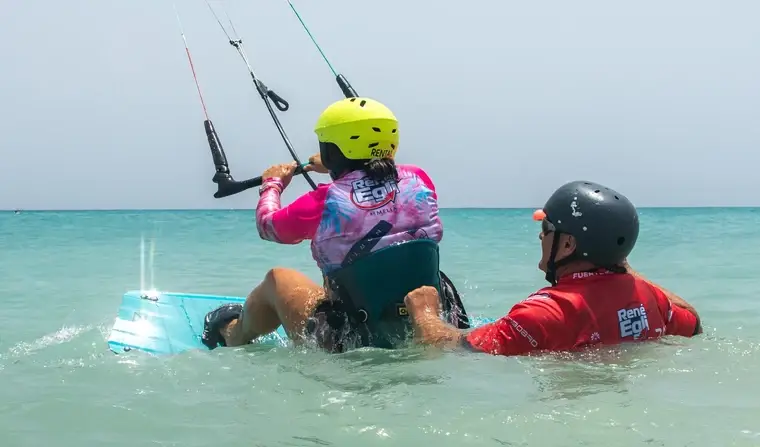
The windy months are the course months. The René Egli kitesurf course in the Sotavento lagoon is taught in blocks of three hours at €205 per person, two students to an instructor, with board, kite, wetsuit, vest, helmet and equipment insurance in the price. It starts at 15 years and 50 kg, and how far you get depends on the weather like everything else here.
In the north the same question gets a different answer: the beginner kite course at Flag Beach in Corralejo runs from €175 for one day to €570 for five, four students to an instructor on the beach and two in the water, and its beach base keeps longer hours in the wind season — 10:00–19:00 from April to September against 10:00–17:00 from October to March.
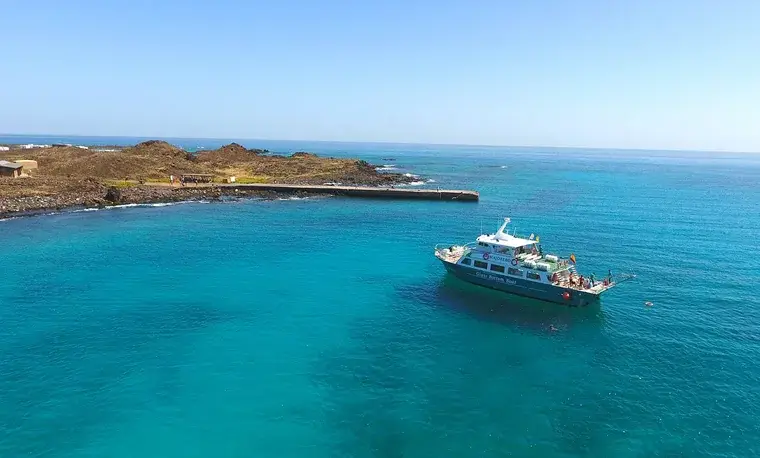
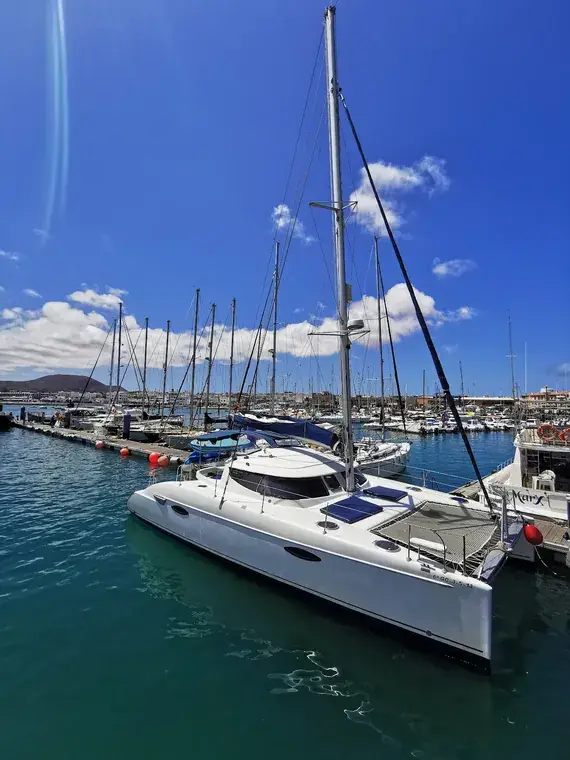
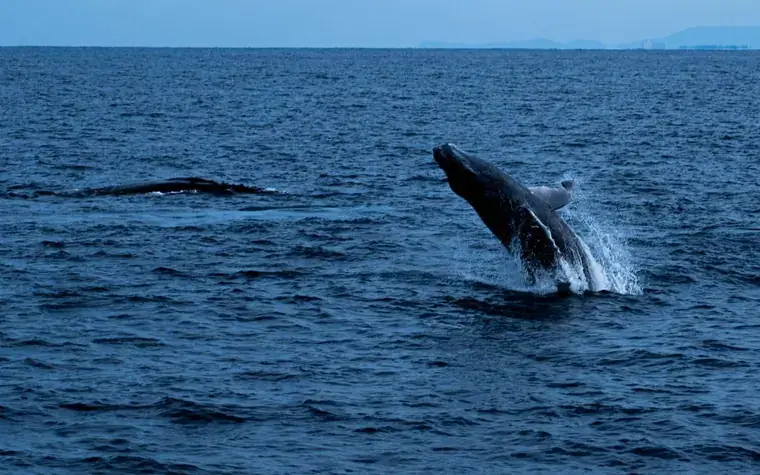
In the south the season reads through the water rather than through the wind. The Magic Select catamaran leaves Morro Jable harbour for four hours along the Jandía coast at €79 per adult and €40 per child aged 2 to 11, looking for dolphins and whales — the operator states plainly that sightings are never guaranteed.
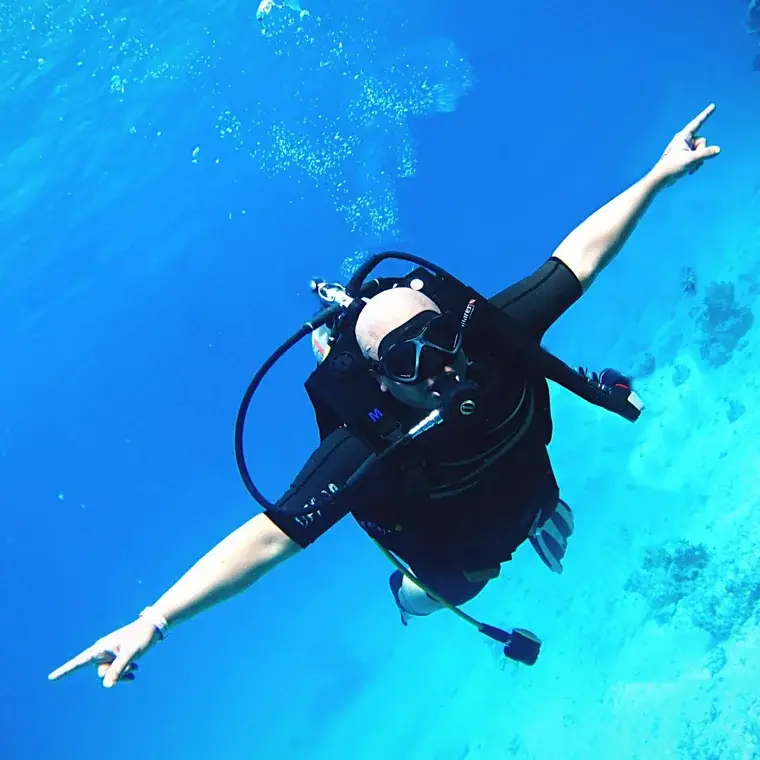
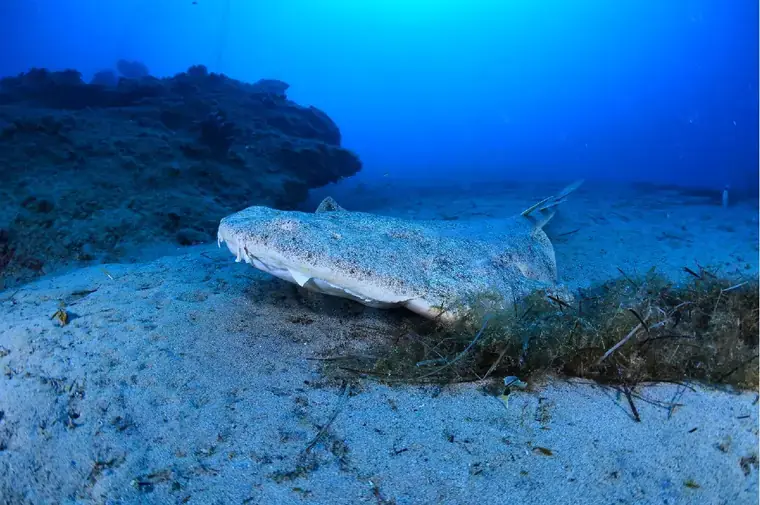
From the same harbour Fuerteventura Buceo runs boat dives on the Veril de Jandía at 09:00 and 11:00 for €45 per person per dive, so a two-dive morning is €90, with IGIC of 7 % added and the compulsory insurance a separate line; if you have never breathed underwater, the try dive in the bay is €105.
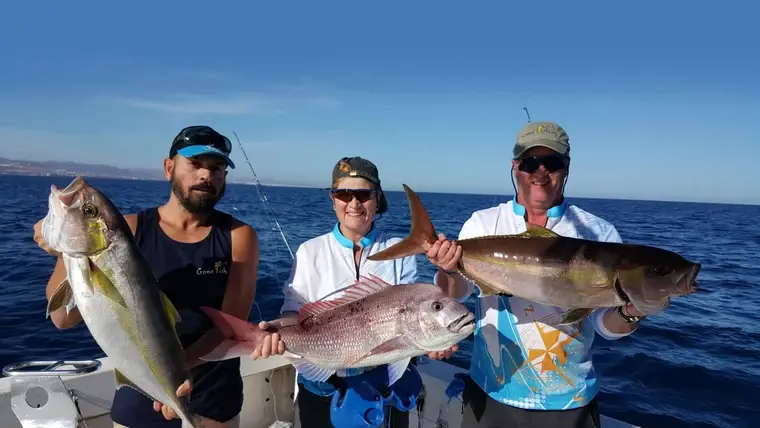
In the north the day starts early, which is the same thing as saying it starts before the wind does. A place on the Faeton 910 out of Corralejo costs €95 per person for five hours of bottom fishing — the early-bird price against €105 —, six places to a departure, out at 08:00. And the 40-minute PowerSafari jet ski from Corralejo harbour is priced per machine rather than per person — €85 with one rider and €100 with two, against the same operator's standard €99 and €119.
Questions that come up before booking
Which month has the least wind?
October, by the monthly averages at the airport station: 17.1 km/h against 25.9 in July. December, November and January are close behind at 18.0, 18.2 and 18.6. The trade wind blows all year, though, and it is strongest in the second half of the day, so the calm you can plan on is a morning rather than a month.
When is the sea warmest, and when is it coldest?
Warmest in September at 22.7 °C, with October a tenth of a degree behind; coldest in February and March at 18.2 °C. The whole year moves through about four and a half degrees, and the peak comes after high summer rather than during it.
Does it rain enough to spoil a week?
Less than 100 mm falls on the coast in a year, and almost all of it between October and March. June, July and August carry no rainfall at all in either reference period, and even the wetter months are counted in a handful of rainy days.