Fuerteventura and Tenerife are a little over three hours apart by ferry, and nobody chooses between them on looks. You choose on what has to happen during a day on the water: wind that carries a board, or animals someone is scanning for from the bridge.
- Where the wind sits on each island and what that does to the shape of a day
- Why Tenerife's year-round whales are a condition of Tenerife, not a general rule
- What there is underwater and which harbours go looking for it
- An islet with a compulsory permit that the neighbour has no equivalent of
- What the same family of four pays on each island
- How the roads work, and whether you can take both islands in one trip
Neither one is "better". What follows are the six axes on which they genuinely differ, and at the end, who each island is for.
What are you actually choosing?
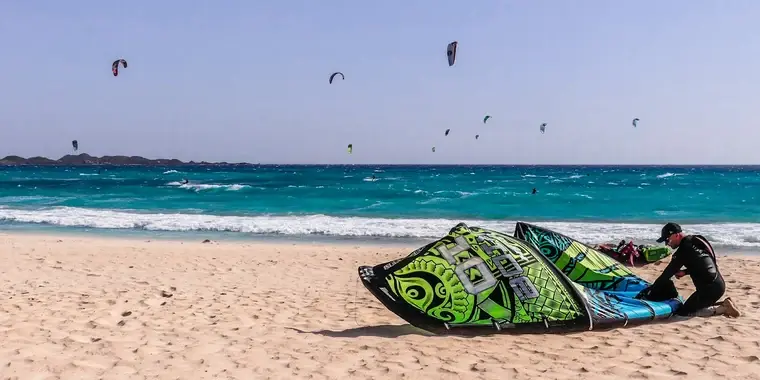
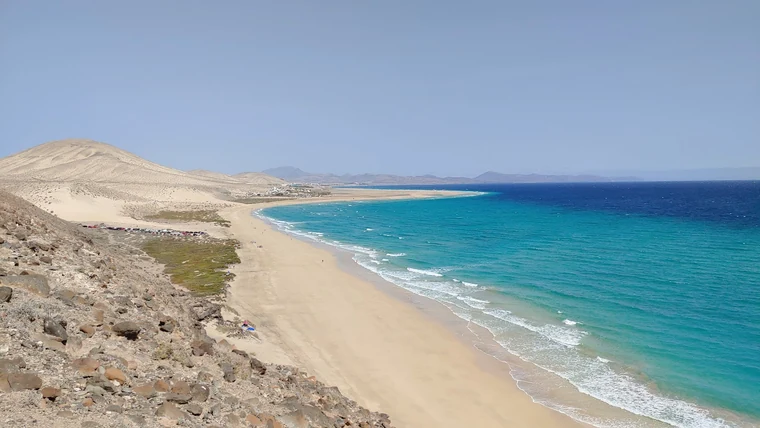
On Fuerteventura the wind is not weather, it is the reason people come. It works on shallow, open water: in the south a sandbar a hundred to three hundred metres offshore holds a lagoon three kilometres long, and in the north Flag Beach lies right against the dunes of Corralejo. Boats leave from the two ends of the island: Corralejo in the north is 39 km from the airport, Morro Jable in the south is 84 km the other way, and between them sits Marina El Castillo, about ten minutes from the terminal.
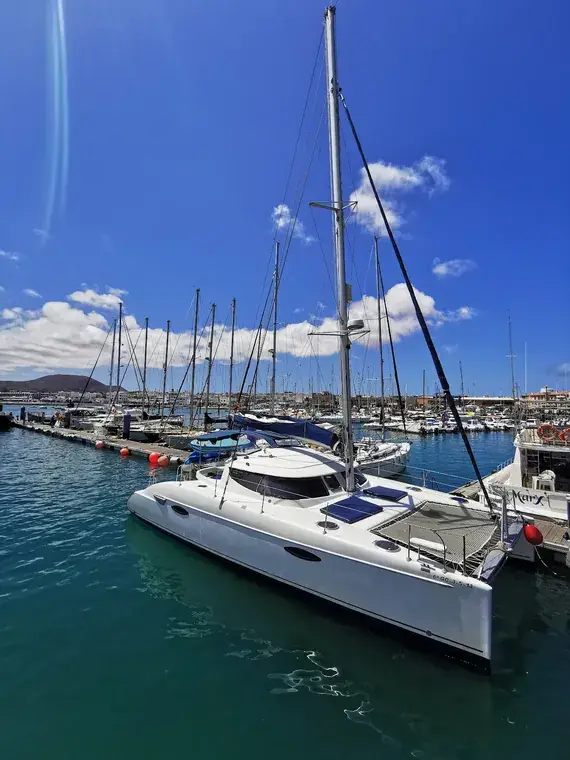
On Tenerife almost everything that happens on the water happens on the sheltered south-west coast, between the marinas of Los Gigantes and Puerto Colón — about half an hour apart by road. The wind sits on the other corner, El Médano in the south-east, roughly an hour from the Costa Adeje marinas. So on one island wind and boats live in the same villages; on the other they are two separate outings.
| Axis | Fuerteventura | Tenerife |
|---|---|---|
| Where the wind sits | the Sotavento lagoon in the south and Flag Beach in Corralejo in the north | El Médano in the south-east, about an hour from the south-west marinas |
| Where the boats leave from | Corralejo in the north, Morro Jable in the south, Marina El Castillo in the east | Los Gigantes and Puerto Colón in the south-west, about half an hour apart |
| Why people go looking for cetaceans | departures from Morro Jable; the operator writes that a sighting is not guaranteed | a resident population of pilot whales holds in the channel with La Gomera, and dolphins move through it both ways |
| Protected area with a quota | Isla de Lobos: the Cabildo permit is compulsory and free | the trips sold here require no permit |
| Hotel transfer | included on some of the Magic & Sailing departures in the south and free at Dive Pro Fuerte | included on two Freebird fares out of Puerto Colón and on the sailing trip |
| Child fares | published on the catamarans: ages 2–11 or 3–12 depending on the boat | published on the whale trips: ages 2–11 or 4–11 depending on the operator |
Wind: one island's whole point, one corner of the other
The trade wind blows over Fuerteventura all year. On the 1991–2020 normals for the airport station the monthly average runs from 17.1 km/h in October to 25.9 km/h in July, and that is a station average, not the strength on a spot in the afternoon, where it is noticeably higher.
The island's official tourism board names May to September as the strongest and steadiest months, and the middle of that window carries a world tour stop: the PWA Fuerteventura Grand Slam runs at Sotavento in the second half of July (in 2026, 17–26 July), with the dates moving from year to year.
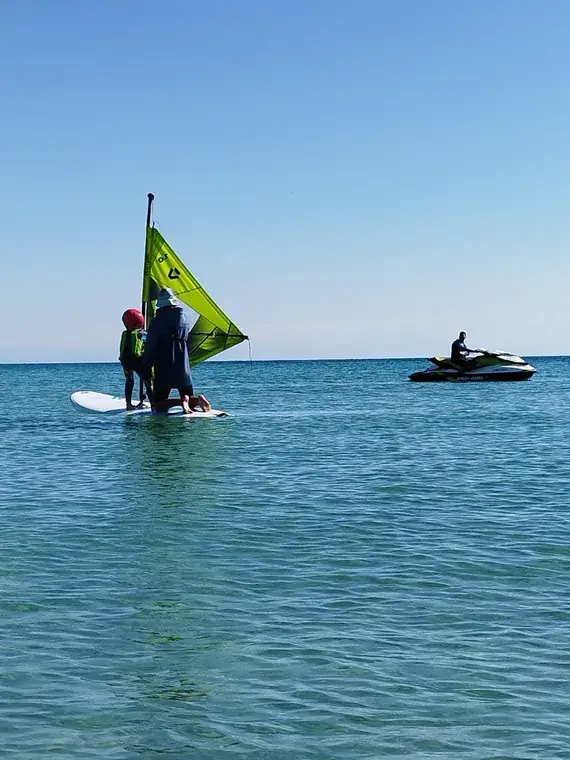
What a lesson costs is built differently in the south and in the north. The René Egli kitesurf course in the Sotavento lagoon is €205 per person for three hours, two students to an instructor, from age 15 and 50 kg. The Flag Beach windsurf course in Corralejo runs as a ladder from €90 for one day to €360 for five, and the international VDWS licence with the booklet is €40 on top.
On Tenerife the kite lives apart from everything else: the school in El Médano puts three hours one-to-one at €180 per student and six hours at €355, with IKO certification and equipment inside, and it is about an hour by road from the Costa Adeje marinas — a separate day, not an add-on to a morning departure. One thing holds on both islands: the forecast sets the day, not your calendar, so treat a booking as a window and do not put it on the last day of the trip.
Whales and dolphins: whose "all year" is it?
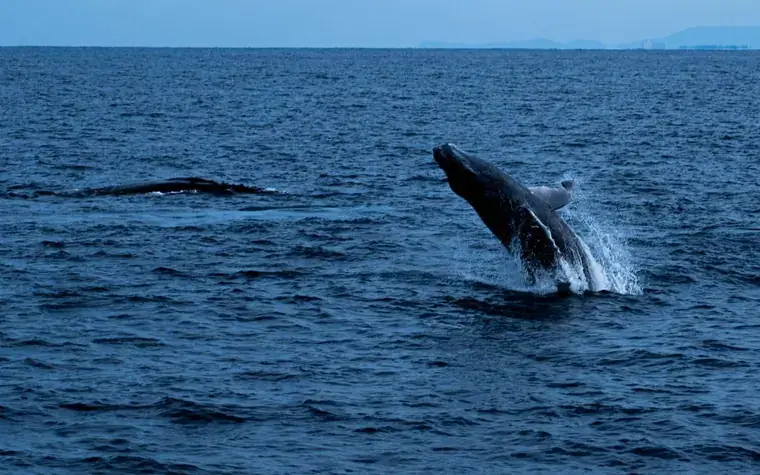
On Tenerife the phrase "all year" rests on geography rather than the calendar: a resident population of pilot whales lives in the channel between Tenerife and La Gomera, and dolphins move through it both ways. That is a condition of that channel. It does not travel to the next island — the reason the sentence is true stays where it is.
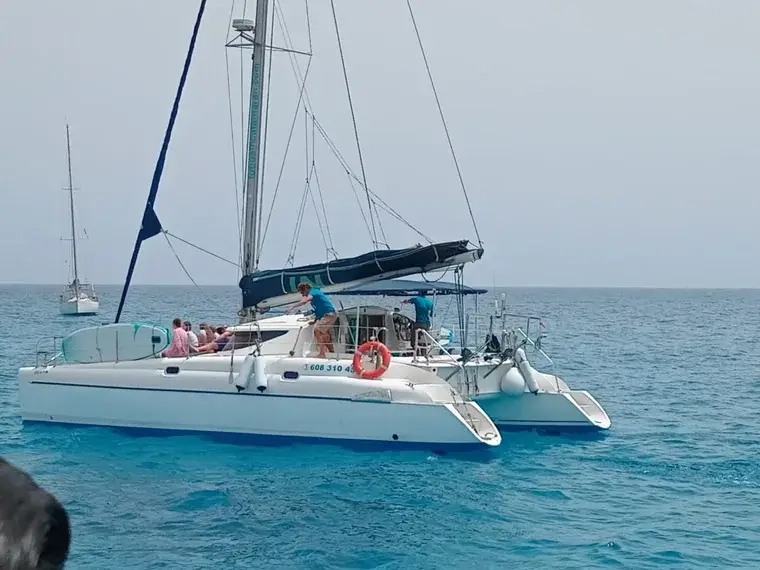
On Fuerteventura the cetacean departures leave from Morro Jable, and the operator puts it plainly: an encounter depends on nature and is not guaranteed. The two-hour dolphin and whale search is €49 for an adult and €39 for a child aged 2–11, infants under two are not taken aboard, drinks are included and food is not, and the transfer runs from agreed points in Costa Calma, Esquinzo, Morro Jable and Jandía. The four-hour catamaran along Jandía is €79 and €40, food and drinks included.
There is nothing here to plan by the calendar: put the trip at the start of your stay so there is room to move it, and ask the operator about his own months.
The law is the same on both islands. Cetacean watching in the Canaries is licensed separately, permitted boats carry the distinctive Barco Azul flag, and the approach is set by Real Decreto 1727/2007: a mobile protection space with a 500 m radius is built around the animal, with an exclusion zone of at least 60 m inside it, a speed no higher than four knots, and no circling or chasing. That is why even on Tenerife, where the animals live nearby year-round, an honest page writes "sighting guaranteed" and immediately adds the bracket about the state of the sea.
What there is underwater, and which harbours go for it
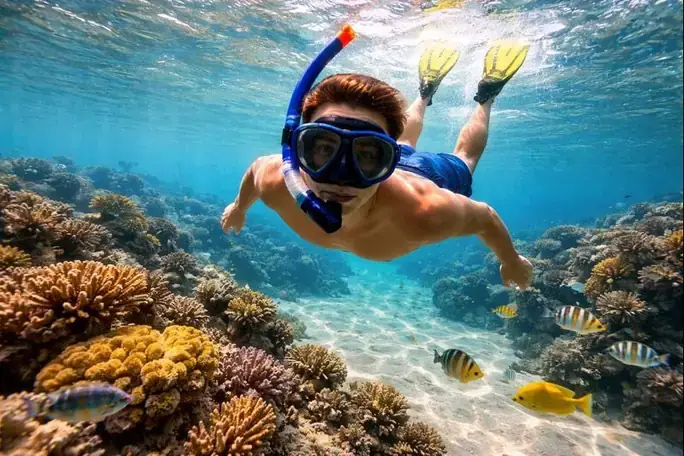
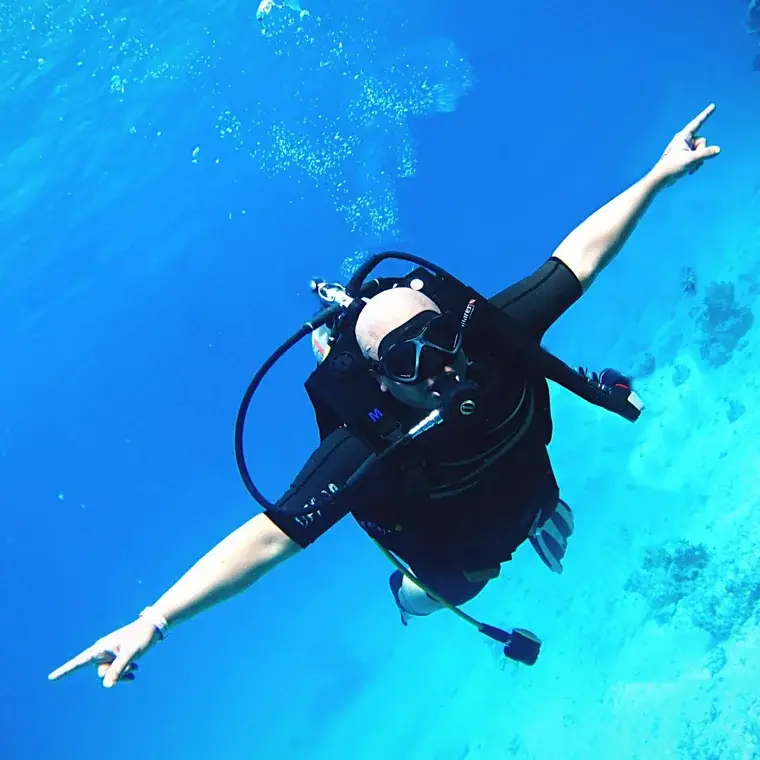
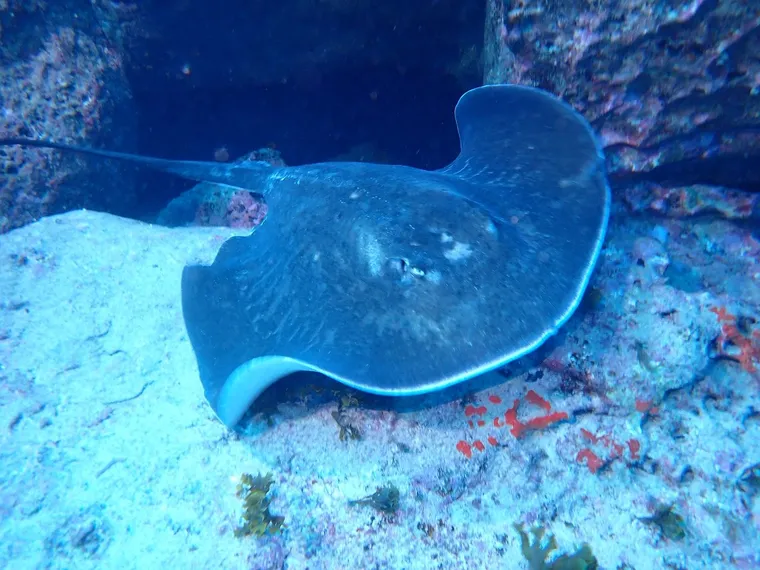
On Fuerteventura the signature day underwater is the crossing to Lobos. Guided dives by the islet start from €50, and the page does not name the unit, so it is worth confirming at booking. From the south, Fuerteventura Buceo runs boat dives on the Veril de Jandía: €45 per person per dive, so a morning of two is €90, plus 7 % IGIC on top, compulsory insurance at €7 for 24 hours and gear hire at €15 a day if you have none of your own.
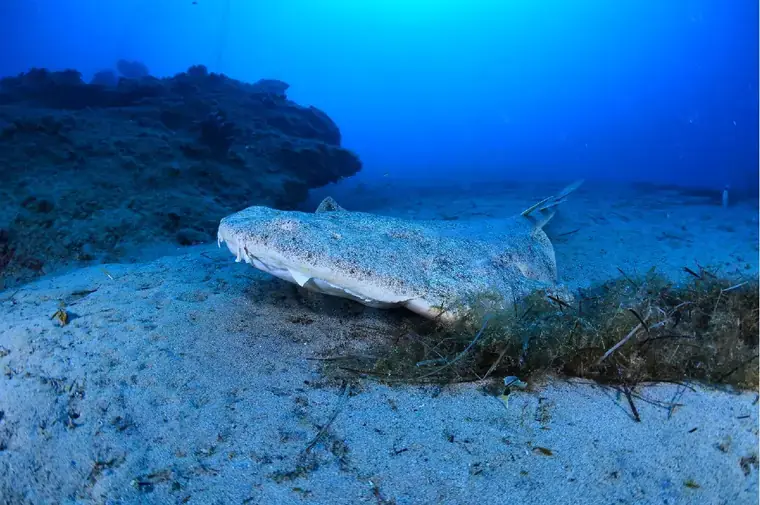
On Tenerife try dives are sold out of Los Cristianos and Costa Adeje in a range from €70 to €135 and, as on the neighbouring island, most of those pages do not print the unit — ask before paying whether it is per person or per session. The angelshark, the reason Canary diving makes the news at all, is not an argument for either island: what is verifiable is only that the Canary Islands as a whole remain the species' last known refuge, with no breakdown by island or by month.
Lobos: the permit the neighbour has no equivalent of
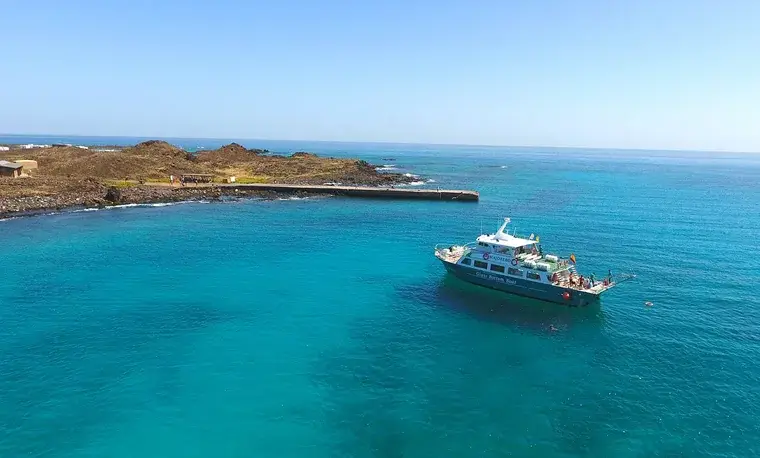
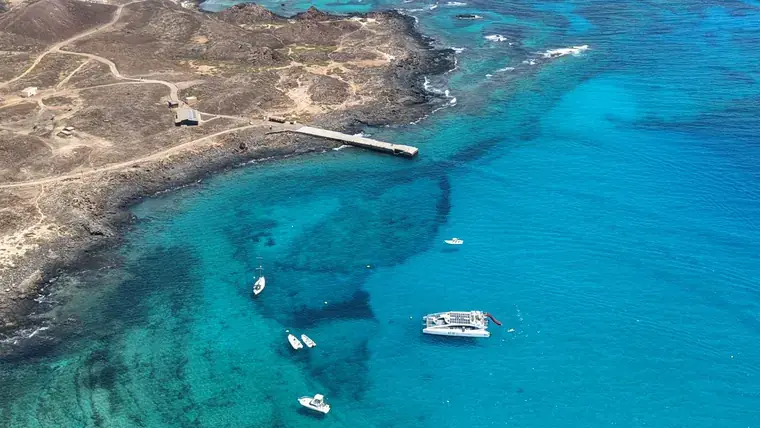
Parque Natural Islote de Lobos lies two kilometres off Fuerteventura, and since 15 January 2019 you can only set foot on it with a permit from the Cabildo of Fuerteventura. The permit is free and issued online. The management plan's capacity is 200 simultaneous visitors, and to hold to it there are two shifts: a morning one from 10:00 to 14:00 and an afternoon one from 14:00 to 18:00, 200 at a time in each.
One applicant may request it for at most three people per day and shift, the calendar opens a few days ahead, and a ferry ticket is not a substitute — the permit is checked on landing.
The practical conclusion is simple: look at who handles the paperwork. The kayak crossing is €60 per person for six hours, and the operator takes the permit on himself and includes it. The catamaran with paella is €69 for an adult and €41 for a child aged 3–12, free under three, with transfer, lunch, drinks, kayaks, SUP and snorkelling gear inside, and the free permit added to the ticket on request. This is the one day you plan in reverse order: the shift and the permit first, everything around them second.
What a family of four pays
Take the same family — two adults and children of five and eight — and take the trips where a child fare is published at all: the motor and sailing departures. Here is how it works out on three specific boats.
| Island | Departure | Adult | Child | Total for four | What is in the price |
|---|---|---|---|---|---|
| Fuerteventura | Dolphin and whale search, 2 h, Morro Jable | €49 | €39 (2–11) | €176 | drinks and transfer from points in the south; no food aboard |
| Tenerife | Masca Express, 2 h, Los Gigantes | €28 | €18 (2–11) | €92 | the boat only: the operator names neither transfer nor drinks |
| Tenerife | Freebird, 3 h with a swim, Puerto Colón | €47 | half price (4–11) | €141 | a sandwich, drinks and a free hotel transfer |
The difference here is between three boats, not between two islands: the €176 already has the drive from a hotel in southern Fuerteventura inside it, while the €92 needs that added on top, and each island has departures both dearer and cheaper than these. What does carry across without a caveat is something else: child fares are printed on the boats, while on the motorised activities the minimum age is published by far from everyone — get it in writing before you pay, whichever island you end up on.
Getting there — and whether you can take both
Fuerteventura's airport sits at El Matorral, five kilometres from Puerto del Rosario. In 2025 it handled about 6.9 million passengers; Germany and the United Kingdom together give more than half of the international traffic, and the domestic flights go to Gran Canaria, Madrid-Barajas, Tenerife Norte and Barcelona-El Prat.
After that the road depends on what you came for. Caleta de Fuste is 8 km and ten minutes from the terminal, Corralejo 39 km and forty minutes with a taxi at roughly €40–50, Costa Calma 65 km and an hour at €55–65, Morro Jable 84 km and an hour and a quarter at €85–95; the island's tourism board calls its own taxi figures approximate.
Three bus lines leave from the departures floor — 3 to Caleta de Fuste, 10 to Morro Jable and 16 to Gran Tarajal — while there is no direct line to Corralejo in the airport's list, and the board openly recommends a car.
And the real answer to "what am I giving up": nothing final. Fred Olsen puts Fuerteventura and Tenerife three hours and twenty minutes apart, and Morro Jable and Las Palmas two hours apart, from €14. Two weeks with a crossing in the middle are not a compromise between islands but two different sets of days in a row.
Who each island is for
Fuerteventura — if the trip is built around wind: a kite or windsurf course, your own board, a lagoon shallow enough to fall in without consequences. If you want a protected islet with shifts and a permit. If you are ready for north and south to be two different resorts with a car between them, and for the warmest water to arrive in September and October rather than at the height of summer: across the year the sea runs roughly from 18 to 23 °C.
Tenerife — if the animals are the point and you want something behind the odds other than luck. If you are staying in the hotel strip without a car and want to be picked up: the transfer there is inside specific fares out of Puerto Colón. If a day needs to hold two things in a row, two marinas half an hour apart allow it. Not "better", but about something else: one water is chosen for what it does to a board, the other for what lives in it.
Questions that come up before booking
Where are the chances of seeing whales better?
Ask what backs the chances, not the chances. On Tenerife a resident population of pilot whales lives in the channel with La Gomera — a condition of that channel. The Morro Jable operator promises no encounter. Nobody guarantees one, and the approach law is the same on both islands.
Can you take both islands in one trip?
Yes. Fred Olsen puts Fuerteventura and Tenerife three hours and twenty minutes apart, and Morro Jable and Las Palmas two hours apart, from €14. Confirm the timetable and the fare with the carrier before you buy: they change more often than anything else on this trip.
Which island has the cheaper day on the water?
The boat sets the price, not the island. A two-hour dolphin search from Morro Jable is €49 for an adult, a two-hour departure from Los Gigantes is €28, a three-hour one from Puerto Colón with hotel transfer €47. Compare what is inside, not the figures.
Do you need a permit to land on Isla de Lobos?
Yes, and it is compulsory and free. The Cabildo of Fuerteventura issues it online; the shifts are 10:00–14:00 and 14:00–18:00, 200 simultaneous visitors each, and the calendar opens a few days ahead. A ferry ticket is not a substitute. Some operators handle it for you.