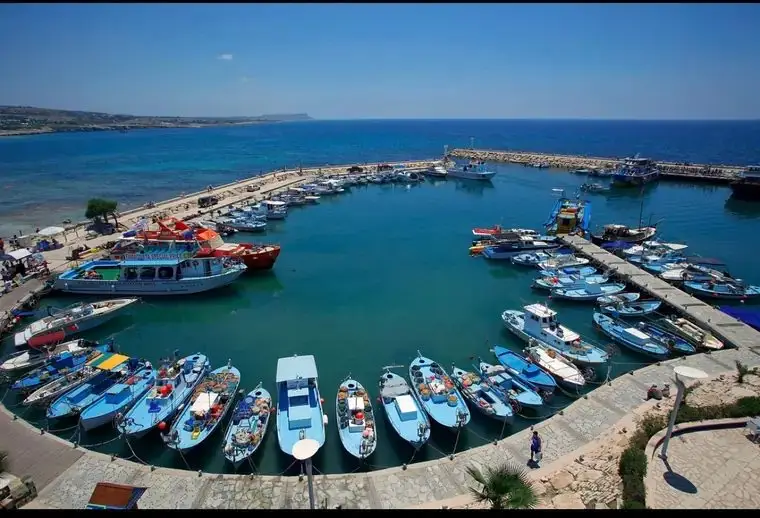
Two towns, one cape between them, and a set of dive sites the tourism authority publishes by name. Two things decide the shape of your day: whether you already hold a certificate, and whether the centre's figure is a per-dive rate or a day rate. On this coast it is usually the day — reading it as a per-dive price will double your budget on paper.
Shore diving is the default#
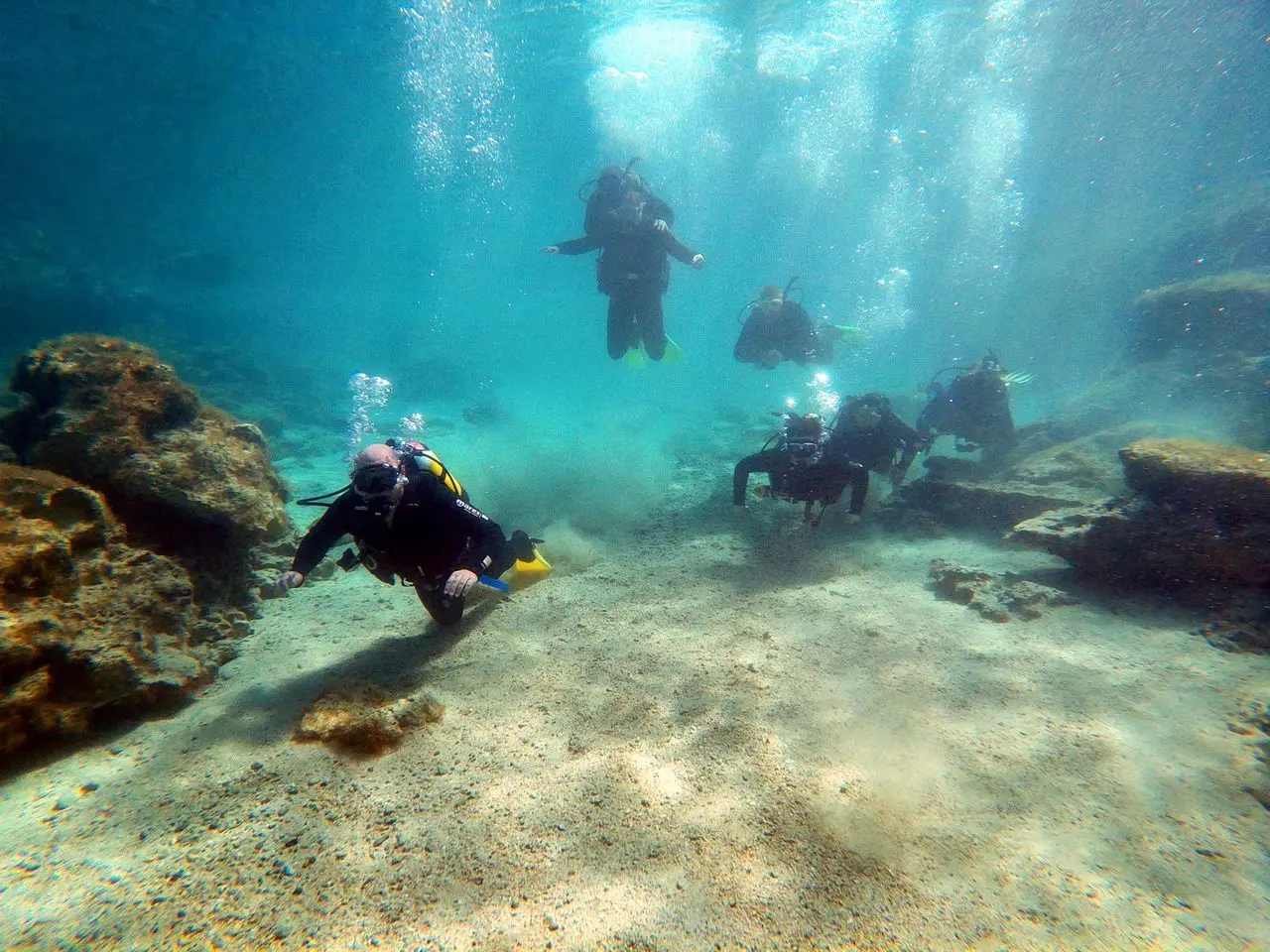
Poseidon states it flatly: all its local sites are shore dives, so you jump in the car rather than on a boat, and its fitness page asks you to be able to carry gear about fifty metres from the parking down to the sea at every site except Green Bay and Crystal, over ground it warns can be rocky. It offers to send pictures and video of the entries before you commit.
Undersea World's price list says the same by arithmetic: a boat is a €45 supplement on top of the package, €90 if the boat goes to Northern Cyprus, so nothing in the base price assumes one. AquaNaut, which teaches on Green Bay beach and calls itself the only dive school in the Protaras area standing directly on the water, keeps a boat for the further sites.
What the local sites are#
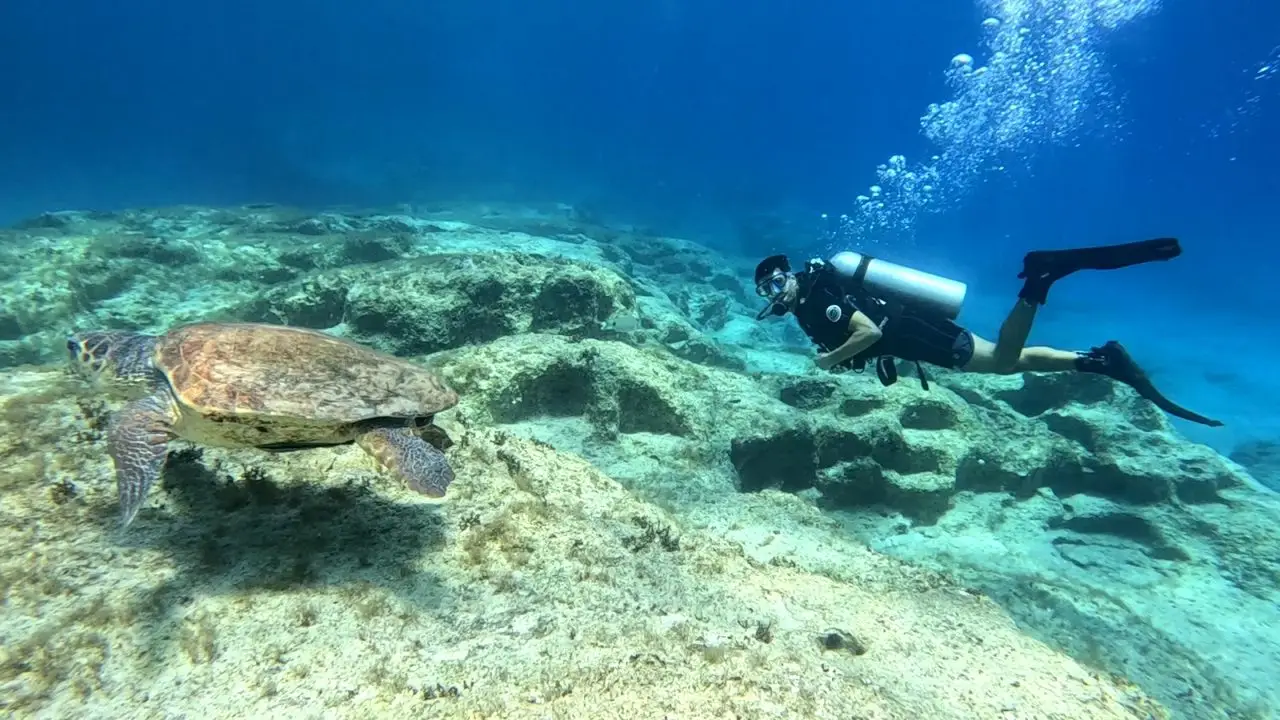
The Deputy Ministry of Tourism publishes the sites around Cape Greco with depth, access and level:
Visibility is given as 20 metres or more at every one of them. The Liberty is a former Russian cargo ship, 37 by 10 metres, lying upright; the Nemesis III is a French-built fishing boat from 1956, 25 by 6 metres, ninety metres away from her, which is why centres sell the pair together — Poseidon at €145 for two dives, with a thirty-metre certification required.
Read the official Cyclops card with care: it gives 45 metres of depth and an Open Water qualification in the same breath, and both cannot be true, so let the centre set the level rather than the page. The Canyon's card is unusually honest in the other direction, saying there is less marine life there than at the other sites.
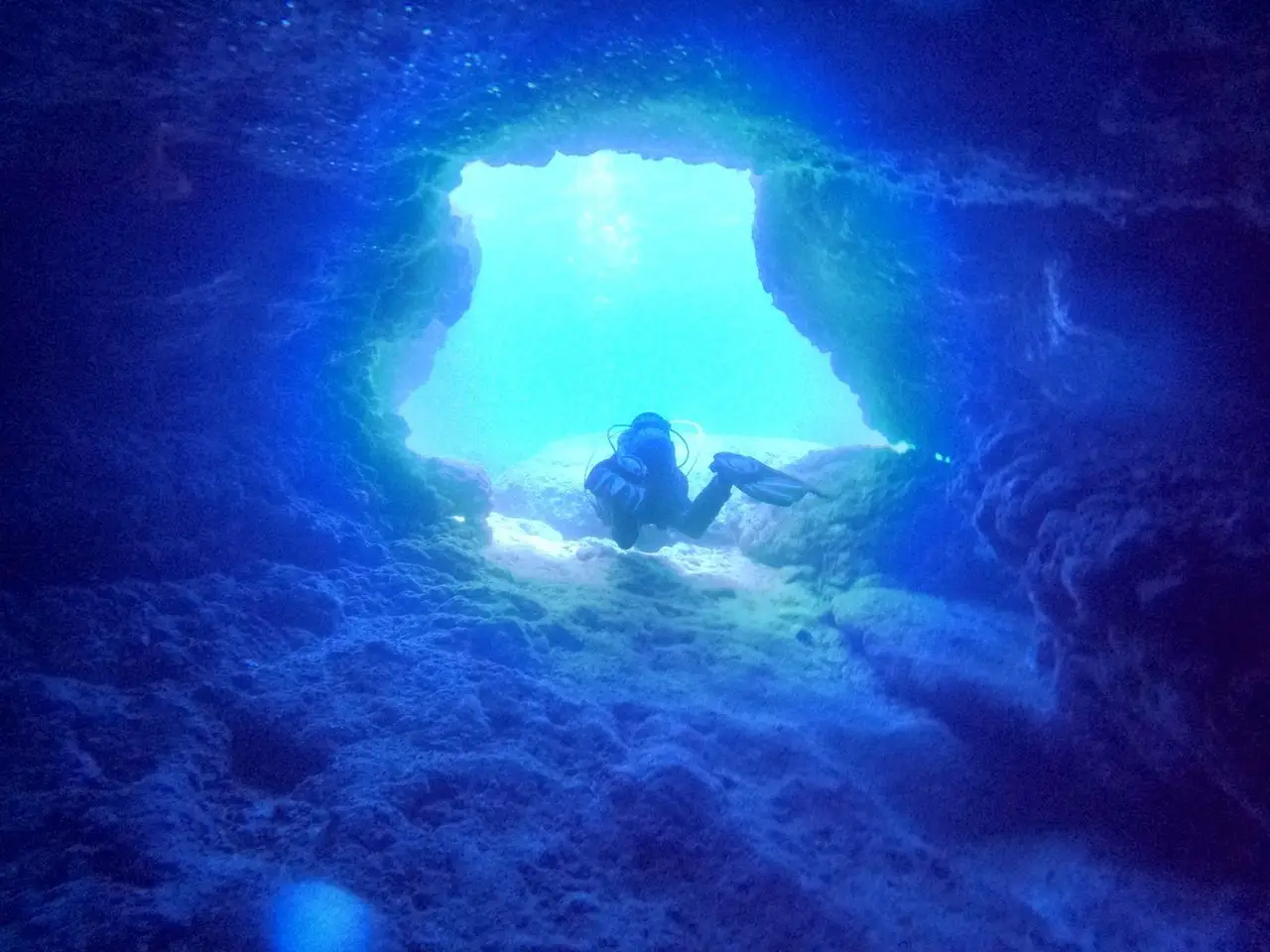
Undersea World also publishes a site of its own, Green Bay 2 — a giant stride from a jetty into about four metres, swim-throughs, and a descent through a crack in the rock into a cave that exits at seventeen to eighteen metres.
Certified, or never dived before?#
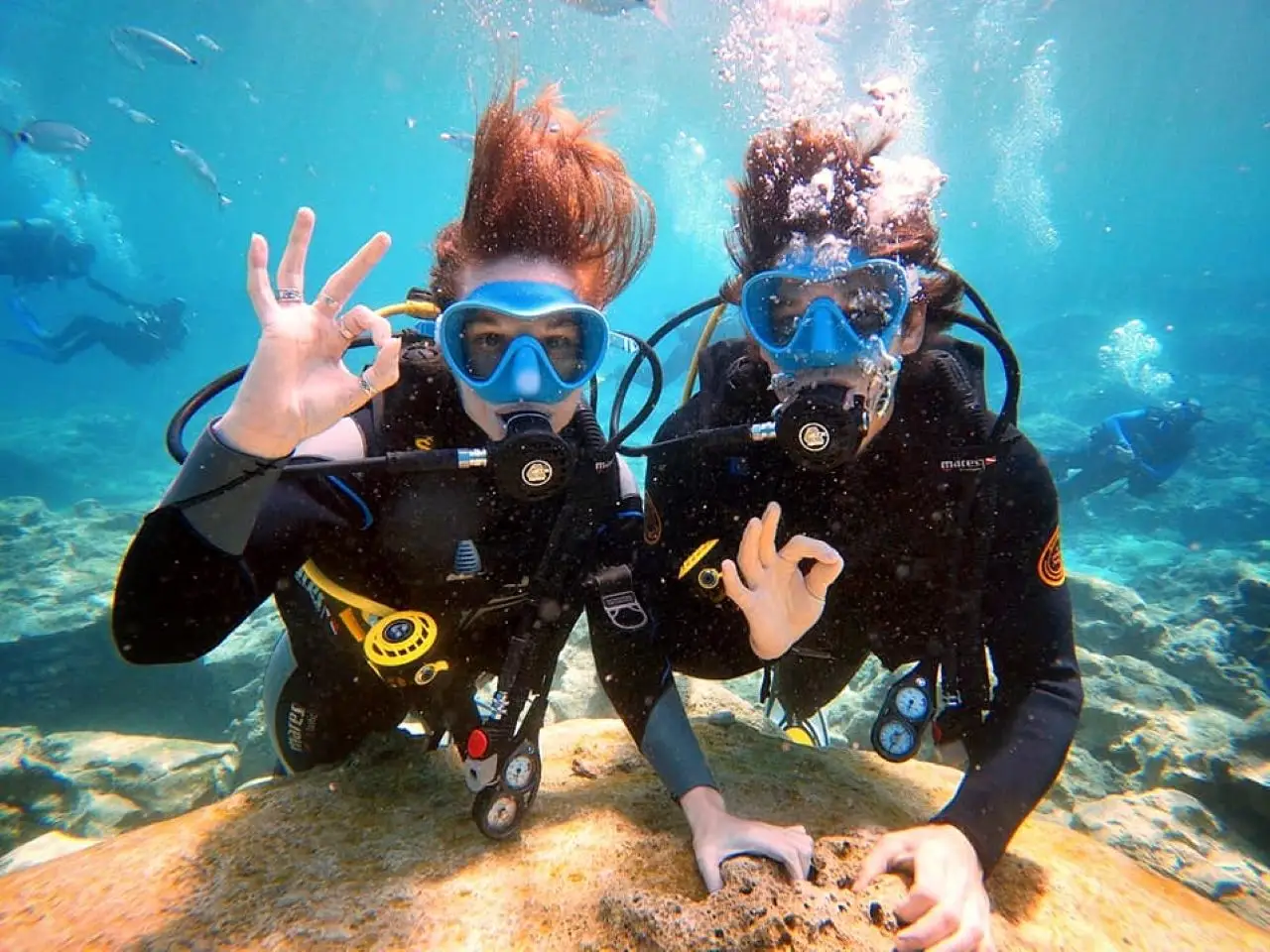
If you have never dived, the entry point is the Discover Scuba Diving programme at Green Bay: €110, up to three hours all in — a short briefing, a skills session in shallow water, then one open-water dive of at least forty minutes with a PADI instructor, twelve metres maximum and the site itself no deeper than nine. Minimum age ten.
It ends with a certificate of completion, not a certification, and within a year it counts towards a Scuba Diver or Open Water course with 10 % off. Green Bay is in Protaras, so the day starts at the Ayia Napa shop and continues by road; no transfer line is published, so ask how you get there.
If you want the card itself, AquaNaut teaches Open Water Diver on Green Bay beach for €460, the junior course the same, with Advanced Open Water at €420, Enriched Air Nitrox at €200 and Rescue Diver at €480. The school is honest about the clock: the course is performance based and can be completed in as little as three days, which is not the same as always three days.
Its page does not itemise what €460 covers, so settle materials, certification fee and course equipment before paying. And do not fly within 24 hours of your last dive — plan the course days against your flight.
What sits outside the price#
At Ocean View the ladder is the product: €60 for one dive with everything supplied, €100 for two, €140 for three and €280 for eight; with your own kit each step drops, to €90 for two and €250 for eight. It collects from your hotel free inside a ten-kilometre radius, gives a discount for three divers or more without printing its size, and adds its own caveat that prices are correct on publication but subject to change without notice.
At Undersea World the €100 covers the dives and little else: a full set minus computer and torch is €30 a day, single pieces €5 to €10, a 15-litre cylinder a €5 supplement, a night dive €25, a non-diving companion €30 — and Nitrox up to 40 % is printed as free. Cancellations there must be made at least 24 hours before the dive.
Poseidon names full equipment and guiding inside its €105 line, asks for a customer record, liability release and PADI Medical Statement on arrival, and says insurance is not required for local diving but is a good idea.
Season and water#
Poseidon publishes what almost nobody here does: the season in Protaras runs generally from mid-April to the end of the first week of November. That is one centre's statement, not a rule for the coast — on the other operators' pages the months were simply absent, so ask yours. The state's frame is the bathing season, 1 May to 31 October, which is a water-quality monitoring period rather than a diving calendar.
Water temperature along this coast runs roughly 17 °C in February and March to 27–28 °C from July to September, from a secondary source measured at Larnaca rather than the Cypriot meteorological service.
Important
The Zenobia is not a dive site of this coast. The wreck lies in Larnaca bay, 1.5 kilometres from that shore, inside its own marine protected area, and the centres here sell it as a day trip to another town — Ocean View at €150, Poseidon at €160 for two dives with a €65 check deep dive recommended if you have not dived within a year, while Undersea World's Ayia Napa list carries no Zenobia line at all.
Two more things before you get in. The water around Cape Greco and the Ayia Napa sea caves is under marine protection decrees whose texts exist only in Greek, so restrictions apply inside them — ask your centre what holds on the day. And lionfish are named on four of the official site cards for this coast.
They are an invasive venomous species rather than an exotic photo subject: look, do not touch.