Fuerteventura is a hundred kilometres of desert with the Atlantic on either side of it, and nearly everything people come here for happens on the narrow strip where the two meet. A return crossing to Isla de Lobos is €17 per adult. An hour in a kayak off the marina at Caleta de Fuste is €15. A two-hour boat snorkelling trip out of Morro Jable is €40 per person. A four-hour bottom-fishing morning is €79 an angler. A 13.6-metre sailing yacht with her skipper is €200 for two hours, for the boat and not for the seat. Every figure on this page is a named operator's own September 2026 price, and every one of them carries its unit, because on this island the unit is where most of the confusion starts.
- What a day costs by category, and which page each category lives on
- Corralejo, Morro Jable, Costa Calma and Caleta de Fuste: four different holidays
- Isla de Lobos and the free permit that is not optional
- The trade wind: one column read as a warning and as an invitation
- Angel sharks, the months the centres name, and what nobody guarantees
- Ages, minimums, and the questions to ask before the card comes out
Important
The licence-free boat hire this island was known for has an end date. Until 30 September 2026 a boat under five metres with a motor of up to 15 CV may be hired without a licence, no further than two nautical miles from the port, in daylight and from the age of eighteen. From 1 October 2026 RD 1188/2025 requires the person hiring the boat to hold the relevant qualification. Jet skis and any departure with a skipper aboard are outside the change.
What does a day on the sea cost here?
Eight categories work on this island, and their entry points sit two orders of magnitude apart. The table below gives the cheapest published way into each one, with the unit spelled out, and the page where the rest of that category is listed. The unit matters more than the number: €17 buys one adult a ferry seat, €45 buys a whole boat for an hour, and the two figures are closer on paper than in life.
| What you want to do | From | What the price buys | Where the rest is |
|---|---|---|---|
| Kayak, SUP | €15 | an hour, one kayak or one board | Sea kayaking |
| Boat trips | €17 | per adult, the return crossing to Lobos | Boat trips |
| Diving, snorkelling | €40 | per person, two hours of boat snorkelling | Diving |
| Boat hire | €45 | an hour for the boat, up to four aboard | Boat hire |
| Jet ski, jet surf | €59 | per person, thirty minutes of jet surf | Jet skis |
| Windsurf, kite, wing | €60 | per person, a two-hour taster in a group of three to five | Wind sports |
| Fishing | €79 | per angler, a four-hour bottom-fishing morning | Fishing charters |
| Yacht charter | €200 | for the boat, two hours with a skipper, up to nine guests | Yacht charter |
Three of those eight rows price a boat and five price a person, and reading a row the wrong way round is how a family of four ends up with a bill four times the one it expected — or, just as often, walks past a private charter it could easily have afforded. Where a price is per person, the child fare is usually published separately and usually starts at two or three years old. Where a price is per boat, the extra head is either free up to the stated capacity or carries a fixed supplement.
Four harbours, four different holidays
The island's official tourism portal keeps a section for harbours and marinas with five entries in it: Corralejo, Puerto del Rosario, El Castillo at Caleta de Fuste, Gran Tarajal and Morro Jable. Four of those five matter to a visitor, and the distance between them is real: the portal measures everything from the airport, and it publishes 39 km and forty minutes to Corralejo, 84 km and an hour and a quarter to Morro Jable, 65 km and an hour to Costa Calma, and 8 km and ten minutes to Caleta de Fuste. The airport sits between the ends, so crossing the island is those two drives run back to back.
Corralejo, in the north
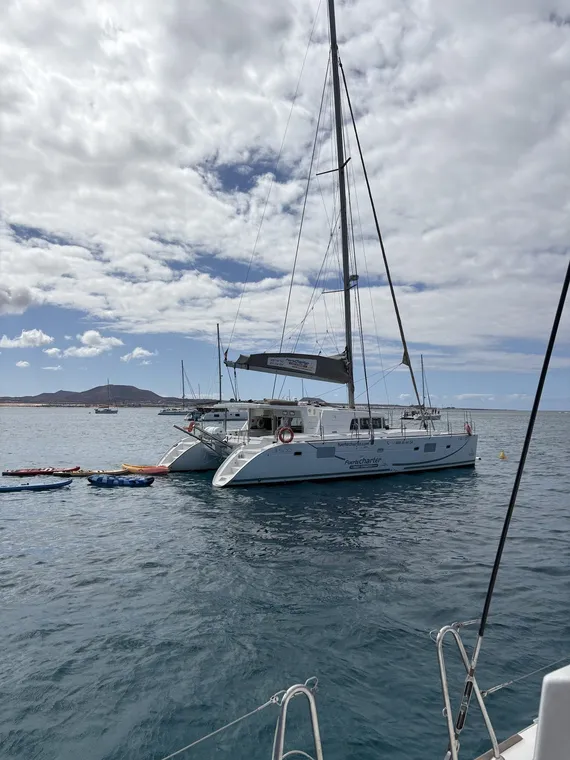
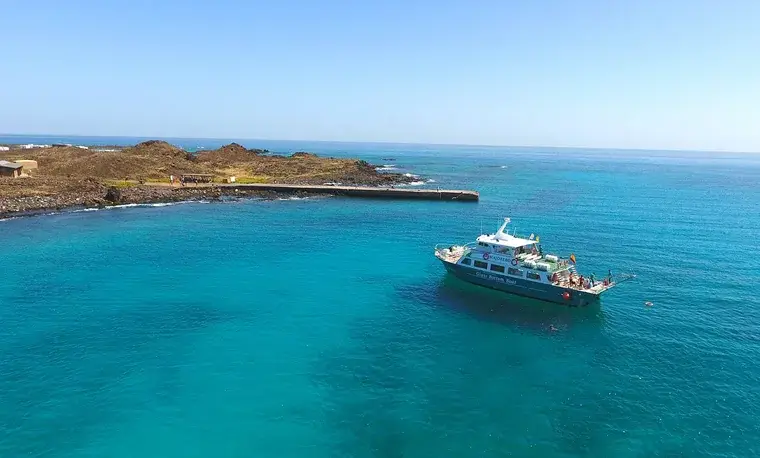
The marina is a five-minute walk from the town and holds 215 berths for vessels up to fifteen metres. The number that changes a holiday, though, is the other one: the anchorage at Isla de Lobos is less than a quarter of an hour away. That short hop is what the north sells, and the cheapest version of it is the electric ECO ferry, twenty minutes each way, at €17 per adult return, €11 for a child of four to eleven and free under four.
Corralejo is also where the choice is widest. Sailing, catamarans, sea kayaks, jet skis, guided dives, first dives, shared fishing and an eight-hour trolling day all leave from the same quay, and most of the operators there pick up within the town and nowhere else. If you are sleeping in Corralejo the whole northern list is open to you; if you are not, read every pick-up radius before you book, because the operators' map of the island is narrower than the road map.
Morro Jable and the Jandía peninsula
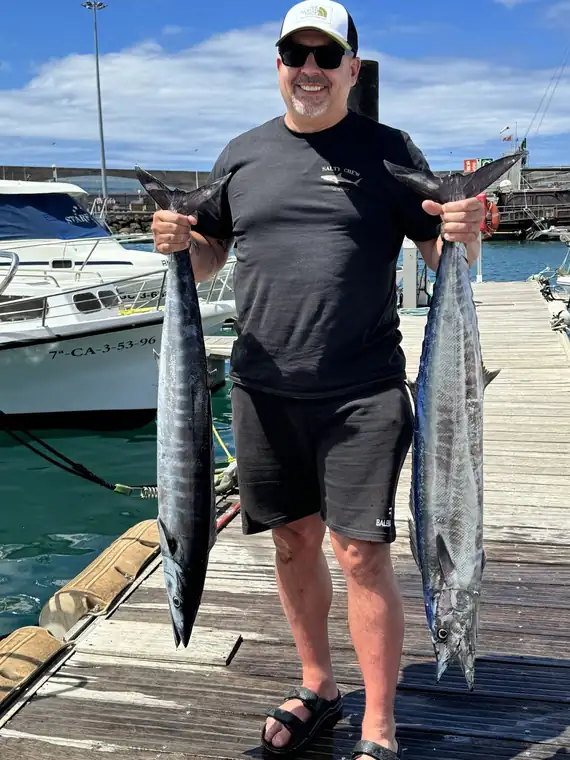
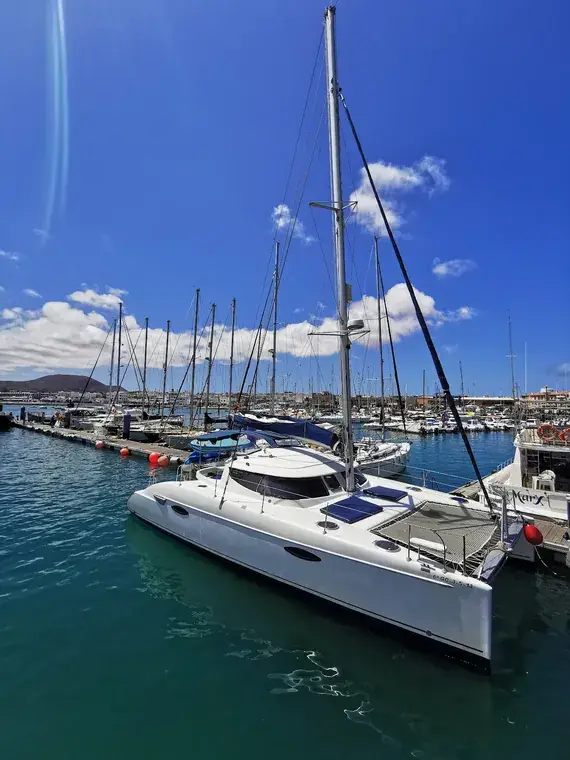
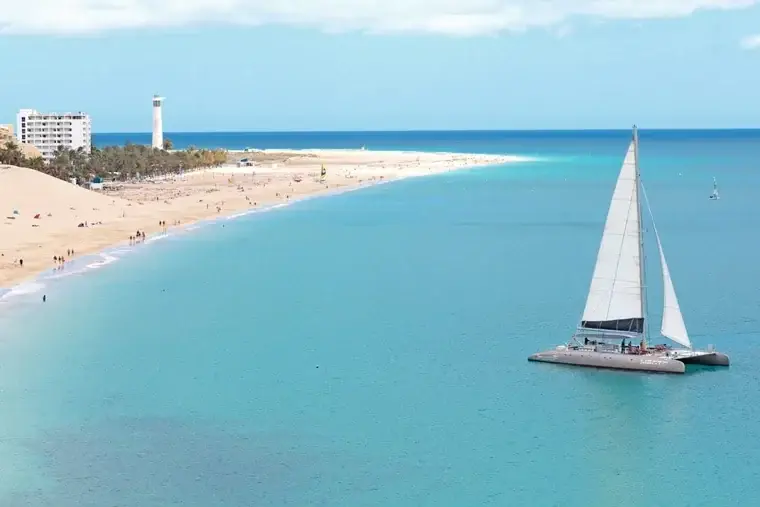
Morro Jable is the biggest of the five harbours by berths and by the size of boat it takes: 290 berths, a five-metre draught, vessels up to 35 m, a fuel station, a travelift and the passenger ferry to Gran Canaria. It is a working port with the fishermen's guild next door, and what leaves it is built around open ocean rather than an islet — a search for dolphins and whales, catamarans along the Jandía coast, boat dives on the drop-off, a seat or a whole boat for fishing. It is also where you can still be the one at the wheel: three hours with a skipper from the operator is €300 for the boat for one to four people, €50 for each extra head, with fuel, drinks, snacks and the hotel transfer inside that figure and no licence asked of you, because the skipper stays aboard.
Costa Calma, Sotavento and Matas Blancas
The southern wind coast is not a harbour at all. The schools stand on the beach, and what they sell is taught from the sand and the shallows rather than from a quay: kite, windsurf and wing courses on the Sotavento lagoon and at Matas Blancas, walk-in dives out of Costa Calma with a free hotel transfer, and a kayak-and-snorkel morning at La Lajita a little further up the coast. Costa Calma is an hour from the airport and the schools open by the water rather than in the town.
Caleta de Fuste, on the east coast
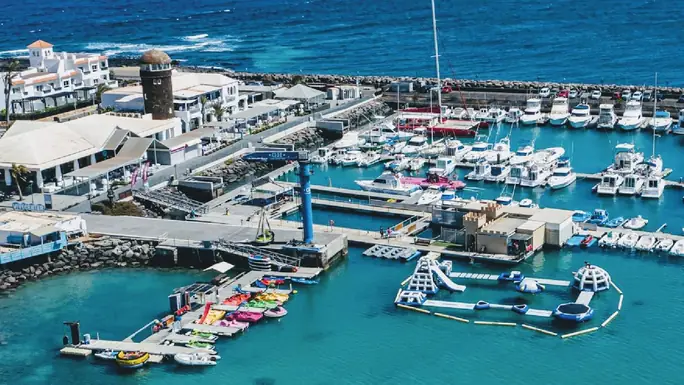
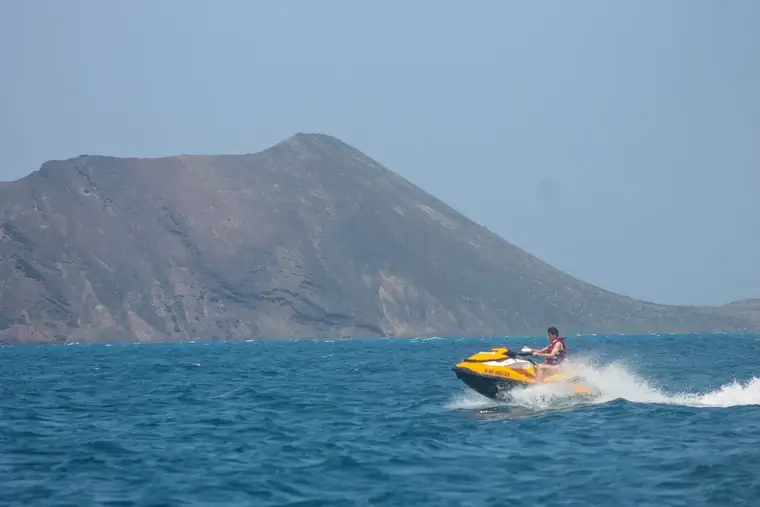
Puerto Castillo is under ten minutes from the airport and from the capital: 110 berths, vessels to sixteen metres, a crane, a travelift and round-the-clock security, with the activity desks sold beside the marina rather than a drive away. In practice the water starts where you park. Twenty minutes on a marked jet-ski circuit inside the bay is €68 per machine whether one or two ride it; a kayak or a paddleboard by the hour is €15 for a single, €25 for a double and €15 for a SUP; a morning of bottom fishing on a twelve-place sportfisherman runs 09:00 to 13:00. The east coast is also where the Corralejo dive centres actually put their shore dives, at El Jablito, Archies Bay and Las Salinas. What this base does not have is Lobos, the Jandía dolphin search and the lagoon.
Isla de Lobos, and the permit nobody mentions on the beach
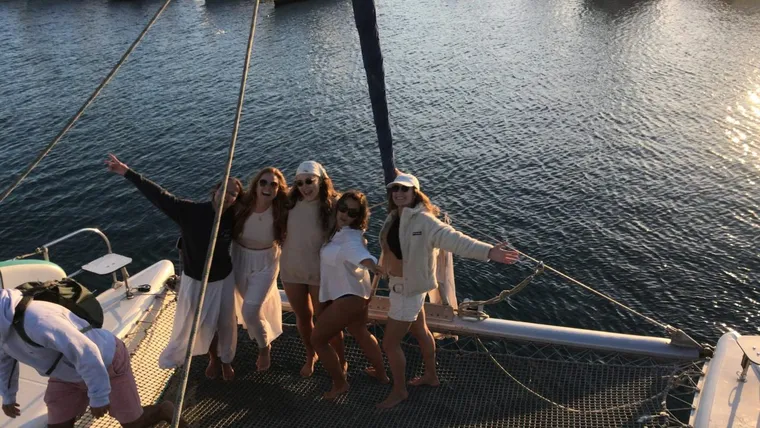
Isla de Lobos is a low volcanic islet off the northern tip, and the island portal's wording about it is the single hard geographical fact in this whole guide: it is reached by sea, and only from the harbour of Corralejo. Setting foot on it requires an authorisation from the Cabildo, obtained in advance and free of charge through the LobosPass web app. The management plan caps the park at 200 simultaneous visitors and the Cabildo runs two shifts, 10:00 to 14:00 and 14:00 to 18:00, with the calendar opening days rather than months ahead.
That rule splits the northern list in two, and the split is not visible in the prices. Trips that land ashore need the named permit for every adult; trips that anchor off Playa de La Concha and put everyone in the water beside the boat need nothing at all. Operators handle it differently and they say so on their own pages: the ferry and the water taxi run an authorisation step inside the booking form and file the requests at no extra cost, the paella catamaran adds the free permit to the ticket on request by WhatsApp, and the kayak crossing obtains it as part of the day. Others land ashore and say nothing about the permit on the trip page, which is a question to ask rather than an answer to assume.
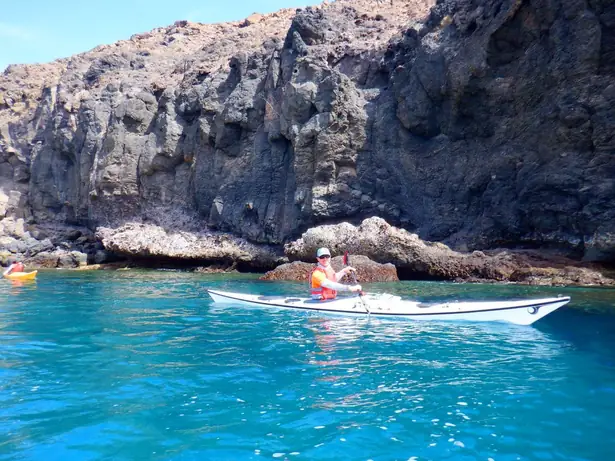
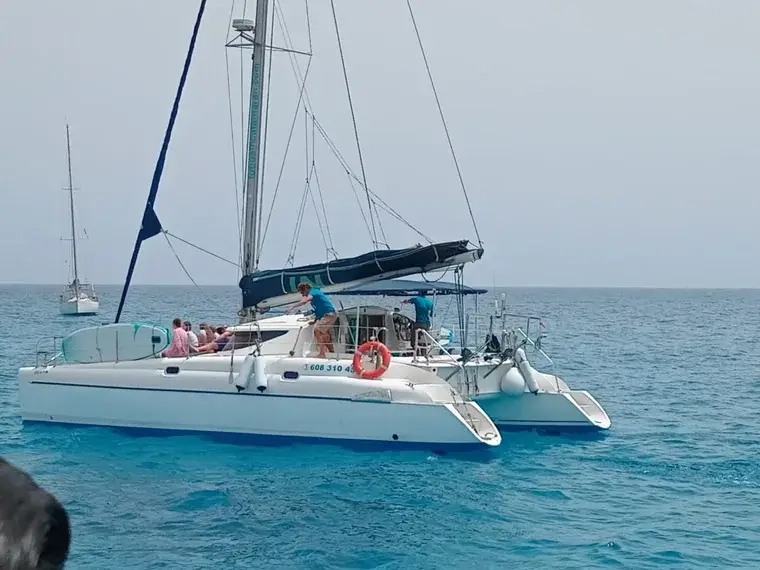
The format is the rest of the decision. A shared catamaran of ten guests maximum is €65 per adult and €45 per child of three to eleven for four hours, with papas arrugadas and Spanish omelette cooked on board, masks and wetsuits for ten and four paddleboards. The same boat as a private charter is €520 for the whole thing, which is cheaper than eight adult seats. A four-hour shared sail around the islet is €50 and carries no catering at all. A ninety-minute jet-ski loop circles Lobos with two stops in the water and does not land.
What is under water here?
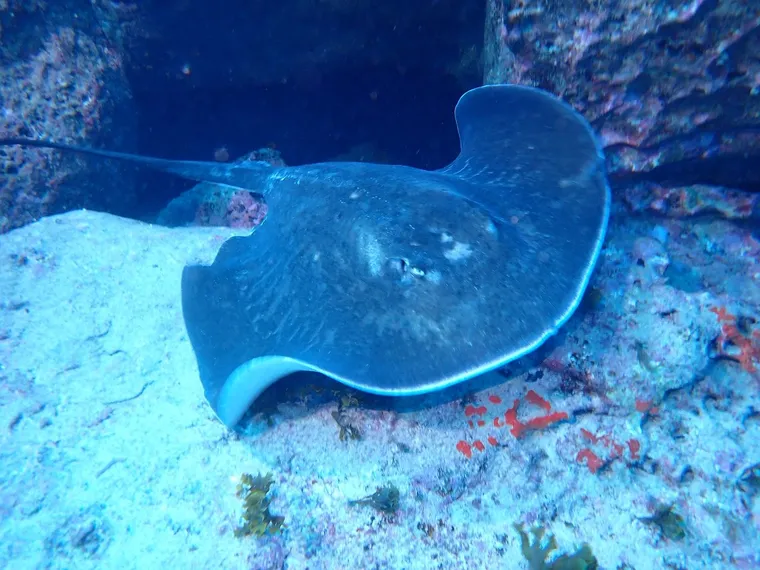
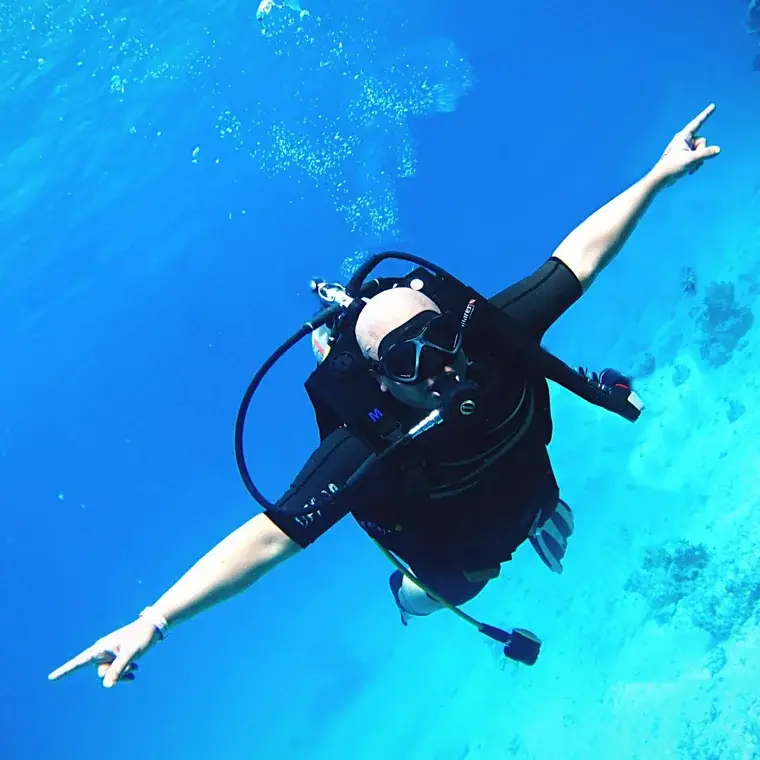
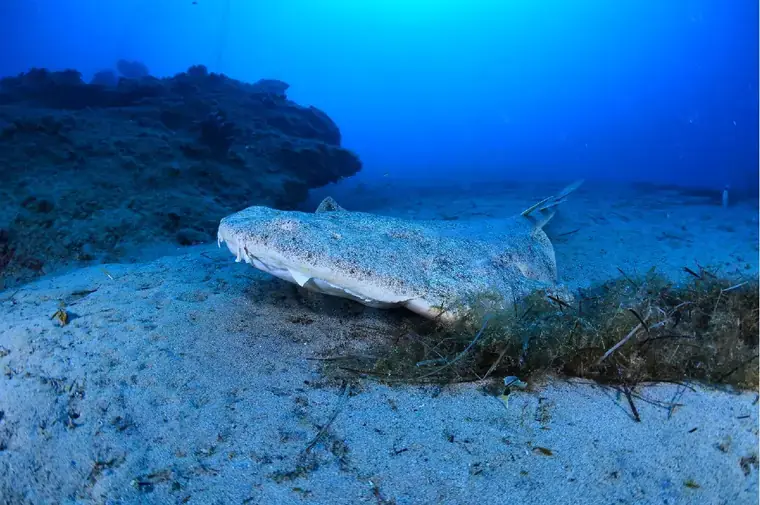
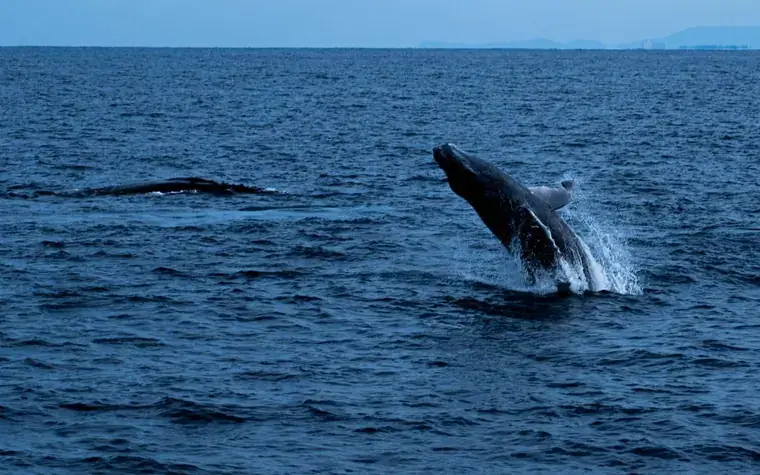
Two things make this coast worth a mask. The first is that the rock goes straight down: the Jandía drop-off and the walls around Lobos start shallow and keep going, so a beginner and an experienced diver can work the same site at different depths. The second is the angel shark, a flat, sand-coloured ray-like shark that winters on these bottoms and is rare almost everywhere else in Europe. Guided dives at Lobos from Corralejo are printed as "from €50", with the boat, an air or nitrox tank, weights and a certified guide inside that figure; the centre's own FAQ puts the angel-shark window between November and February, and adds that spring brings the best visibility, summer the warmest water, and September and October the calmest sea.
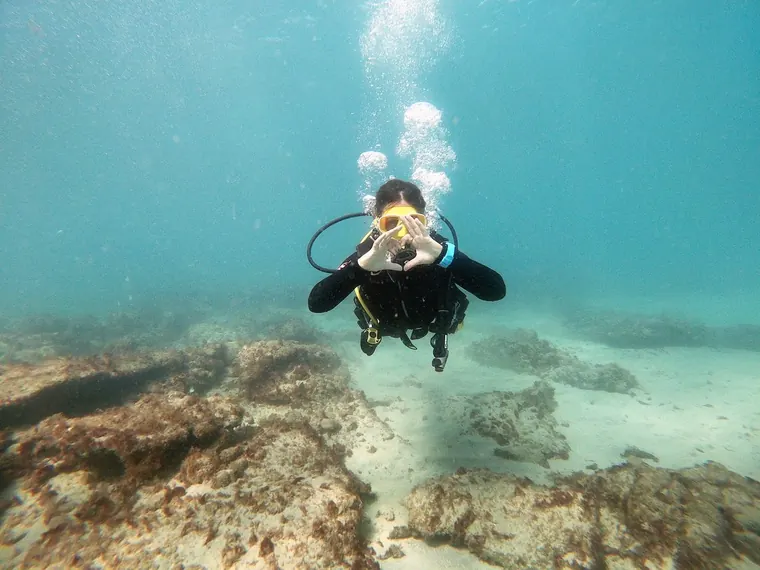
On the southern coast the same animal is described with a different calendar. Walk-in guided dives out of Costa Calma are €45 for the dive itself, with a free hotel transfer, and the centre says it sees the angel shark regularly at its La Lajita sites, especially between November and March. November to February on one coast, November to March on the other: both are the operators' own words, neither is a promise, and a wild animal on an open coast is not a fixture.
The number on the page is rarely the number on the receipt, and the additions are published. Spanish rules require accident and liability cover for recreational diving, and the centres bill it separately from about €5 to €9 a day unless their programme names it as included. A full equipment set runs €10 to €15 a day where the dive price covers only the tank, weights, boat and guide. And one centre in Morro Jable prints that 7 % IGIC is not included in its list, which is a line to read before comparing it with a centre whose prices already carry tax. First dives sit between €85 and €105 depending on whether the operator puts insurance and equipment inside; the shore-dive alternative, a guided dive with all equipment and transport to the site, is €55 for one dive and drops to €180 for four.
The trade wind is the island's second season
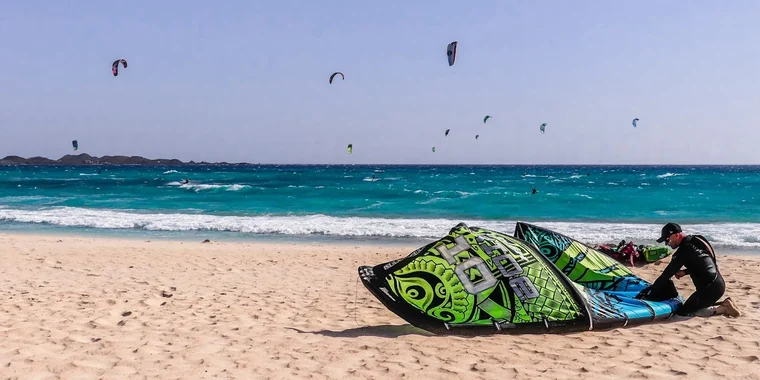
The north-easterly alisios blow over this island all year and hardest in the second half of the day, and that single fact splits its visitors in two: one group is looking for the month when the wind blows least, the other for the month when it blows most. They are reading the same column. By the monthly means at the airport station, July is the windiest month at 25.9 km/h and October the calmest at 17.1 — roughly fourteen knots against nine once converted, and a monthly mean at a weather station is markedly lower than the strength on a spot at four in the afternoon.
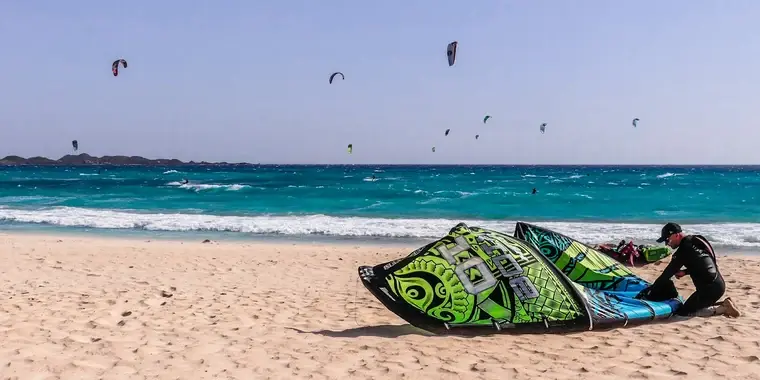
The island's tourist board answers in months rather than figures: sailing, kiting and windsurfing are all possible year-round, and May to September is when the trade wind is strongest and most constant. Geography does the rest. In the south, the Sotavento lagoon holds a very safe beginners' zone and an advanced zone by the main breaking wave in the same stretch of water, and the flat bay at Matas Blancas nearby is where the board schools send people who are starting out. In the north, Flag Beach is wide and sandy with an easy entry and works on N, NW and NE winds regardless of the tide.
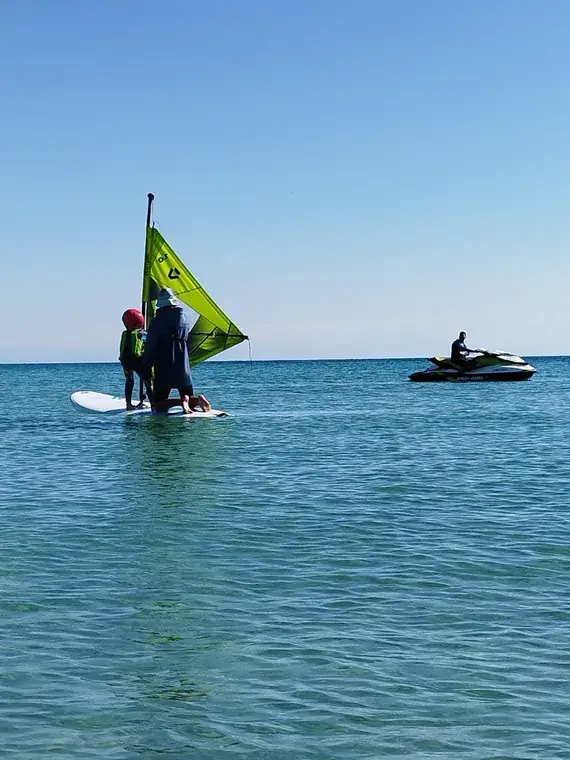
Prices follow the format rather than the discipline. A two-hour windsurf taster in a group of three to five is €60 per person, and the school shortens it to an hour if only two people turn up. A beginner kite course sold as a day on the beach with no water time is €175; the same school states plainly that the one-day version does not include time in the water and advises booking two days or more. A one-hour wing-foil group trial is €75 per person at the Sotavento centre, and its kite and wing courses run from fifteen years and fifty kilos while its windsurf side starts at eight.
When should you come?
The climate here is desert-mild and the year is flatter than most: daytime air moves from about 20.8 °C in January to 27.9 °C in August, less than a hundred millimetres of rain falls in a year, and almost all of it falls between October and March. June, July and August carry no rainfall at all in the reference series. The sea travels about four and a half degrees across the year — coolest at 18.2 °C in February and March, warmest at 22.7 °C in September — so the month that suits a beach week and the month that suits a snorkelling stop are not always the same month.
Read as a whole, October is the quiet favourite: the calmest month on the wind record, still 22.6 °C in the water, and days around 26.5 °C. May to mid-October is the window the reference climatology names for a beach holiday, and it notes that so little rain falls that the window stretches into the second half of October and into November. Winter is often sunny and pleasant on land and distinctly cooler in the water. Whatever the month, the wind builds in the afternoon, which is why the quieter half of the day is the morning — a two-and-a-half-hour sunset sail to Lobos at €35 per person is the exception that trades the calm for the light, and the operator's own advice is to bring a layer for the leg home.
With children, and with no experience at all
Ages on this island are set operator by operator, not by the country, and they differ by years rather than months. On the boats, the usual child fare runs from two or three to eleven or twelve, with babies free on several of the Lobos trips; two departures go the other way and sell no child places at all, a sunset gulet that is eighteen and over and an adults-only sunset catamaran. Under water, ten years is the common floor for a first dive, and surface-supplied diving — the cylinder floats above you and the air comes down a hose — also starts at ten, which is two years below the same centre's minimum for taking a child scuba diving in the ocean.
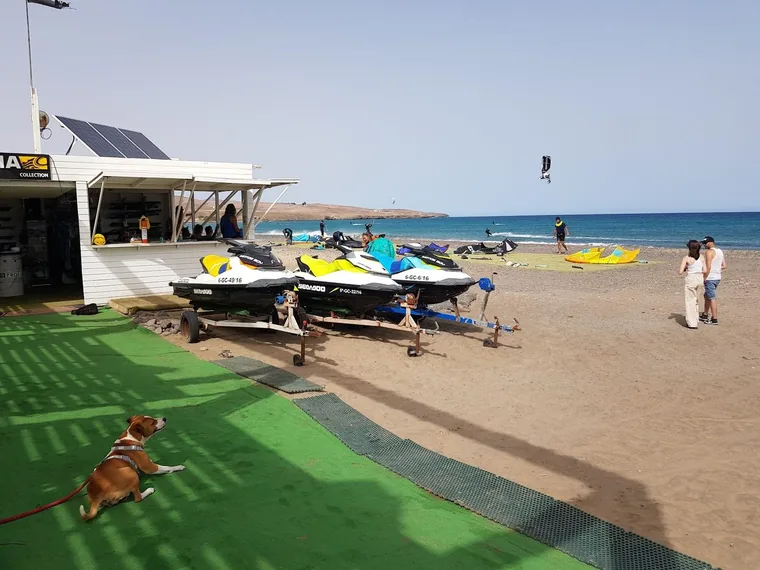
On engines, the driver of a jet ski must be eighteen in Corralejo and in Caleta de Fuste, while a southern operator sets sixteen with a parent's written authorisation; a passenger on a two-up machine can be seven. A motorised jet-surf board starts at fourteen. On paddles, one Corralejo operator takes twelve-year-olds on its four-hour coastal morning and sixteen-year-olds on the nine-kilometre crossing to Lobos and its full-day trips, and says so on both pages. Where an operator publishes no minimum age at all — and several do not — that is a question for the booking, not a silence to read as permission.
Experience is a separate axis from age. Guided formats dominate here: the jet-ski runs are led by an instructor on a separate machine, which is why no navigation licence is asked; the kayak days include full paddling tuition and grade the group by ability; the dive centres run first dives that assume nothing. What they cannot flatten is the Atlantic. Operators reschedule or refund when the sea will not allow safe navigation, and on the wind side one school refunds multi-day kite courses when the wind never arrives before your departure date — a policy it prints alongside a strict no-refund rule for everything else.
What to ask before you pay
Six questions cover almost every surprise on this island, and all six have published answers somewhere on the operators' sites. First, is the price per person or for the boat, and if it is for the boat, how many heads are inside it and what does the next one cost. Second, is tax in the figure: one Morro Jable centre prints that 7 % IGIC is added on top, and several of the fishing and boat pages state the opposite in as many words. Third, what is genuinely included — insurance and equipment are the two lines that move a dive price by a third, and catering is the line that separates a €50 shared sail from a €65 catamaran with lunch cooked that morning.
Fourth, the deposit and how the balance is settled: the Corralejo fishing operator takes €100 online on a €500 private charter and €23.75 per place on a shared seat, and settles the rest on the day. Fifth, what happens to the money when the weather wins — the answers range from a free reschedule or full refund, through a termination fee inside 72 hours, to no refund inside 24 hours, and they are published trip by trip rather than company by company. Sixth, and only in the north, who files the Lobos permit, because the free authorisation is only free if somebody remembers to request it.
One more thing that costs nothing to check: the pick-up radius. Operators draw their own map of Fuerteventura and it is narrower than the road map — the Corralejo catamaran collects within the Corralejo area only and names the places it does not serve, and the kayak days start and finish in the town. The kilometres on the portal's page are not the kilometres the minibus will drive.
Prices in this guide are the operators' own, read from their pages in September 2026, and are confirmed at booking. The full lists sit on the boat trips, diving and wind sports pages for Fuerteventura.
Updated 27 September 2026.